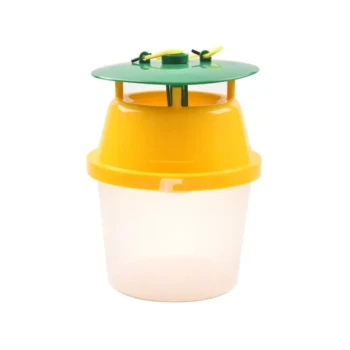
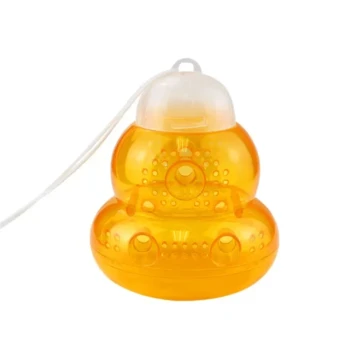
Professional traps act as the primary physical defense mechanism within an Integrated Pest Management (IPM) strategy against Asian hornets (Vespa velutina). By combining specific chemical attractants with specialized one-way entry designs, these devices actively capture predators to lower local hornet density and shield honey bee colonies from predation stress.
Core Takeaway While their immediate function is capture, the strategic value of professional traps lies in stabilizing apiary productivity. They serve as essential infrastructure that reduces the labor burden of pest management while mitigating the environmental risk of colony collapse due to predator stress.
The Mechanics of Physical Control
Targeted Attraction and Capture
These devices rely on specific chemical baits designed to lure predatory hornets away from the hives. Once inside, the one-way entry structure ensures the hornets cannot escape, effectively removing them from the ecosystem surrounding the apiary.
Reducing Predation Pressure
The direct capture of hornets lowers the population density in the immediate vicinity. This significantly decreases the rate of predation on foraging honey bees, allowing the workforce to gather resources without being intercepted.
Impact on Colony Health and Stability
Alleviating Colony Stress
Beyond simply saving individual bees, traps reduce the overall "siege mentality" or stress placed on a colony. Lowering this external threat level is crucial for maintaining normal hive behavior and preventing productivity dips caused by defensive confinement.
Supporting Large-Scale Operations
For commercial operations managing over 150 colonies, relying on manual intervention is inefficient. Professional traps introduce a level of mechanization to pest control, significantly reducing the labor intensity required to protect high-density apiaries.
Consistency Across Environments
Industrial-grade trap designs ensure consistency in colony management regardless of climatic conditions. They provide the necessary infrastructure to maintain production stability, even when environmental fluctuations might otherwise spike predator activity.
Understanding the Trade-offs
Maintenance Requirements
While these traps reduce active guarding labor, they are not "set and forget" devices. To remain effective, chemical baits must be monitored and replenished regularly, requiring a strict management schedule.
Infrastructure Investment
Implementing professional-grade traps across a commercial apiary represents a tangible upfront cost. This investment in hardware is necessary to standardize protection but requires initial capital allocation compared to ad-hoc methods.
Making the Right Choice for Your Goal
To determine how to integrate these traps into your apiary, consider your primary operational objectives:
- If your primary focus is maximizing productivity: Deploy traps to minimize colony stress, ensuring your bees continue foraging rather than entering a defensive state.
- If your primary focus is labor efficiency: Utilize these devices as standardized infrastructure to automate pest reduction and lower the man-hours spent on manual hive defense.
By integrating professional traps, you transform pest management from a reactive struggle into a stabilized, scalable system.
Summary Table:
| Feature | Role in IPM Strategy | Operational Benefit |
|---|---|---|
| One-Way Entry | Physical Capture | Removes predators from the ecosystem permanently |
| Chemical Baits | Targeted Attraction | Lures hornets away from honey bee hive entrances |
| Stress Reduction | Colony Stabilization | Prevents defensive confinement and productivity dips |
| Mechanization | Labor Efficiency | Reduces manual intervention for large-scale operations |
Protect Your Colonies and Scale Your Operation with HONESTBEE
Don't let Asian hornets compromise your apiary's productivity. HONESTBEE specializes in supporting commercial apiaries and distributors with high-performance beekeeping machinery and essential supplies. From specialized hardware and hive-making tools to honey-filling machines, our comprehensive wholesale offering is designed to streamline your operations and maximize output.
Ready to upgrade your pest management and apiary infrastructure?
Contact HONESTBEE Today to explore how our professional-grade tools and industry consumables can secure the future of your beekeeping business!
References
- Hossam F. Abou‐Shaara, Areej A. Al-Khalaf. Using Maximum Entropy Algorithm to Analyze Current and Future Distribution of the Asian hornet, Vespa velutina, in Europe and North Africa Under Climate Change Conditions. DOI: 10.51963/jers.v24i1.2011
This article is also based on technical information from HonestBee Knowledge Base .
Related Products
- Professional Multi-Component Bucket Wasp Trap
- Compact Multi-Funnel Hanging Wasp Trap
- Professional Bucket Style Wasp and Moth Pheromone Trap
- Gourd Shaped Hanging Wasp Trap Professional Wasp Catcher
- HONESTBEE Professional Telescopic Pole Bee Swarm Catcher
People Also Ask
- How do professional wasp traps function? Master Physical Control of Oriental Hornets to Protect Your Apiary
- What are the practical advantages of using professional wasp traps and protective equipment in apiary management? Scale Up
- Why replace sugar syrup bait in wasp traps every three days? Ensure Maximum Attraction and Catch Rates
- How can commercial apiary operators mitigate wasp predation around hives using specialized trapping equipment? Effective strategies for wasp control
- What is the primary function of specialized traps used to defend against wasps? Protect Your Hive and Queen Today