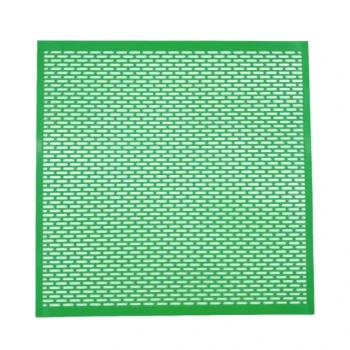
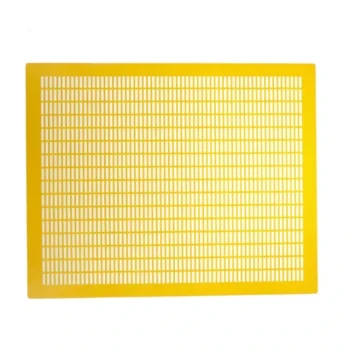
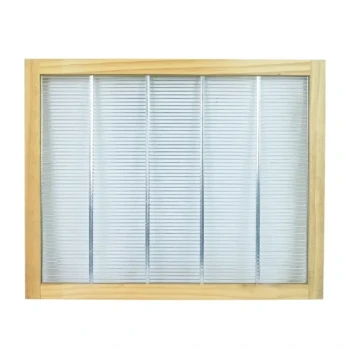
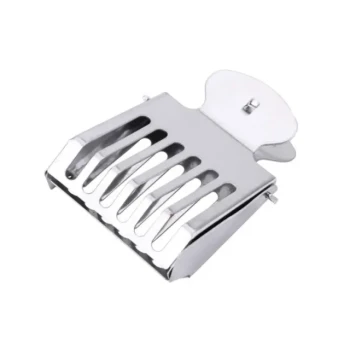
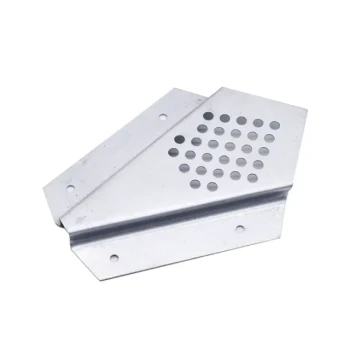
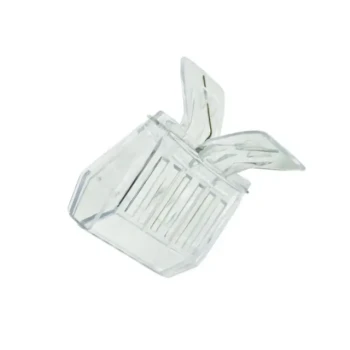
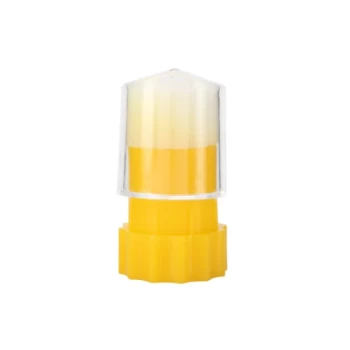
A Queen Excluder acts as a precision filter for your hive population, leveraging size differences to control internal movement. By allowing smaller worker bees to pass while blocking the larger queen, this physical barrier restricts egg-laying to specific zones, ensuring brood management remains distinct from other hive activities.
The Queen Excluder is not just a barrier; it is a tool for orchestrating colony rhythm. By confining the queen, it allows for precise brood management and supports artificial splitting techniques essential for preventing the losses associated with natural swarming.
The Mechanics of Brood Management
Defining the Reproductive Zone
The fundamental role of the Queen Excluder is to limit the queen's egg-laying area.
By installing this barrier, you designate specific sections of the hive as the brood nest. This prevents the queen from moving into areas intended for honey storage or other resources, ensuring that brood production is contained and organized.
Selective Permeability
The device relies on precision pore sizes.
These openings are engineered to be large enough for worker bees to traverse freely but too narrow for the queen's larger thorax. This ensures that the workforce can maintain the entire hive while the reproductive source of the colony remains in a fixed location.
Controlling Swarming Dynamics
Coordinating Colony Expansion
Swarming is a natural reproductive response, but it can lead to colony loss and environmental stress.
Queen Excluders help the beekeeper coordinate the rhythm of colony expansion. By controlling where the queen can lay, you can better monitor the population density and growth rate of the brood nest, which are key indicators of swarm preparation.
Supporting Artificial Splitting
The excluder is a critical component when performing artificial splitting techniques.
Rather than allowing a hive to swarm naturally—which depletes the population—beekeepers use the excluder to separate the queen from parts of the colony during a controlled split. This allows for the creation of new colonies and the mitigation of swarming impulses in a managed, low-stress way.
Understanding the Trade-offs
The Constraint of Movement
While effective for management, a Queen Excluder is inherently a restriction on natural movement.
It physically blocks the queen from accessing the full volume of the hive. This requires the beekeeper to be vigilant in ensuring the queen has adequate space within her designated zone to lay eggs, or the colony rhythm may be disrupted.
Dependence on Precision
The effectiveness of this method relies entirely on the integrity of the physical barrier.
If the specific pore sizes are damaged or inconsistent, the separation fails. A single gap large enough for the queen renders the management strategy ineffective, underscoring the need for high-quality, precision equipment.
Making the Right Choice for Your Goal
To utilize a Queen Excluder effectively, align its use with your specific management objectives:
- If your primary focus is Brood Isolation: Use the excluder to strictly confine the queen to the lower brood boxes, keeping upper supers free of eggs and larvae.
- If your primary focus is Swarm Prevention: Utilize the excluder as a temporary tool to separate the queen during artificial splits, disrupting the natural swarming impulse without losing the colony.
Success with a Queen Excluder comes from viewing it not as a simple wall, but as a strategic gatekeeper that balances population growth with hive organization.
Summary Table:
| Feature | Role in Brood Management | Role in Swarm Control |
|---|---|---|
| Physical Barrier | Restricts egg-laying to designated zones | Facilitates artificial splitting techniques |
| Selective Permeability | Allows worker movement while confining the queen | Monitors population density by limiting queen access |
| Resource Separation | Keeps honey supers free of eggs and larvae | Prevents natural colony depletion from swarming |
| Operational Goal | Ensures organized hive rhythm and isolation | Manages colony expansion and reproductive impulses |
Maximize Your Colony's Potential with HONESTBEE
At HONESTBEE, we understand that precision is the difference between a thriving apiary and a lost swarm. As a leading partner for commercial apiaries and distributors, we provide a comprehensive wholesale range of high-quality beekeeping tools, from precision-engineered queen excluders to advanced honey-filling and hive-making machinery.
Whether you are scaling your operations or supplying the next generation of beekeepers, our portfolio of equipment and essential industry consumables ensures your success. Contact us today to discuss our wholesale offerings and discover how our expertise can streamline your honey production and brood management.
References
- Giovanni Formato, Stefano Palomba. Definition and Identification of Honey Bee Welfare Practices Within the Five Domains Framework for Sustainable Beekeeping. DOI: 10.3390/app142411902
This article is also based on technical information from HonestBee Knowledge Base .
Related Products
- High Performance Plastic Queen Excluder for Beekeeping and Apiary Management
- Professional Plastic Queen Excluder for Modern Beekeeping
- Lightweight Durable Plastic Queen Excluder Scraper for Beekeeping
- Metal Queen Bee Excluder for Beekeeping
- Premium Wood Framed Metal Wire Queen Bee Excluder
People Also Ask
- What are the characteristics of a plastic queen excluder? Key Benefits for Cost-Effective Beekeeping
- What are the operational and cost advantages of using plastic queen excluders over metal or wire excluders in commercial hive management? Discover how they reduce labor, prevent wing damage, and lower total costs.
- What types of queen excluders are available for beekeepers? Choose the Right Tool for Your Hive
- Why are standardized hive frames and queen excluders essential for maintaining honey purity and quality? Scale Your Purity
- Do plastic queen excluders work? A Cost-Effective Solution for Modern Apiaries