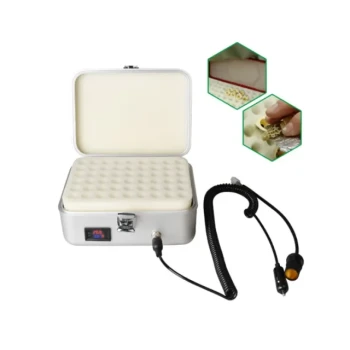
A digital constant temperature and humidity incubator acts as a standardization engine for honey bee research, bridging the gap between field collection and laboratory analysis. Its primary function is to simulate the ideal hive environment for brood frames that are near emergence, ensuring that every bee collected for a sample group shares an identical age and health profile.
By removing environmental fluctuations found in nature, these incubators provide the rigorous control necessary for scientific validity. They transform a biological process into a repeatable data point, ensuring that collected cohorts are uniform in age and development—a critical prerequisite for accurate behavioral tracking and experimentation.
The Core Function: Standardization of Samples
Eliminating Variable Emergence Times
In a natural hive, emergence can be sporadic and difficult to track precisely. By moving brood frames into an incubator just prior to emergence, researchers gain total control over the timeline.
This allows for the collection of newly-emerged individuals within a tight temporal window.
Establishing a Uniform Biological Baseline
For experiments to be valid, the subjects must start from the same baseline. The incubator ensures that all bees in a sample group have the same "Day 1" status.
This uniformity creates a standardized starting point, effectively neutralizing age as a variable in subsequent analyses.
Enabling Precise Behavioral Tracking
The primary reference highlights the necessity of this equipment for RFID marking experiments.
To compare behaviors accurately, researchers must apply tracking technology to bees of the exact same age. The incubator facilitates the mass collection of these specific cohorts.
Replicating the Hive Micro-environment
Reducing Environmental Stress
Honey bees, particularly during the pupation and emergence stages, are highly sensitive to environmental changes.
High-precision incubators maintain a stable atmosphere, often holding temperatures around 33°C to 34°C. This stability prevents the developmental abnormalities that can occur due to cold snaps or heat waves in a field setting.
Regulating Humidity for Successful Emergence
Temperature is only half the equation; humidity control is equally vital to prevent desiccation or mold issues.
While specific requirements may vary by study, incubators allow researchers to lock in precise relative humidity levels (often between 55% and 75% depending on the specific developmental stage). This ensures the insect acts naturally during emergence without physical struggle or deformity.
Understanding the Trade-offs
The Risk of Incorrect Parameter Settings
While incubators offer control, they also introduce the risk of user error. As noted in the supplementary data, humidity requirements can vary significantly based on the specific goal (e.g., 40% for sensitive pupation vs. 75% for final emergence).
Incorrect settings can lead to quality degradation or lower emergence rates than would be found in nature.
Artificial vs. Social Environment
The incubator simulates the physical conditions of the hive (temperature/humidity) but removes the social context.
Emerging bees are isolated from nurse bees and colony pheromones. While this is necessary for controlled sampling, researchers must account for this isolation when designing experiments that rely on social integration.
Making the Right Choice for Your Research
To maximize the utility of a digital incubator, align the environmental settings with your specific experimental end-goals.
- If your primary focus is Behavioral Comparison (e.g., RFID): Prioritize the synchronization of emergence. Use the incubator to batch-process frames so that all marked bees belong to a single, identical age cohort.
- If your primary focus is Specimen Health/Rearing: Focus on environmental stability. Ensure the incubator is calibrated to the precise temperature (approx. 33-34°C) and humidity needed to prevent physical deformities during the sensitive pupation phase.
By leveraging precise environmental control, you transform the chaotic variable of nature into a reliable constant for your laboratory data.
Summary Table:
| Feature | Laboratory Role | Key Benefit |
|---|---|---|
| Temperature Control | Maintains 33°C - 34°C | Prevents developmental abnormalities and cold stress |
| Humidity Regulation | Sets levels between 55% - 75% | Ensures successful emergence without desiccation |
| Temporal Sync | Controls emergence timing | Produces uniform age cohorts for RFID tracking |
| Environmental Stability | Eliminates field fluctuations | Transforms biological processes into repeatable data |
Elevate Your Apiary Research and Operations with HONESTBEE
At HONESTBEE, we understand that precision is the backbone of successful beekeeping, whether in the lab or the field. We cater to commercial apiaries and global distributors by providing a comprehensive wholesale range of professional tools and machinery. From specialized hive-making and honey-filling machines to essential industry consumables and honey-themed cultural merchandise, we equip you with everything needed to scale your operations.
Ready to optimize your production and research? Contact HONESTBEE today to explore our wholesale equipment solutions and see how our expertise can drive your business growth!
References
- Théotime Colin, Andrew B. Barron. Effects of late miticide treatments on foraging and colony productivity of European honey bees (Apis mellifera). DOI: 10.1007/s13592-020-00837-3
This article is also based on technical information from HonestBee Knowledge Base .
Related Products
- Portable Queen Bee Incubator with 12V Car Adapter for Safe Transport
- Digital Honey Refractometer for Precision Measurement of Optimal Honey Quality
People Also Ask
- What happens if a colony loses its queen during the nectar flow? A Guide to Salvaging Your Honey Harvest
- How can you tell if the worker bees have accepted the queen? Decode Bee Behavior for a Thriving Hive
- How can the queenless state of a newly created nuc be resolved? Expert Solutions for Colony Growth
- What are the primary reasons for replacing a queen bee? Boost Your Commercial Honeybee Colony's Success
- What queen bee behaviors should be observed after introduction? Ensure Hive Success with Our Expert Monitoring Guide