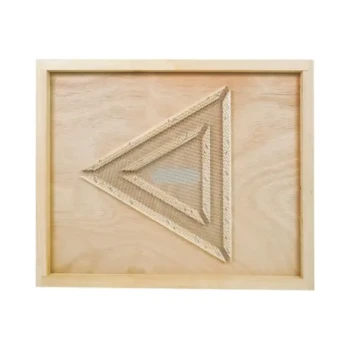
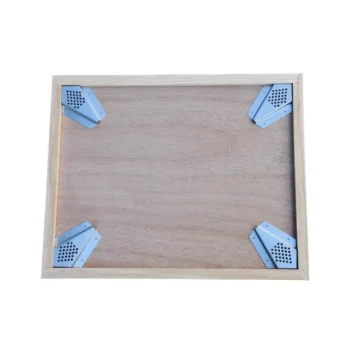
A wood-framed mite sticky board serves as the primary verification tool for determining if a miticide treatment has successfully reduced Varroa mite populations. By positioning this board at the bottom of the hive, you capture mites that fall due to natural causes or chemical intervention, allowing for a direct calculation of the treatment's kill rate.
The sticky board transforms abstract mite populations into quantifiable data. By securing fallen mites against removal by bees or scavengers, it provides the baseline and post-treatment counts necessary to calculate the exact kill efficiency of your control protocol.
How the Sticky Board Validates Efficacy
To understand if a treatment works, you must measure the change in mite mortality. The sticky board facilitates this through a comparative process.
Establishing a Baseline
Before applying any treatment, the board captures the "natural mite drop." This count represents the mites dying of old age or natural grooming by the bees.
This baseline data is critical. It establishes the standard mortality rate of the colony before outside chemicals are introduced.
Measuring the "Knockdown"
Once the miticide is applied, the board captures the subsequent surge in fallen mites. By comparing this "post-treatment" drop against the "pre-treatment" natural drop, you can visualize the instantaneous kill efficiency.
A significant spike in the count confirms the medication is actively dislodging and killing the parasites.
Calculating Percentage Effectiveness
Technicians use the data collected from the board to calculate specific efficacy percentages. This turns a visual estimation into a hard metric, validating whether a specific control protocol is working for a commercial apiary.
Why the "Sticky" Design is Critical
For the data to be accurate, the mites must remain on the board until they are counted.
Overcoming Hive Hygiene
Worker bees are hygienic and will naturally attempt to clean dead debris, including mites, out of the hive. The adhesive layer or oil film on the board traps the mites immediately upon contact.
This prevents the bees from carrying the "evidence" away, ensuring the count reflects the true number of fallen mites.
Preventing Data Loss to Scavengers
Scavengers, particularly ants, frequently enter hives to feed on organic debris. Without a sticky barrier, these scavengers would carry away dead mites.
The board secures the remains, ensuring that external factors do not skew your data by lowering the count artificially.
Understanding the Trade-offs
While sticky boards are a core consumable for monitoring, they require correct usage to provide value.
Indirect Population Measurement
The board measures mortality (death), not the live infestation level directly. You are inferring the total population based on how many fall, which requires consistent monitoring to be accurate.
Debris Saturation
If left too long without inspection, the board can become covered in hive debris (wax cappings, pollen). This makes it difficult to distinguish and count the mites accurately, potentially leading to user error.
Making the Right Choice for Your Goal
Using a sticky board effectively depends on what you are trying to achieve in your apiary management plan.
- If your primary focus is validating a new chemical: Compare the pre-treatment natural drop against the immediate post-treatment drop to confirm the chemical's "knockdown" power.
- If your primary focus is long-term monitoring: Perform periodic counts to track population dynamics over time, ensuring you catch rising infestation levels before they become critical.
Data is your best defense against colony loss; the sticky board ensures that data is accurate, visible, and actionable.
Summary Table:
| Stage of Evaluation | Purpose of Sticky Board | Metric Collected |
|---|---|---|
| Pre-Treatment | Establish a baseline | Natural mite drop count |
| During Treatment | Measure 'Knockdown' effect | Instantaneous kill efficiency |
| Post-Treatment | Calculate percentage effectiveness | Total mortality vs. survivors |
| Ongoing Management | Long-term monitoring | Population growth dynamics |
Maximize Your Colony Survival with HONESTBEE Precision Tools
Accurate data is the foundation of a successful commercial apiary. At HONESTBEE, we specialize in supporting commercial beekeepers and distributors with high-quality, professional-grade equipment. From essential consumables like wood-framed mite sticky boards to advanced honey-filling and hive-making machinery, we provide the full spectrum of tools needed to scale your operations.
Partner with HONESTBEE to access:
- Comprehensive Wholesale Solutions: Bulk supply of beekeeping hardware and consumables.
- Industrial Machinery: Streamline your production with our specialized honey-processing equipment.
- Cultural Merchandise: Expand your market reach with our honey-themed merchandise.
Don't leave your hive health to chance. Contact us today to discuss how our wholesale offerings can enhance your apiary's efficiency and profitability.
References
- Jennifer A. Berry, Lewis J. Bartlett. Inducing a summer brood break increases the efficacy of oxalic acid vaporization for <i>Varroa destructor</i> (Mesostigmata: Varroidae) control in <i>Apis mellifera</i> (Hymenoptera: Apidae) colonies. DOI: 10.1093/jisesa/iead085
This article is also based on technical information from HonestBee Knowledge Base .
Related Products
- Langstroth Screen Bottom Board for Beekeeping Wholesale
- HONESTBEE Wooden Bee Escape Board with Triangle Mesh Design for Beekeeping
- Solid Bottom Board Australian Pine Wood Langstroth Bottom Board for Wholesale
- Australian Pine Wood Langstroth Screen Bottom Board for Wholesale
- Wooden Bee Hive Frames for Beekeeping and Wholesale
People Also Ask
- What role do screen bottom boards and monitoring inserts play in assessing Varroa mite mortality and maintaining hive hygiene in Langstroth hives?
- What is the primary function of a screen bottom board? Achieve Accurate Varroa Mite Assessment in Your Apiary
- Why is the combination of a screen bottom board and a sticky trap board essential for monitoring Varroa mite? Guide
- What is the primary function of a standard screen bottom board when assessing honeybee grooming behavior? - Key Mite Data
- Why might a screen bottom board be less effective for pest control? Understanding the 'Mixed Sunlight' Complication