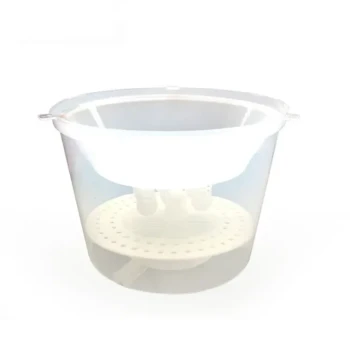
An entrance pollen trap serves as a precise mechanical interface between the environment and the hive. It functions by positioning a mechanical grid at the hive entrance which intercepts foraging bees, using physical friction to strip pollen pellets from their legs before they enter the colony. This process allows for the direct acquisition of fresh, unaltered bee bread raw materials without disturbing the internal hive structure.
The entrance pollen trap is not merely a harvesting tool; it is a standardization device. By isolating pollen from specific geographical areas and time periods, it provides the high-quality, biologically consistent protein sources necessary for formulating control diets in laboratory settings.
The Mechanism of Collection
Physical Interception via Grids
The core function of the trap relies on a mechanical grid or aperture structure. As foraging bees return to the hive, they are forced to squeeze through narrow openings to gain entry.
Separation by Friction
These openings are calibrated to specific dimensions. As the bee passes through, the physical friction dislodges the pollen pellets stored in the pollen baskets on their hind legs. These pellets then fall into a designated collection container below the entrance.
Preventing Physical Harm
While the aperture restricts movement to strip the pollen, the design is critical. It must rely on precise specifications to separate the pollen without causing physical harm to the insect. This ensures the colony remains healthy while harvesting occurs.
Scientific and Nutritional Value
Sourcing "Control" Diets
According to the primary technical guidelines, the most significant role of the trap is in research and nutrition formulation. It facilitates the creation of control diets for laboratory settings. By trapping pollen at the entrance, researchers acquire protein sources that strictly conform to specific biological characteristics.
Spatiotemporal Specificity
The trap allows for the isolation of samples from specific geographical areas and time periods. Unlike harvesting stored pollen from combs (which may be a mix of weeks of foraging), entrance traps provide a snapshot of exactly what nutritional resources are available in the environment at that exact moment.
Raw Material Integrity
Collecting pollen at the entrance obtains fresh bee bread raw materials. Because the pollen is intercepted before it is packed into cells and fermented into bee bread, it retains its original physical integrity and preliminary purity, serving as an ideal foundation for deep processing.
Understanding the Trade-offs
Mechanical Precision vs. Efficiency
The effectiveness of the trap depends entirely on the aperture specifications. If the holes are too large, pollen is not stripped; if they are too small, the bees may be harmed or entry may be overly congested.
Hygiene and Design Variations
While standard entrance traps collect fresh material, they can be susceptible to environmental debris. Some variations, such as Wall Traps, mitigate this by altering the entry path and elevating the collection port. This prevents ground dust and hive debris from contaminating the sample, ensuring a lower initial microbial load.
Making the Right Choice for Your Goal
When employing entrance pollen traps, align your usage with your ultimate objective:
- If your primary focus is Scientific Research: Prioritize the trap's ability to isolate pollen from specific timeframes and locations to create accurate control diets.
- If your primary focus is Commercial Processing: Focus on traps with precise apertures that maximize the physical integrity and purity of the pellet for subsequent deep processing.
- If your primary focus is Hygiene: Consider trap designs that elevate the collection port to minimize contamination from ground dust or hive debris.
By mechanically intercepting pollen at the threshold of the hive, you gain control over the purity and origin of your nutritional data.
Summary Table:
| Feature | Function & Benefit |
|---|---|
| Mechanism | Mechanical grid uses physical friction to strip pollen pellets safely. |
| Nutritional Value | Provides fresh, unfermented raw materials for precise control diets. |
| Data Accuracy | Isolates pollen by specific geography and time for spatiotemporal research. |
| Design Focus | Calibrated apertures ensure maximum yield without harming the colony. |
| Hygiene Options | Elevated collection ports (Wall Traps) reduce environmental contamination. |
Elevate Your Apiary's Productivity with HONESTBEE
Are you looking to scale your pollen collection or upgrade your commercial beekeeping infrastructure? HONESTBEE specializes in serving commercial apiaries and distributors with a comprehensive range of professional-grade tools. From precision-engineered pollen traps to high-capacity honey-filling machines and hive-making hardware, we provide the equipment you need to ensure purity and efficiency.
Our value to you:
- Wholesale Excellence: Full spectrum of beekeeping machinery and essential consumables.
- Targeted Solutions: Tools designed for both biological research and mass-market production.
- Industry Expertise: Supplying everything from specialized hardware to honey-themed cultural merchandise.
Ready to optimize your operations? Contact our expert team today to discuss our wholesale offerings!
References
- Vincent Ricigliano, Steven Williams. Nutrigenetic comparison of two Varroa-resistant honey bee stocks fed pollen and spirulina microalgae. DOI: 10.1007/s13592-021-00877-3
This article is also based on technical information from HonestBee Knowledge Base .
Related Products
- 30 cm Plastic Entrance Hole Bee Pollen Trap and Collector
- Removable Plastic Pollen Trap With Ventilated Tray for Bees Pollen Collector
- Plastic Bee Pollen Trap Strips Comb Catcher Collector
- High-Efficiency Diamond Maze Bee Escape for Clearing Supers
- Professional Reversible Beehive Hive Entrance
People Also Ask
- What are the design principles and advantages of pollen traps in the collection of bee pollen? Boost Your Apiary Yield
- Why is frequent harvesting of bee pollen from traps necessary for quality control? Ensure Freshness and Prevent Mold.
- How often should bee pollen be harvested from a trap and why? Master Freshness and Prevent Spoilage
- What function do pollen traps serve in quantitative collection? Boost Your Apiary's Data & Production Efficiency
- What is the primary function of bee pollen traps? Optimize Your Pollen Harvest with Advanced Extraction Efficiency