During winter, hive ventilation manages moisture—not heat loss. When temperatures fall below about 18°C, bees form a tight cluster that maintains a core temperature of approximately 34–35°C. Slight ventilation near the top allows warm, moisture-laden air to escape while preserving the cluster’s warmth, preventing condensation from dripping onto the bees.
The correct winter configuration is controlled ventilation, not an open hive. A properly fitted lid, ventilated inner cover, small upper air gap, and slight forward tilt work together to release humidity and drain any water without exposing the colony to excessive drafts, rain, or snow.
Why Winter Ventilation Matters
Bees produce heat and moisture
Winter bees generate heat through muscle activity while clustered together. This process also releases water vapor into the hive’s interior.
If that vapor remains trapped, it rises toward colder surfaces such as the inner cover and outer lid. The vapor can condense into liquid water or ice and eventually drip onto the cluster.
Moisture can be more dangerous than cold air
A damp colony loses heat more rapidly than a dry one. Condensation can chill bees, encourage mold and fungal growth, and contribute to winter mortality.
Ventilation therefore serves as a moisture-control system. Its purpose is to remove humid air gently without creating a direct draft through the cluster.
Top ventilation is more effective than uncontrolled openings
Warm, humid air naturally moves upward. A small opening near the top gives that air a controlled escape route.
Large openings or poorly protected gaps can admit wind-driven rain, snow, and cold drafts. Winter ventilation should be small, protected, and positioned above the cluster.
How Lid and Box Configurations Control Moisture
Use a properly fitted outer lid
The outer lid should protect the hive from precipitation while working with the inner cover to preserve a controlled ventilation path. It should not allow water to pool or enter freely around the box joints.
For commercial operations, consistent lid dimensions and reliable fit are important because small variations can create either excessive exposure or inadequate airflow across many colonies.
Create a small gap beneath the inner cover
A ventilated inner cover can provide a micro-gap between the cover and the upper brood box. Thin wooden shims or rim spacers placed beneath the inner-cover corners are one way to create this space.
The inner-cover notch and any intended ventilation opening should remain unobstructed beneath the outer lid. The objective is a gentle upward airflow, not a large open entrance.
Use an upper entrance where conditions require it
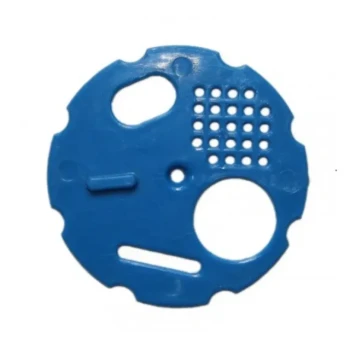
A small upper entrance or ventilation notch can help release moisture and may remain useful when snow blocks the lower entrance. In wet or snowy regions, this configuration provides a dependable escape route for humid air.
The opening must remain small enough to avoid creating a significant draft or encouraging robbing. It should also be protected from direct precipitation.
Configure stacked brood boxes carefully
In multi-story Langstroth-style hives, sliding the upper deep box back slightly can create an approximately 1/8-inch ventilation gap along the front seam. This provides a controlled upper escape path without requiring permanent holes in the wooden box.
The box should be positioned consistently, and the resulting gap should not be large enough to function as an uncontrolled entrance.
Tilt the hive slightly forward
A slight forward tilt helps rain, snowmelt, or condensation drain toward the main entrance instead of collecting on the bottom board.
This is especially important when an upper gap is used. Ventilation can release moisture, but the hive still needs a drainage path for any liquid that enters.
How Modular Components Support Winter Management
Adjustable ventilation improves seasonal flexibility
Modular brood boxes, vented inner covers, rim spacers, and screened bottom boards allow beekeepers to adapt airflow to local weather and colony conditions.
This is more practical than permanently drilling holes into hive bodies, which can reduce equipment flexibility and may place openings in unsuitable locations.
Moisture boards and quilt boxes add absorption
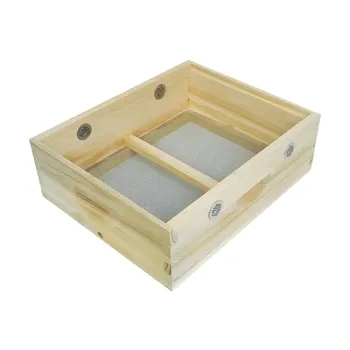
Moisture boards or quilt boxes can absorb some excess humidity above the inner cover. They are particularly useful in climates with high winter moisture or in hive designs with limited natural ventilation.
These components should complement, not replace, a sound lid fit, a controlled upper air path, and effective drainage.
Avoid unnecessary overhead space
Empty or partially filled honey supers left above the winter cluster can increase the volume of cold air inside the hive and create additional cold surfaces where moisture may condense.
After the autumn flow, remove unnecessary supers unless the colony and management plan specifically require them.
Understanding the Trade-offs
More ventilation is not always better
Excessive openings can expose the colony to drafts, wind-driven precipitation, and unnecessary heat loss. The correct target is controlled ventilation, not maximum airflow.
A tight cluster can retain its core warmth, but persistent air movement directly through the cluster can still increase stress and energy use.
Insulation changes the condensation pattern
Highly insulated hives may have fewer cold interior surfaces, naturally reducing condensation. In these systems, adding large ventilation openings may provide little benefit and can undermine thermal performance.
Ventilation should therefore be matched to the hive’s insulation, local climate, and observed moisture conditions.
Screened bottoms require contextual judgment
A screened bottom board can assist moisture escape, but it does not automatically solve condensation at the top of the hive. Since warm moisture rises, upper ventilation and proper lid configuration remain important.
The bottom board should also be protected from wind exposure and managed according to the colony’s wintering environment.
Permanent drilling can create avoidable problems
Drilling holes into brood boxes may damage reusable equipment, create openings above handholds, or produce ventilation that cannot be adjusted for changing conditions.
Replaceable vented components and small reversible spacers generally provide better operational flexibility for both individual beekeepers and commercial apiaries.
How to Apply This to Your Wintering Program
Use a configuration that balances moisture removal, thermal retention, precipitation protection, and drainage.
- If your primary focus is moisture control: Use a properly fitted lid with a ventilated inner cover, small upper gap, or protected top entrance so humid air can escape without creating a direct draft.
- If your primary focus is winter heat retention: Keep ventilation controlled, avoid oversized openings, and use insulation or a moisture board to reduce cold surfaces and condensation.
- If your primary focus is equipment flexibility: Choose modular brood boxes, adjustable vents, removable spacers, and vented covers instead of permanently drilling hive bodies.
- If your primary focus is commercial consistency: Standardize lid fit, ventilation dimensions, box alignment, forward tilt, and moisture-management components across the apiary for faster inspection and fulfillment.
- If your primary focus is wet or snowy conditions: Provide a protected upper exit, keep the inner-cover opening clear, and tilt the hive slightly forward so water drains through the lower entrance.
A well-configured winter hive keeps the cluster warm by controlling airflow while giving moisture a reliable path out.
Summary Table:
| Configuration | Purpose | Key Benefit |
|---|---|---|
| Properly fitted outer lid | Protects from precipitation | Prevents water ingress |
| Ventilated inner cover with small gap | Releases humid air | Reduces condensation |
| Small upper entrance or notch | Provides escape for moisture | Works when snow blocks lower entrance |
| Sliding upper box back slightly | Creates 1/8-inch gap | Controlled upper airflow |
| Slight forward tilt | Drains water towards entrance | Prevents bottom board pooling |
| Moisture board or quilt box | Absorbs excess humidity | Complements ventilation |
| Remove unnecessary supers | Reduces cold air volume | Less condensation surfaces |
Optimize your hive ventilation for winter with HONESTBEE's premium beekeeping equipment. From modular brood boxes and vented inner covers to moisture boards and precision-crafted lids, our wholesale supply ensures reliable wintering for your apiary. Benefit from our one-stop sourcing, rapid delivery, and expert support. Contact us today to discuss your needs and keep your bees thriving all season.
Related Products
- Stainless Steel Round Beehive Air Vents for Ventilation
- Professional Reversible Beehive Hive Entrance
- Inner Beehive Cover for Beekeeping Bee Hive Inner Cover
- Steel Round Disc Entrance Reducer for Flexzion Bee Hive Nuc Box Gate
- Professional Beekeeping Quilt Box with Multi Vent Moisture Control
People Also Ask
- How does ventilation affect colony health, and how should it be managed seasonally? A Guide to Preventing Moisture & Overheating
- Why is proper ventilation important in a beehive? Prevent Mold, Regulate Temperature, and Boost Colony Health
- How can a beekeeper provide proper ventilation for a beehive throughout the year? Seasonal Strategies for Bee Health
- How can ventilation be added to a beehive without using an inner cover? Simple, Effective Solutions for Healthy Hives
- Why is good ventilation crucial when transporting beehives? Protect Your Colony from Lethal Overheating