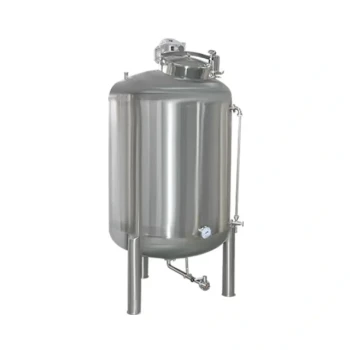
Storage equipment serves as the strategic economic lever in the honey supply chain, not merely a passive holding area. Its primary function is to provide a dry, cool, and controlled environment that preserves the biological activity and nutritional content of honey, beeswax, and pollen during off-harvest seasons. By stabilizing the product, this equipment empowers beekeepers to regulate supply flow, allowing them to time their sales for the most profitable market conditions rather than being forced to sell immediately upon harvest.
Core Takeaway Storage equipment transforms honey from a perishable commodity into a stable asset. By maintaining strict environmental controls, it prevents spoilage and fermentation, allowing producers to bridge the gap between seasonal production and year-round market demand to maximize economic returns.
Preserving Value Through Market Timing
The most immediate impact of proper storage equipment is economic. It decouples the production cycle from the sales cycle.
Regulating Supply and Demand
Honey production is seasonal, but demand is often constant. Controlled storage allows producers to hold inventory during the harvest when prices may be low due to oversupply.
Maximizing Economic Return
By preserving the product's integrity during off-seasons, producers can release stock when market scarcity drives prices up. This capability is essential for converting total production volume into maximum financial yield.
Ensuring Product Consistency and Quality
Beyond economics, industrial storage equipment plays a vital technical role in standardizing the product. This is critical for meeting the strict requirements of high-end retail markets.
Homogenization for Uniformity
Industrial-grade storage tanks, often equipped with stirring systems, allow for the mixing of different honey batches. This ensures a consistent color, moisture content, and flavor profile across large-scale exports, removing natural batch-to-batch variability.
Preventing Crystallization and Fermentation
Tanks equipped with heating or constant temperature control systems actively manage the honey's physical state. This technology prevents unwanted crystallization and stops fermentation, which can ruin the product's marketability during long-term storage.
Logistical Efficiency and Safety
The physical design of storage containers directly impacts the speed and safety of the supply chain.
Protection from Environmental Contaminants
Honey is hygroscopic, meaning it readily absorbs moisture and odors from the air. Specialized containers made from food-grade stainless steel or high-density synthetics provide a sealed barrier that prevents moisture absorption, which is the leading cause of fermentation and spoilage.
Standardization for Transport
Standardized container designs facilitate efficient logistics. They allow for uniform stacking, reduce breakage rates during transport, and serve as the physical hardware necessary for accurate inventory management and product traceability.
Understanding the Trade-offs
While advanced storage equipment offers significant advantages, it introduces specific challenges that must be managed.
Capital Intensity vs. Quality Assurance
High-performance equipment, such as stainless steel tanks with temperature controls, represents a significant upfront capital investment. However, relying on sub-par or non-food-grade storage to save money poses a high risk of chemical migration and product loss due to spoilage.
Complexity of Maintenance
Maintained environments require constant monitoring. If a temperature control system fails or a seal is compromised, a large volume of high-value inventory can be lost quickly to fermentation or contamination.
Making the Right Choice for Your Goal
Selecting the right storage strategy depends on where you aim to position your product in the market.
- If your primary focus is maximizing profit margins: Prioritize temperature-controlled storage that allows you to hold inventory safely for months to await peak market pricing.
- If your primary focus is large-scale export or retail: Invest in industrial tanks with homogenization capabilities to ensure the batch consistency required by supermarkets.
- If your primary focus is product purity and organic certification: Ensure all containers utilize verified food-grade materials to prevent chemical migration and maintain natural physicochemical indicators.
Storage equipment is the foundational hardware that secures both the biological quality of the honey and the financial stability of the producer.
Summary Table:
| Key Role | Primary Benefit | Specific Mechanism |
|---|---|---|
| Market Timing | Higher Profit Margins | Decouples harvest cycles from sales, allowing storage for peak pricing. |
| Quality Preservation | Product Stability | Controls temperature/humidity to prevent fermentation and crystallization. |
| Standardization | Batch Consistency | Homogenization systems ensure uniform color, moisture, and flavor profile. |
| Logistics & Safety | Reduced Loss | Food-grade sealed barriers prevent contamination and hygroscopic spoilage. |
| Inventory Management | Supply Stability | Provides a buffer to bridge the gap between seasonal production and year-round demand. |
Secure Your Harvest Value with HONESTBEE
At HONESTBEE, we understand that storage is not just about holding honey—it's about protecting your investment. We provide commercial apiaries and distributors with professional-grade storage tanks, honey-filling machinery, and complete beekeeping equipment designed to turn your production into a stable, high-value asset.
Whether you are looking to scale your export capabilities with homogenization systems or need food-grade solutions to maintain organic certifications, our comprehensive wholesale offering has you covered.
Ready to optimize your supply chain?
Contact HONESTBEE Today for Custom Equipment Solutions
References
- M. Audu, B. H. Gabdo. Stochastic production function and costs-returns analyses of apiarists in Adamawa State, Nigeria. DOI: 10.15547/ast.2020.01.009
This article is also based on technical information from HonestBee Knowledge Base .
Related Products
- Stainless Steel Honey Storage Tank with Lid for Honey
- Stainless Steel Honey Storage and Settling Tank with Double Strainer
- Professional Honey Storage Tank with Agitation System
- Hexagonal Glass Honey Jar with Wooden Lid Integrated Dipper Elegant Functional Storage
- Stainless Steel Honey Tank Stand for Honey Storage
People Also Ask
- What economic role do honey storage tanks play? Boost Your Revenue Through Strategic Inventory Management
- What roles do industrial honey storage tanks and filtration meshes play in processing? Ensure Purity & Consistency
- What is the purpose of a honey storage tank? Streamline Your Honey Processing for Quality & Efficiency
- What are honey storage tanks used for? Essential Features for Quality Preservation and Profit
- How do large honey storage tanks and gravity fall filling systems improve honey packaging efficiency and safety?