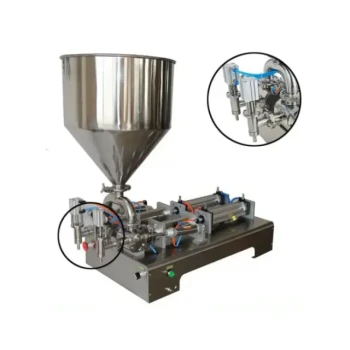
Industrial honey-filling machines fundamentally outperform manual operations by replacing human variability with calculated mechanical precision and environmental isolation. While manual filling is prone to inconsistency and contamination, industrial machines utilize high-precision metering pumps to ensure the net content of every unit is identical. Furthermore, by operating within a closed environment, these systems drastically reduce the honey's exposure to air and external impurities, directly translating to improved hygiene and shelf-life stability.
The transition from manual to industrial filling is not just about speed; it is a shift from estimation to volumetric certainty. The core technical advantage lies in the ability to isolate the product from the environment during the bottling process, preserving the honey's bioactive integrity while eliminating the physical waste associated with manual handling.
Precision and Volumetric Control
Eliminating Human Variability
Manual filling relies on visual estimation or basic scales, leading to fluctuations in net weight. Industrial machines employ high-precision metering pumps and quantitative filling systems.
Consistent Net Content
This technology ensures that every bottle meets exact weight specifications. This consistency is critical for regulatory compliance and consumer trust, ensuring no unit is under-filled or wastefully over-filled.
Waste Reduction via Anti-Drip Systems
Manual pouring often results in spills and drips, which accumulate as significant financial loss over time. Industrial equipment utilizes vacuum anti-drip mechanisms and precision valves to ensure the product goes into the bottle, not onto the production floor.
Hygiene and Bioactive Preservation
The Closed-Loop Advantage
The primary reference highlights that industrial machines operate within a closed environment. This effectively isolates the honey from the surrounding atmosphere, eliminating the "open-air" risks inherent in manual ladling or pouring.
Preventing Secondary Contamination
Human contact is the primary vector for introducing pathogens or impurities into food products. Automated bottling minimizes human interaction with the open product, significantly lowering the risk of secondary contamination from operators or the facility environment.
Preserving Chemical Stability
Honey contains oxygen-sensitive bioactive substances, such as inhibines, phenolic antioxidants, and vitamins. By reducing exposure to air during the fill, industrial machines preserve these pharmacological properties, ensuring the product retains its health benefits from the apiary to the consumer.
Moisture Control
Honey is hygroscopic, meaning it absorbs moisture from the air. The integrated sealing technology and rapid filling cycles of industrial machines prevent moisture absorption, which can otherwise lead to fermentation and spoilage.
Operational Efficiency and Aesthetics
Scalable Throughput
Automated workflows allow for continuous operation at speeds manual labor cannot match. This high-speed throughput transforms beehive products into commercial goods efficiently, removing the bottleneck of packaging from the production line.
Visual Standardization
Beyond the liquid itself, industrial machines ensure the visual consistency of the package. Uniform fill lines and standardized sealing improve the aesthetic appeal of the product on the retail shelf, meeting modern consumer expectations for premium goods.
Understanding the Trade-offs
Maintenance and Calibration Requirements
While machines offer superior precision, they require strict technical oversight. Metering pumps must be calibrated regularly to maintain accuracy, and the "closed environment" requires rigorous clean-in-place (CIP) protocols to prevent cross-batch contamination.
Flexibility Limitations
Manual filling is highly adaptable to different jar shapes on the fly. Industrial machines require specific tooling and setup time to switch between container sizes. This rigidity means that while they are efficient for large runs, they may offer less agility for very small, custom batches compared to manual methods.
Making the Right Choice for Your Goal
To determine if an industrial filling solution aligns with your specific processing needs, consider your primary operational objectives:
- If your primary focus is Product Quality and Bioactivity: Industrial filling is essential to minimize oxidation and preserve sensitive enzymes like inhibines through closed-environment processing.
- If your primary focus is Regulatory Compliance: The volumetric precision of metering pumps provides the strict net-weight consistency required for retail standardization.
- If your primary focus is Market Competitiveness: The combination of reduced labor costs and standardized visual appeal allows for a more competitive price point in global markets.
True technical optimization in honey processing occurs when you view the filling machine not just as a labor-saving device, but as a preservation tool that locks in quality at the critical moment of packaging.
Summary Table:
| Feature | Manual Filling | Industrial Filling Machine | Benefit of Automation |
|---|---|---|---|
| Filling Accuracy | Visual estimation (High variance) | High-precision metering pumps | Ensures regulatory compliance & reduces waste |
| Hygiene Level | Open-air exposure (High risk) | Closed-loop environment | Prevents contamination & moisture absorption |
| Product Integrity | Risk of oxidation | Minimal air contact | Preserves bioactive enzymes and antioxidants |
| Speed & Throughput | Slow/Labor intensive | Continuous high-speed output | Dramatically increases commercial scalability |
| Drip Control | Frequent spills/manual cleanup | Vacuum anti-drip mechanisms | Minimizes product loss and maintains clean floors |
| Visual Appeal | Inconsistent fill lines | Standardized fill levels | Enhances brand trust and retail aesthetics |
Elevate Your Honey Production with HONESTBEE
Transitioning from manual bottling to automated precision is a game-changer for commercial apiaries and distributors. At HONESTBEE, we specialize in empowering your business with high-performance honey-filling machines and a comprehensive range of beekeeping tools and machinery designed for the modern industry.
Why partner with HONESTBEE?
- Precision Engineering: Our machinery ensures every drop is accounted for, eliminating waste and meeting strict net-weight standards.
- Quality Preservation: Protect the bioactive integrity of your honey with our advanced closed-environment systems.
- Wholesale Expertise: From hive-making equipment to honey-themed cultural merchandise, we provide the full spectrum of consumables for your success.
Ready to scale your operations and improve your product's market competitiveness?
Contact HONESTBEE Today for a Wholesale Quote
References
- Savella Deanova Supatno, Riswandha Risang Aji. Identifikasi Potensi Eduwisata Perlebahan Gunung Guntur. DOI: 10.29313/bcsurp.v4i3.14011
This article is also based on technical information from HonestBee Knowledge Base .
Related Products
- Commercial Rotary Honey Filling Machine for Production
- Precision Durable Efficient HONESTBEE Rotary Honey Filling Machine
- Fully Automatic Honey Filling Packaging Machine for Processing Line
- Automatic Honey Filling and Filtering Machine for Beekeeping Bottle Filling
- Economy Small Honey Filling Machine Honey Bottle Filler Packaging Machine
People Also Ask
- What role do commercial honey filling machines play in honey distribution? Scaling Efficiency and Quality Control
- What technical support do commercial-grade filling machines provide? Convert Honey NTFPs into Marketable Commodities
- What is the significance of specialized honey filling equipment? Scaling from Beekeeping to Commercial Success
- Why is professional honey filling machinery critical for honey production? Scale Your Apiary's Profit & Efficiency
- Why is high-capacity honey filling machinery necessary for Giant Honey Bees? Solve the Apis dorsata Volume Crisis