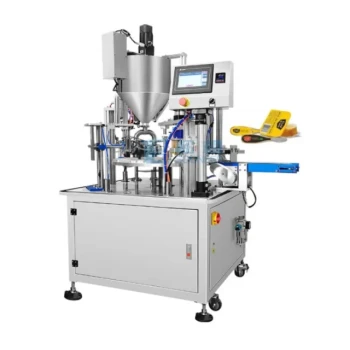
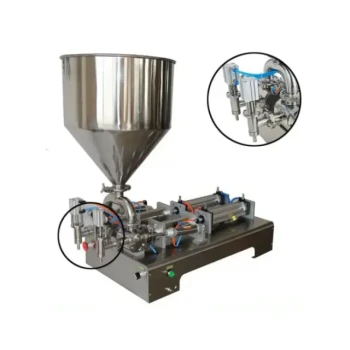
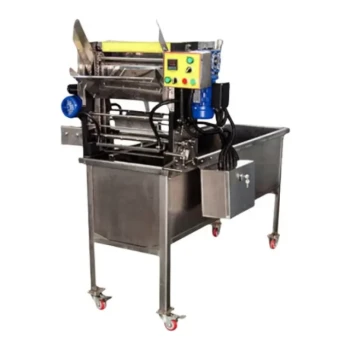
Implementing automated honey filling systems fundamentally transforms the economic structure of large-scale apiaries by driving down operational costs and enforcing rigorous product standardization. These systems do not merely speed up production; they serve as a critical lever for optimizing the supply chain, significantly reducing the cycle time from harvest to market while minimizing labor expenditures.
Core Takeaway Automation allows commercial apiaries to transition from traditional manual processing to industrial-grade manufacturing. By ensuring precise volume control and high-speed throughput, these systems maximize yield recovery and free up human resources for high-value colony management tasks.
Optimizing Direct Financial Performance
Reducing Labor Costs
The most immediate economic impact is the drastic reduction in manual labor requirements during the bottling phase. Automated lines replace the need for large teams to hand-fill containers, lowering payroll expenses associated with seasonal processing staff. This shifts the cost structure from variable labor expenses to a fixed asset investment, stabilizing long-term financial planning.
Precision and Yield Maximization
Automated systems utilize high-precision quantitative filling technologies to ensure consistent net product weight. In manual operations, overfilling is a common "hidden cost" used to ensure compliance, resulting in significant product giveaway over thousands of units. Automation eliminates this waste, ensuring every ounce of harvested honey contributes to revenue.
Regulatory Compliance and Standardization
By guaranteeing that every unit meets strict weight specifications, apiaries avoid the legal and financial risks of under-filling. This standardization creates a retail-ready product that meets the stringent requirements of the modern food industry, facilitating easier entry into large-scale commercial distribution channels.
Enhancing Operational Efficiency and Throughput
Accelerating the Harvest-to-Market Cycle
For large operations, the speed at which raw honey is converted into a finished product is critical. Automated lines shorten the processing cycle, allowing apiaries to capitalize on market demand rapidly. This velocity is essential for maintaining cash flow during peak harvest seasons.
Preventing Spoilage and Loss
Manual filling is often a bottleneck that leaves raw honey waiting in bulk storage. Automation enables the rapid processing of large volumes during peak harvest years, reducing the risk of secondary loss or spoilage due to prolonged exposure or inefficient handling. This resilience ensures that the maximum amount of harvested product reaches the point of sale.
Strategic Resource Allocation
Shifting Focus to Colony Health
A frequently overlooked economic benefit is the ability to redirect labor to core agricultural tasks. By automating the post-harvest process, skilled beekeepers are released from the bottling line to focus on colony management.
Proactive Disease Management
Specifically, this labor reallocation allows for more timely and effective treatment of threats like the Varroa destructor mite. Improved focus on colony health reduces winter mortality rates, preserving the apiary's primary asset—the bees themselves—and ensuring consistent production capacity for future seasons.
Risk Management and Quality Control
Minimizing Contamination Risks
Automated systems significantly enhance hygiene control by removing human contact from the filling process. This minimizes the risk of secondary contamination, ensuring food safety standards are met without improved manual oversight.
Brand Protection
Consistently hygienic, accurately weighed products protect the apiary’s brand reputation. In a competitive market, product consistency is a key driver of customer trust and repeat business, serving as a long-term economic moat.
Understanding the Trade-offs
Capital Expenditure vs. Operational Expenditure
While operationally efficient, these systems require significant upfront capital investment. Small or mid-sized apiaries may find the return on investment (ROI) too slow if their production volume does not justify the initial expense of industrial-grade machinery.
Maintenance and Skill Gaps
Transitioning to automation introduces a new layer of technical complexity. The economic gains can be offset if the apiary lacks the technical expertise to maintain the equipment. Downtime on an automated line is more costly than a slowdown in manual processing, requiring a robust maintenance strategy to ensure reliability.
Making the Right Choice for Your Goal
To maximize the value of an automated system, align the investment with your specific operational bottleneck.
- If your primary focus is Profit Margin: Prioritize machines with the highest filling precision to eliminate product giveaway and maximize revenue per gallon.
- If your primary focus is Colony Health: Use the labor hours saved by automation to implement rigorous Varroa mite treatment schedules and winter prep.
- If your primary focus is Market Expansion: Select systems that offer "retail-ready" packaging speeds to meet the volume demands of large distributors.
True economic efficiency in apiculture comes not just from working faster, but from standardizing your output to turn a variable natural resource into a consistent commercial product.
Summary Table:
| Economic Driver | Manual Processing | Automated Systems | Impact on Profitability |
|---|---|---|---|
| Labor Costs | High variable costs (seasonal staff) | Lower fixed costs (minimal staff) | Increases long-term margins |
| Filling Precision | Low (common overfilling/waste) | High-precision quantitative filling | Maximizes yield & revenue |
| Throughput Speed | Slow / Production bottleneck | High-speed industrial throughput | Faster cash flow & market entry |
| Resource Focus | Staff tied to bottling lines | Staff redirected to colony health | Reduces bee mortality & losses |
| Product Quality | Variable standardization | Rigorous food-grade consistency | Enhances brand & retail trust |
Scale Your Honey Production with HONESTBEE
Transition from manual labor to industrial-grade efficiency with HONESTBEE. We specialize in supporting commercial apiaries and distributors with a complete range of high-performance beekeeping tools and machinery.
Our automated honey-filling machines are designed to eliminate product giveaway, reduce labor overhead, and ensure your honey is retail-ready for global distribution. Beyond machinery, we provide the essential consumables and hive-making equipment needed to sustain a thriving apiculture business.
Ready to maximize your apiary's economic potential?
Contact HONESTBEE Today to explore our wholesale equipment solutions and expert technical support.
References
- Duran GÜLER. TÜRKİYE’DE İLLERE GÖRE ARICILIK ETKİNLİĞİNİN VERİ ZARFLAMA ANALİZİ İLE BELİRLENMESİ. DOI: 10.31467/uluaricilik.940167
This article is also based on technical information from HonestBee Knowledge Base .
Related Products
- Fully Automatic Honey Filling Packaging Machine for Processing Line
- Automatic Honey Filling and Filtering Machine for Beekeeping Bottle Filling
- Semi Automatic Small Honey Bottle Filling Machine Honey Filler
- Precision Automated Packaging Turntable Honey Spoon Filling Sealing Packing Machine
- Precision Durable Efficient HONESTBEE Rotary Honey Filling Machine
People Also Ask
- Why are fully automatic honey filling and packaging lines essential? Boost Your Honey's Market Value and Quality
- What is a fully-automatic honey filler? Streamline Your Production with High-Precision Automation
- How do automated honey filling and packaging machines affect profitability? Boost Margins with HONESTBEE Technology
- How do automated honey filling and packaging machines contribute to the market value of honey products? Maximize Your ROI
- How do industrial-grade automated honey filling and packaging machines mitigate the risk of physical contamination?