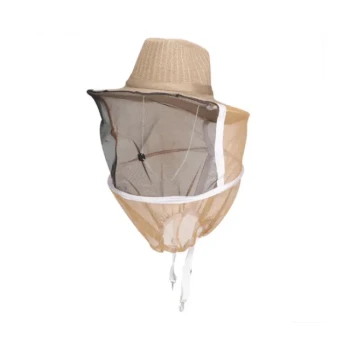
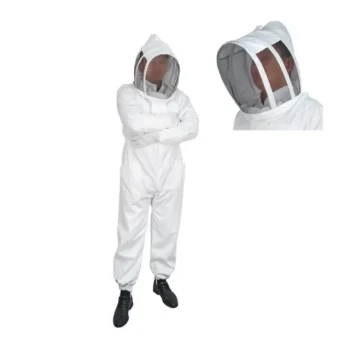
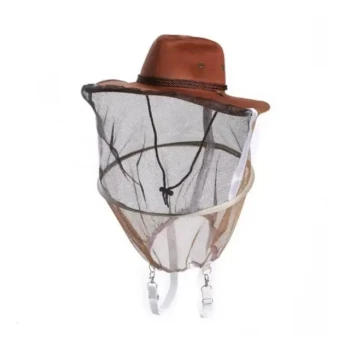
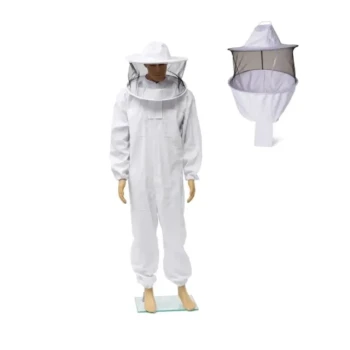
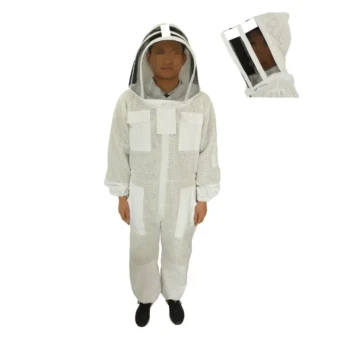
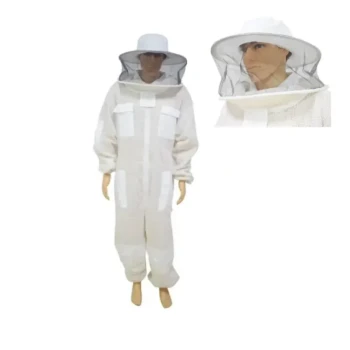
Beekeeping suits primarily rely on two distinct veil designs to balance safety with visibility: the fencing (or sheriff-style) veil and the round veil. These designs are engineered to offer an unobstructed view of the hive while establishing a secure, sting-resistant barrier around the face and neck.
Whether you choose a fencing style or a round style, the effectiveness of a beekeeping veil relies on a combination of premium materials and structural reinforcement to maintain a safe distance from the face without compromising your line of sight.
Common Veil Configurations
To perform hive inspections safely, beekeepers typically select one of two primary veil shapes.
The Fencing or Sheriff-Style Veil
This is a widely used design integrated into many modern beekeeping suits. It is engineered specifically to provide clear vision, allowing the beekeeper to spot eggs and larvae efficiently.
The Round Veil
The round veil is the standard alternative to the fencing style. Like the sheriff-style, its primary function is to offer an unobstructed view of the bees and the hive environment while keeping the mesh away from the skin.
Critical Construction Features
Regardless of the specific shape (fencing or round), a veil must effectively balance visibility with physical protection. Several key design elements facilitate this balance.
Material Composition
Veils are typically constructed from a blend of premium cotton and synthetic materials. This combination is chosen to offer durability for long-term use while maintaining enough comfort for extended wear.
Structural Reinforcement
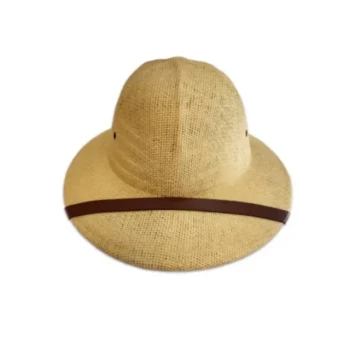
To prevent the mesh from collapsing against the face—which would create a sting risk—veils often feature an integrated soft hat and reinforced brims at the top and bottom. These rigid elements ensure the protective barrier maintains its shape.
Neck and Shoulder Integration
Safety extends beyond just the face. Effective veils utilize an oversized mesh designed to drape over the neck and shoulders. This is secured by elastic shoulder straps, which keep the veil firmly in place during movement to prevent bees from crawling underneath.
Understanding the Trade-offs
While veils are essential for safety, they introduce specific challenges that the design must mitigate.
Visibility vs. Mesh Density
The core challenge is providing a barrier that is impenetrable to bees but transparent to the human eye. The design relies on the unobstructed view provided by the mesh structure, but this requires the mesh to be kept taut and away from the face by the reinforced brims.
Mobility vs. Security
The oversized mesh offers great coverage but can shift during inspection. The inclusion of elastic shoulder straps is the critical counter-measure here, restricting the veil's movement to ensure the seal remains tight even when the beekeeper bends over a hive.
Making the Right Choice for Your Goal
Selecting the right protective gear depends on prioritizing which features matter most for your specific workflow.
- If your primary focus is visibility: Ensure the veil design—whether fencing or round—specifically prioritizes an unobstructed view to facilitate detailed hive inspections.
- If your primary focus is security: Verify the presence of elastic shoulder straps and reinforced brims to guarantee the veil remains a secure barrier during movement.
Ultimately, the best veil is one that maintains a rigid structure around your face while integrating seamlessly with the suit to prevent bee entry.
Summary Table:
| Feature | Fencing (Sheriff) Veil | Round Veil |
|---|---|---|
| Primary Benefit | Excellent visibility for spotting eggs/larvae | Traditional, unobstructed 360° field of view |
| Design Shape | Contoured, flip-back style | Wide, circular brim structure |
| Safety Mechanism | Integrated soft hat & reinforced brims | Reinforced rigid top and bottom brims |
| Security Feature | Elastic shoulder straps for tight seal | Elastic straps to prevent mesh shifting |
| Material | Premium cotton & synthetic mesh blend | Durable cotton & heavy-duty synthetic mesh |
Elevate Your Beekeeping Operations with HONESTBEE
At HONESTBEE, we specialize in empowering commercial apiaries and beekeeping distributors with top-tier equipment designed for safety and efficiency. Whether you need professional-grade suits featuring high-visibility veils, advanced hive-making machinery, or honey-filling solutions, our comprehensive wholesale portfolio has you covered.
Why partner with HONESTBEE?
- Full Spectrum Supply: From essential consumables to specialized hardware.
- Built for Professionals: Our gear is engineered to withstand the demands of large-scale operations.
- Market Variety: We offer everything from heavy machinery to honey-themed cultural merchandise to help grow your brand.
Ready to scale your apiary or restock your distribution channel? Contact us today to discover how our wholesale solutions can drive your success!
Related Products
- Beekeeper Cowboy Hat and Veil for Beekeeping
- Professional Square Folding Wire Mesh Beekeeping Veil
- Premium Cotton Beekeeper Suit with Reinforced Fencing Veil
- Premium Cowboy Beekeeper Hat with Visibility Veil Outdoor Professional Beekeeping Protective Gear
- White Cotton Beekeeping Jacket and Veil for Bee Keepers
People Also Ask
- What is the correct way to wash a beekeeping hat and veil? Safe Hand-Washing Guide to Protect Your Gear
- What are the components and importance of a beekeeper's hat and veil? Essential Safety Gear for Apiary Success
- What are the differences between a separated and an attached beekeeping hat and veil? Security vs. Versatility
- What are the design specifications for an effective beekeeping hat and veil? Professional Standards for Protection
- What is the function of a beekeeping hat and veil? Essential Protection for Safe Hive Management