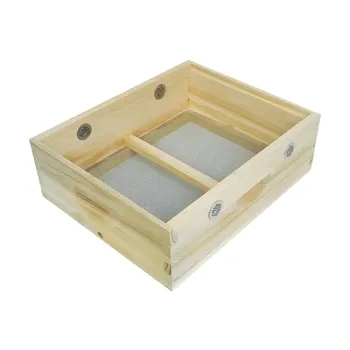
Specify clear, well-seasoned softwood with minimal defects when purchasing or manufacturing wooden beehive boxes. Premium pine, red cedar, or cypress should be prioritized because they combine manageable weight, workable strength, insulation, and outdoor durability. The lumber must be free of major knots, chemical treatments, excessive moisture, and repellent odors, while being accurately milled to ensure tight sealing, stable stacking, and interchangeable components.
The critical purchase standard is not simply the wood species or nominal grade. It is consistent, well-milled, non-toxic, properly seasoned softwood with no structural defects that could create openings, warping, rot, or excessive hive weight.
What Makes Lumber Suitable for Beehive Boxes
Choose Lightweight Softwood
Hive bodies and honey supers become significantly heavier when filled with frames, bees, and honey. Pine, cedar, cypress, fir, and spruce are generally suitable because they offer a practical strength-to-weight ratio and are easy to machine.
Hardwoods should usually be avoided for standard hive boxes. Their added weight can make routine inspections, transport, and honey harvesting unnecessarily difficult.
Prioritize Clear or Defect-Free Boards
High-grade, knot-free lumber is especially important for hive bodies, supers, and other large structural components. Large black knots can weaken boards, promote cracking, and eventually fall out after repeated exposure to sunlight and weather.
A knot that appears harmless at purchase can shrink and detach over time. The resulting hole may compromise the hive's weather resistance, pest defense, thermal regulation, and colony security.
Use Seasoned, Dimensionally Stable Timber
The wood should be well seasoned before assembly. Excessively wet lumber is more likely to shrink, twist, split, or open gaps as it dries.
Stable boards help the hive maintain accurate dimensions through seasonal changes in rain, heat, and frost. This is essential when boxes, frames, covers, and bottom boards must remain compatible across a commercial apiary.
Which Wood Species Usually Work Best
Pine for Cost and Availability
Pine is widely available, relatively affordable, lightweight, and straightforward to cut and assemble. Clear pine is a strong choice when the buyer needs consistent appearance and reduced risk of knot-related failure.
Standard, locally available pine can also support more reliable commercial sourcing than expensive or exotic species. For distributors and manufacturers, consistent regional supply is often more valuable than a marginal material advantage.
Cedar for Natural Weather Resistance
Red cedar offers natural resistance to rot, pests, and outdoor weathering. It is well suited to apiaries where hive boxes are exposed to moisture and changing temperatures.
Cedar can cost more than pine, so it is often positioned as a premium option. Its durability may justify the higher purchase price when long service life and reduced material degradation are central requirements.
Cypress for Durability
Cypress is another durable softwood commonly used for hive bodies and frames. It provides outdoor performance while remaining more manageable than hardwood.
Its suitability depends on regional availability, price, and the manufacturer's ability to obtain consistent dimensions and quality. A readily available, well-processed species is generally preferable to an inconsistent premium alternative.
Lumber Criteria Manufacturers Should Inspect
Reject Major Knots and Structural Defects
Inspection should identify large black knots, loose knots, cracks, splits, voids, severe grain distortion, and other defects that could weaken joints or create openings.
Small, tight knots may be acceptable in some standard-grade lumber, but critical structural surfaces should be selected for minimal defects. For premium products, a clear or nearly knot-free specification provides a more dependable quality standard.
Check Moisture and Seasoning
Boards should be sufficiently seasoned for the intended manufacturing and storage conditions. Moisture variation between boards can cause uneven shrinkage and dimensional instability after assembly.
Suppliers should apply a consistent moisture and storage standard rather than relying only on visual inspection. Covered, ventilated storage also helps prevent the lumber from absorbing moisture before production.
Confirm Accurate Milling
Hive components should be straight, square, and accurately dimensioned. Properly milled boards create tighter joints, flatter box edges, easier stacking, and more reliable frame alignment.
Precision matters especially for distributors selling interchangeable equipment. Small dimensional inconsistencies can create compatibility problems across boxes, supers, frames, covers, and bottom boards.
Avoid Repellent Odors and Toxic Treatments
The lumber must not emit strong odors that could discourage bees from occupying the equipment. More importantly, pressure-treated wood containing CCA or other harsh chemical preservatives must be excluded because of toxicity and contamination concerns.
Non-toxic, untreated timber is the appropriate baseline for hive interiors and wooden components that contact the colony or hive products. Protective coatings should be applied only where suitable for the hive's exterior surfaces.
Consider Joint and Fastener Performance
Wood selection and assembly quality are closely connected. Boards that split easily can reduce the strength and service life of the finished box.
Manufacturers should use appropriate joints and pre-drill where necessary before driving nails or screws. This is particularly important near board ends and corners, where splitting can compromise both appearance and structural stability.
Match the Box Design to Handling Requirements
Use Deep Boxes for Brood Chambers
Traditional hive configurations commonly use 10-frame or 8-frame deep boxes approximately 9 5/8 inches deep for brood chambers. Deep boxes provide the volume needed for brood-rearing areas.
The exact configuration should also reflect colony size, bee type, and local climate. Equipment should be standardized within the operating system so replacement components remain compatible.
Use Medium or Shallow Boxes for Honey
Medium boxes, commonly approximately 6 5/8 inches deep, are easier to lift when filled with honey than deep boxes. Shallow supers can also reduce handling weight, depending on the operation's equipment standards.
For commercial users, the right choice is a balance between colony capacity, honey production, labor, and interchangeability. A lighter box can improve handling efficiency even if it requires more boxes in the apiary.
Consider an All-Medium System
Some beekeepers standardize both brood chambers and honey supers around medium boxes. This approach keeps individual boxes lighter and allows frames to be exchanged throughout the apiary.
Standardization can simplify purchasing, inventory management, repairs, and order fulfillment. It is most valuable when the entire equipment fleet follows the same dimensional system.
Protect the Wood After Manufacturing
Apply an Exterior Protective Finish
Paint or another suitable exterior coating helps protect wooden boxes from rain, sunlight, and repeated seasonal exposure. Protective oil-based paint is one approach referenced for reducing weather-related wood degradation.
The coating should be limited to appropriate exterior surfaces and applied without contaminating hive interiors. Maintenance remains necessary even when naturally durable wood is used.
Design the Top Cover for Weather and Access
A waterproof top cover should rest securely on the super chamber edges. It must shed water while remaining easy to lift during routine inspections.
Good cover design protects the timber and reduces disturbance to the colony during handling. The cover should also fit consistently across the product range.
Understanding the Trade-offs
Clear Lumber Versus Standard-Grade Lumber
Clear, knot-free lumber offers better appearance, reduced defect risk, and stronger long-term reliability, but it generally costs more and may be less available.
No. 2 pine or similar standard-grade softwood can be practical for cost-sensitive production when boards are carefully selected and major knots, cracks, and voids are removed. The grade name alone should not replace an actual defect and dimensional inspection.
Cedar and Cypress Versus Pine
Cedar and cypress provide stronger natural resistance to rot and weathering. Pine is usually easier to source economically and can perform well when properly seasoned, assembled, painted, and maintained.
The best commercial specification therefore depends on the target price, climate, expected service life, and supply consistency. A reliable supplier should be able to offer both economical and premium material options without changing essential safety and dimensional standards.
Durability Versus Weight
More durable wood can extend service life, but dense or heavy material increases the labor required to inspect, move, and harvest from hives. Hardwood may appear robust but is generally a poor choice for full honey supers because of its handling weight.
For most operations, lightweight durable softwood provides the better overall balance.
Premium Quality Versus Supply Continuity
Exotic or difficult-to-source wood can create purchasing delays, inconsistent production, and higher costs. Standard regional species from dependable lumberyards are usually better suited to recurring commercial supply.
For distributors and wholesalers, quality consistency, rapid replenishment, and accurate fulfillment are part of the product specification. A slightly less prestigious species with stable supply may deliver more value than a premium species that cannot be sourced reliably.
How to Apply This to Your Project
Use the following priorities when writing a purchase specification or evaluating a manufacturing supplier:
- If your primary focus is maximum service life: Specify seasoned cedar, cypress, or clear pine with strong resistance to moisture-related degradation, accurate milling, and a maintainable exterior protective finish.
- If your primary focus is cost control: Use readily available standard-grade pine or another suitable softwood, provided each board is screened for major knots, cracks, voids, excessive moisture, and dimensional defects.
- If your primary focus is easy handling: Select lightweight softwood and consider medium or shallow boxes for honey production, or standardize the apiary around medium boxes.
- If your primary focus is commercial compatibility: Require consistent box dimensions, square edges, interchangeable frames, reliable joints, and repeatable quality across every shipment.
- If your primary focus is colony and product safety: Require untreated, non-toxic, low-odor lumber and exclude CCA-treated or otherwise chemically preserved wood from hive construction.
The right beehive box begins with defect-controlled, non-toxic, dimensionally stable softwood matched to the colony, climate, handling system, and supply requirements.
Summary Table:
| Wood Species | Key Benefits | Considerations |
|---|---|---|
| Pine | Affordable, lightweight, easy to machine | May require more maintenance; choose clear for fewer knots |
| Cedar | Natural rot and pest resistance | Higher cost than pine |
| Cypress | Durable, moisture-resistant | Availability may vary; premium price |
| Critical Criteria | Why It Matters |
|---|---|
| Knot-free lumber | Prevents weaknesses and holes that compromise hive integrity |
| Seasoned wood | Ensures dimensional stability and reduces warping |
| Accurate milling | Ensures tight joints and interchangeable components |
| Non-toxic, untreated | Protects bees and hive products from contamination |
| Lightweight softwood | Eases handling and reduces labor during inspections |
Looking for reliable beehive boxes that meet these standards? HONESTBEE, your one-stop wholesale partner for beekeepers and distributors, offers premium pine, cedar, and cypress hives, meticulously crafted from defect-free, well-seasoned wood. Our commitment to quality, fast delivery, and dedicated service ensures your apiary operations run smoothly. Contact us today for a quote and experience the HONESTBEE difference — Get in touch now!
Related Products
- Wooden Bee Hive Frames for Beekeeping and Wholesale
- Wholesales Dadant Size Wooden Bee Hives for Beekeeping
- Assembled Wooden Bee Frames with Plastic Foundation for Durability and Convenience by HONESTBEE
- HONESTBEE Wired and Assembled Wooden Bee Frames Foundation for a Thriving Hive
- Australian Langstroth Beehive Boxes for Beekeeping Wholesales
People Also Ask
- How do wooden and plastic hive frames compare in terms of durability? Wood vs. Plastic Longevity & Repairability
- How does balancing the number of frames impact hive productivity? Optimize Your Apiary's Biological Output
- What are the main considerations when choosing between wooden and plastic bee hive frames? Optimize Your Apiary's Efficiency
- How should beehive frames be maintained to prolong their lifespan? 5 Pro Tips for Durable Beekeeping Equipment
- Can I reuse old beehive frames? Save Money and Boost Hive Productivity