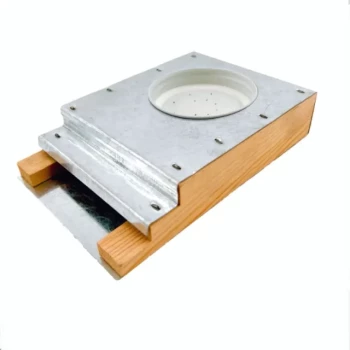
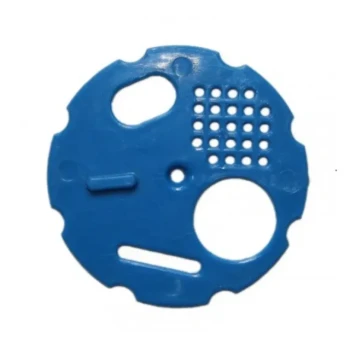
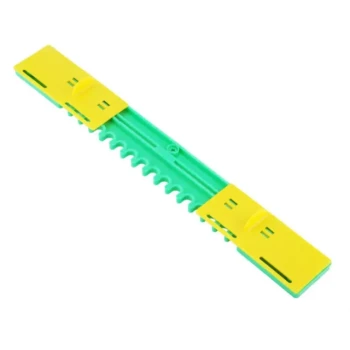
You should use a beehive entrance reducer primarily when a colony is establishing itself, recovering from weakness, or enduring harsh seasonal conditions. Specifically, it is recommended for use when installing new bee packages or nucleus colonies (nucs), during the winter months to conserve heat, and whenever a colony's population is too low to effectively defend a full entrance.
Core Takeaway: The entrance reducer is a regulatory tool that helps a colony balance its internal resources against external threats; it artificially decreases the defensive perimeter and thermal exchange until the bee population is strong enough to manage the hive without assistance.
Managing Colony Vulnerability
The primary function of an entrance reducer is to align the size of the hive opening with the colony's current ability to defend it.
Protecting New Installations
When you install a new package of bees or a nucleus colony, you must immediately install the entrance reducer.
The smallest opening setting is the standard recommendation for these scenarios. This allows the disorganized or small population to focus on establishing the brood nest rather than guarding a massive gap.
Supporting Weak Colonies
A colony with low numbers cannot defend the same surface area as a booming summer hive.
If you identify a colony as weak or small, restricting the entrance helps them repel intruders. This simple mechanical change compensates for their lack of "manpower."
Environmental and Seasonal Factors
Beyond population size, the entrance reducer is a critical tool for managing the hive's interaction with the climate and local ecosystem.
Winter Conservation
Using the reducer during winter months is common practice to assist with thermoregulation.
By shrinking the opening, you help the colony conserve heat generated by the winter cluster. Furthermore, supplementary data suggests this is vital for preventing pests, particularly mice, from seeking warmth inside the hive and destroying the comb.
Navigating Nectar Dearths
During periods of nectar dearth (when natural food sources are scarce), robbing behavior between hives increases.
Reducing the entrance makes the hive easier to defend against robber bees and wasps looking to steal honey.
Understanding the Trade-offs
While the reducer provides protection, leaving it on at the wrong time can hinder the colony's productivity and health.
The Traffic Bottleneck
During a heavy honey flow, a reduced entrance can cause a "traffic jam" of foragers trying to enter and exit.
If you see a bottleneck of bees at the entrance, the reducer is likely impeding pollen and nectar collection. In this scenario, the colony is usually strong enough to defend a fully open entrance, and the reducer should be removed or set to the largest opening.
Ventilation Issues
In extremely hot weather, a restricted entrance limits airflow.
Bees need to circulate air to cure honey and regulate temperature; a reducer can trap heat and moisture, potentially leading to overheating.
Making the Right Choice for Your Goal
Deciding when to adjust your entrance reducer depends on the immediate objective of your apiary management plan.
- If your primary focus is Colony Establishment: Use the smallest opening immediately upon installing a package or nuc to ensure security.
- If your primary focus is Overwintering: Install the reducer (or a dedicated mouse guard) to retain heat and exclude rodents.
- If your primary focus is Honey Production: Monitor the entrance during peak flows; if congestion occurs, remove the reducer to maximize foraging efficiency.
Your goal is to simulate the protection of a natural tree hollow while allowing the colony the freedom it needs to thrive.
Summary Table:
| Scenario | Recommended Setting | Primary Benefit |
|---|---|---|
| New Packages/Nucs | Smallest Opening | Easier defense & establishment |
| Weak/Small Colonies | Smallest Opening | Prevents robbing & intrusion |
| Winter Season | Smallest Opening | Conserves heat & excludes mice |
| Nectar Dearth | Smallest/Medium | Deters robber bees & wasps |
| Heavy Honey Flow | Fully Removed | Prevents traffic jams & aids ventilation |
| Extreme Heat | Fully Removed | Improves airflow & temperature control |
Scaling Your Apiary Operations with HONESTBEE
Effective hive management starts with the right tools. At HONESTBEE, we specialize in supporting commercial apiaries and distributors with a comprehensive range of high-quality beekeeping supplies. From precision-engineered beehive components and entrance reducers to industrial-grade honey-filling machines and hive-making equipment, we provide the infrastructure your business needs to thrive.
Whether you are looking for bulk essential consumables or specialized machinery to streamline your honey production, our wholesale offerings are designed for durability and efficiency.
Ready to elevate your beekeeping business? Contact us today to discuss our wholesale solutions and discover how HONESTBEE can power your professional success.
Related Products
- Steel Round Disc Entrance Reducer for Flexzion Bee Hive Nuc Box Gate
- Beehive Entrance Reducer Guardian Metal Hive Entrance for Bees
- HONESTBEE Entrance Bee Feeder Professional Hive Nutrition Solution for Beekeeping
- Beehive Entrance Discs Plastic Bee Entrance Disc for Bee Hives
- Professional Hive Front Entrance Bee Feeder
People Also Ask
- What is the purpose of an entrance reducer for a beehive? Strengthen Colony Defense and Prevent Robbery
- Why are entrance reducers used to counter hornet infestations? Protect Your Hive with Strategic Choke Points
- Why is it critical to maintain a smaller entrance for a newly established bee hive? Boost Colony Growth and Security
- Under what conditions should a beekeeper adjust the size of a beehive entrance? Seasonal & Defense Management Tips
- What is the function of an entrance reducer on a beehive? Strengthen Colony Defense and Climate Control