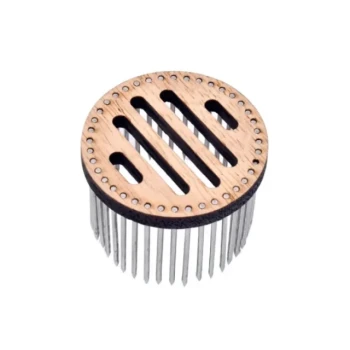
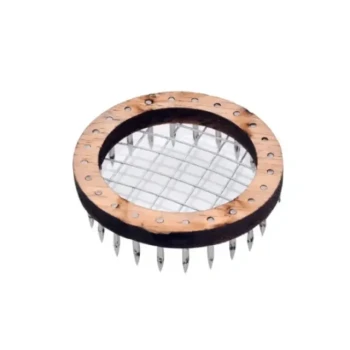
Laboratory pollination cages act as precise isolation tools that are critical for scientific accuracy. They create a controlled physical barrier that prevents outside insects from accessing specific crops, allowing researchers to measure the exact impact of honeybee pollination compared to crops where pollinators are excluded. Without this isolation, it is impossible to distinguish the specific economic contribution of honeybees from other environmental factors.
To determine the true economic value of pollination, you must be able to isolate cause and effect. Pollination cages facilitate a direct comparison between natural pollination and excluded groups, quantifying exactly how honeybees influence yield volume and crop quality.
The Necessity of Controlled Isolation
Eliminating Environmental Interference
In an open field, countless variables affect crop growth. Wind, wild insects, and varying weather patterns can all influence pollination.
Pollination cages eliminate this environmental noise. By establishing a physical barrier, they ensure that the results observed are strictly due to the presence or absence of the specific pollinators being studied.
Creating a Comparative Baseline
To calculate value, you need a control group. Cages allow researchers to isolate specific plant groups to facilitate an A/B test.
This enables a direct comparison between natural pollination (where bees are present) and excluded pollination (where bees are barred). This gap in performance is the raw data needed for economic valuation.
Quantifying Agricultural Metrics
Measuring Fruit Maturity
The speed and quality of fruit maturation often depend on successful pollination.
Using cages allows researchers to observe how honeybee access specifically impacts fruit maturity rates. This data helps farmers estimate harvest timelines and market readiness.
Calculating Seed Yield
Seed yield is a primary volume metric for many crops.
By isolating the crop, researchers can precisely quantify the seed yield attributed to honeybee activity versus self-pollination. This difference translates directly into revenue projections.
Assessing Nutritional Enhancement
Quality is just as important as quantity when determining economic value.
Pollination cages enable the measurement of subtle quality metrics, such as the enhancement of vitamin content. Proving that honeybees improve the nutritional profile of a crop adds a distinct value-add layer to their economic assessment.
Common Pitfalls in Methodology
The Danger of Uncontrolled Variables
Attempting to value pollination without cages introduces "confounding variables."
If you rely solely on open-field observation, you cannot prove that a high yield was caused by honeybees rather than a passing swarm of wild insects or favorable wind conditions. The lack of a physical barrier destroys data integrity, rendering any economic calculation speculative rather than scientific.
Validating Your Research Approach
To accurately assess the economic value of honeybee pollination, you must align your methods with your specific data requirements.
- If your primary focus is Volume: Use cages to isolate the specific increase in seed yield caused by honeybee access compared to the excluded baseline.
- If your primary focus is Quality: Utilize the controlled environment to measure improvements in fruit maturity and vitamin content, which command higher market prices.
Precise isolation is the only way to transform biological activity into hard economic data.
Summary Table:
| Metric Evaluated | Role of Pollination Cages | Economic Significance |
|---|---|---|
| Seed Yield | Isolates honeybee activity from wild pollinators. | Quantifies raw volume and revenue potential. |
| Fruit Maturity | Enables observation of ripening speed in a controlled zone. | Determines harvest timelines and market readiness. |
| Nutritional Profile | Protects plants for precise vitamin and nutrient analysis. | Justifies premium pricing for enhanced crop quality. |
| Data Integrity | Eliminates environmental noise (wind, wild insects). | Provides scientific proof for ROI calculations. |
Scaling Your Apiary Research and Operations with HONESTBEE
To translate scientific insights into commercial success, you need professional-grade equipment that stands up to industry demands. HONESTBEE is a leading partner for commercial apiaries and distributors, providing a comprehensive wholesale ecosystem designed for growth.
Whether you are conducting precision research with laboratory pollination cages or scaling up production, we offer:
- Specialized Machinery: From hive-making to honey-filling machines.
- Beekeeping Hardware: A full spectrum of durable tools and equipment.
- Industry Consumables: Essential supplies for daily apiary management.
- Cultural Merchandise: Honey-themed products to expand your brand reach.
Ready to elevate your beekeeping business or distribution network? Contact HONESTBEE today to discuss our wholesale offerings and discover how our expertise can drive your operational efficiency.
References
- Yahya Al Naggar, Anton Safer. Beekeeping and the Need for Pollination from an Agricultural Perspective in Egypt. DOI: 10.1080/0005772x.2018.1484202
This article is also based on technical information from HonestBee Knowledge Base .
Related Products
- Hexagonal Direct Comb Introduction Queen Bee Cage
- Removable Plastic Pollen Trap With Ventilated Tray for Bees Pollen Collector
- Professional Round Push-In Queen Cage with Metal Tines
- Premium Wood and Steel Push In Queen Cage
- Durable Plastic Push In Queen Bee Cage
People Also Ask
- What is the technical purpose of using an introduction cage? Ensure Safe Queen Bee Integration and Colony Acceptance
- How does the introduction cage method differ from standard cage insertion for queen bees? Best Acceptance Strategies
- What is the mechanism of action for using temporary queen bee cages? Master Successful Queen Introduction
- Why are specialized queen bee cages used for the banking of mated queen bees? Maximize Commercial Apiary Storage Efficiency
- What is the importance of specialized queen introduction cages and tools? Secure High-Value Genetics & Scalability.