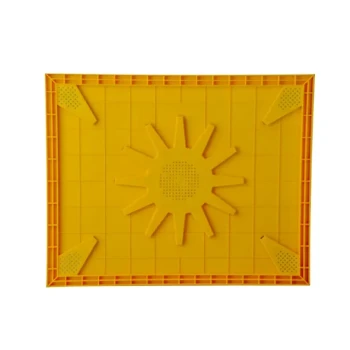
Plywood and hardboard are the preferred materials for the Morris Board because they provide superior dimensional stability within the aggressive environment of a beehive. Unlike standard timber, which is prone to warping under high heat and humidity, these engineered materials maintain a flat profile to ensure a precise, gap-free fit against the brood box.
The interior of a beehive is a high-humidity, high-temperature environment that causes many materials to deform. Plywood and hardboard are essential for the Morris Board because they resist warping, maintaining the critical physical seal required to manage the queen and worker bees effectively.
The Challenge of the Hive Environment
High Heat and Humidity
The interior of a beehive is not a static environment. It is a biologically active space that maintains high temperature and humidity levels to support brood rearing.
The Risk of Material Deformation
This variable environment poses a significant challenge for construction materials. Natural materials often expand, contract, or twist when exposed to moisture and heat cycles, leading to structural deformation.
Why Engineered Materials Succeed
Mechanical Strength and Stability
Plywood and hardboard are favored because they possess high mechanical strength and inherent resistance to warping. Their engineered structure allows them to remain dimensionally stable despite the fluctuating conditions inside the colony.
Ensuring a Tight Interface
The effectiveness of a Morris Board relies entirely on the precision of its fit. The warp-resistant nature of these materials ensures a tight fit between the board and the brood box interface.
Maintaining the Physical Barrier
If the material were to deform, gaps would open between the board and the box. These gaps could lead to queen escapes or disruptions in worker bee passage, compromising the integrity of the queen-rearing cycle.
The Consequence of Poor Material Choice
Compromising the System
The primary pitfall in Morris Board construction is selecting a material that lacks dimensional stability. Using materials prone to warping can render the device useless after a short period in the hive.
Disrupted Operations
Even a slight deformation breaks the physical seal. This failure not only risks the loss of the queen but can also invalidate the specific manipulations required for successful queen rearing.
Making the Right Choice for Hive Management
To ensure your Morris Board functions correctly, prioritize material stability over aesthetics or cost.
- If your primary focus is reliability: Choose high-grade plywood or hardboard to ensure the board remains flat and the queen remains contained.
- If your primary focus is longevity: Select materials known for high mechanical strength to withstand the constant humidity without delaminating or warping over time.
The success of your queen-rearing efforts depends on a physical barrier that remains impervious to the harsh environment of the hive.
Summary Table:
| Feature | Plywood/Hardboard | Standard Timber |
|---|---|---|
| Dimensional Stability | High (Resists warping) | Low (Prone to twisting) |
| Humidity Resistance | Superior engineered layers | Poor (Expands/Contracts) |
| Fit Precision | Maintains airtight seal | Risk of gaps/leaks |
| Durability | Long-lasting in hive conditions | Requires frequent replacement |
| Queen Containment | Reliable physical barrier | High risk of escape |
Elevate Your Queen Rearing with Professional Equipment
At HONESTBEE, we understand that precision is the difference between a thriving colony and a failed season. As a dedicated partner to commercial apiaries and distributors, we provide more than just supplies—we provide reliability.
Whether you need warp-resistant components, advanced hive-making machinery, or high-capacity honey-filling systems, our comprehensive wholesale offering is designed to scale your operations. From essential consumables to specialized hardware and honey-themed cultural merchandise, we equip you for success.
Ready to upgrade your inventory? Contact HONESTBEE today to discuss our wholesale solutions and discover how our beekeeping tools can optimize your production.
References
- Desta Gemedi, Taye Lema. Evaluation of Morris Board Queen Rearing Technique in Central Rift Valley of Ethiopia. DOI: 10.11648/j.eeb.20251003.12
This article is also based on technical information from HonestBee Knowledge Base .
Related Products
- Solid Bottom Board Australian Pine Wood Langstroth Bottom Board for Wholesale
- Langstroth Screen Bottom Board for Beekeeping Wholesale
- HONESTBEE Multi Exit Plastic Bee Escape Board for Efficient Honey Harvesting
People Also Ask
- In what conditions is a solid bottom board preferred over a screened bottom board? Maximize Hive Heat and Treatment
- What are the characteristics of a solid bottom board? A Guide to Hive Foundation & Climate Control
- What is the primary function of a solid bottom board on a beehive? Key Benefits for Hive Stability and Insulation
- What is a solid bottom board and in what climate is it most beneficial? Essential Guide for Cold Climate Beekeeping
- How should a solid bottom board be cleaned? Essential Scraping Tips for Apiary Hygiene