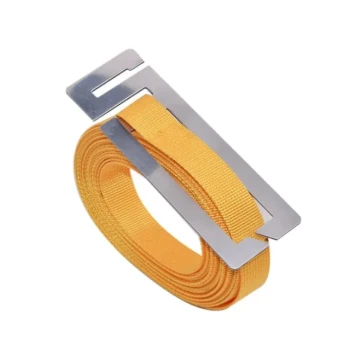
Specialized medicinal strips serve as the primary mechanism for standardized parasite control in commercial apiaries, offering a precision delivery system that raw chemical applications cannot match. These consumables ensure that active ingredients, such as fluvalinate or coumaphos, are released continuously over a set duration, allowing the medication to reach Varroa mites hidden deep within the colony during critical non-harvest periods.
By providing a controlled release of miticides, medicinal strips bridge the gap between sporadic treatment and continuous protection. They transform a complex biological battle into a manageable, standardized process that prevents viral outbreaks and reduces the economic risk of colony collapse.
The Mechanics of Effective Delivery
Controlled Release Technology
The fundamental value of medicinal strips lies in their ability to dictate the rate of chemical delivery. Unlike sprays or dusts which provide a single, high-concentration spike, strips are engineered to release active ingredients slowly.
This ensures a consistent therapeutic level within the hive over several weeks. It allows the treatment to remain active long enough to impact mites that were protected inside capped brood cells at the time of insertion.
Achieving Uniform Distribution
For a treatment to be effective in a commercial setting, it must reach every corner of the hive. Specialized strips and applicators are designed to facilitate uniform distribution of the miticide.
As bees brush against the strips and interact with one another, they physically transfer the active ingredients throughout the colony. This social transmission ensures the medication reaches mites regardless of where they are harboring within the hive structure.
Economic and Operational Impact
Reducing Operational Risk
In large-scale apiaries, inconsistency is a liability. Medicinal strips provide a standardized chemical control method, allowing managers to treat hundreds or thousands of colonies with predictable results.
This standardization is crucial for reducing colony losses. By effectively lowering mite loads, operations avoid the "domino effect" of collapsing colonies robbing out weaker ones and spreading parasites further.
Preventing Viral Transmission
The damage caused by Varroa mites is rarely limited to physical parasitism; they are potent vectors for debilitating viruses.
By using strips to maintain low mite counts, beekeepers effectively break the transmission cycle of mite-transmitted viruses. This preventative approach preserves the long-term vitality of the workforce and ensures the colony is strong enough for future pollination or production seasons.
Understanding the Trade-offs
Timing and Residue Risks
While strips are effective, they introduce the risk of chemical residue if managed poorly. Strict adherence to non-harvest windows is essential.
Applying these strips during nectar flow can result in active ingredients contaminating honey and bee products. To prevent excessive residues, they must only be utilized during specific seasonal windows when honey is not being collected for human consumption.
The Challenge of Resistance
Reliability on a single mode of action can lead to diminishing returns. Continual use of the same chemical strips (e.g., only using fluvalinate) can pressure mite populations to develop resistance.
Beekeepers must view strips as one tool in a rotation. They are best used as part of a broader strategy that may include organic acids or other synthetic treatments to ensure long-term efficacy.
Making the Right Choice for Your Goal
To maximize the effectiveness of medicinal strips, align their usage with your specific operational objectives:
- If your primary focus is Colony Survival: Prioritize the use of strips immediately after the honey harvest to knock down mite levels before winter bees are reared.
- If your primary focus is Product Purity: Strictly follow the manufacturer's removal schedule to ensure no strips remain in the hive when the nectar flow begins.
- If your primary focus is Operational Efficiency: Utilize strips as a standardized baseline treatment, freeing up labor for monitoring and other maintenance tasks.
Correctly implemented, medicinal strips transform Varroa management from a reactive emergency into a proactive, controllable routine.
Summary Table:
| Key Feature | Benefit to Commercial Apiaries | Operational Impact |
|---|---|---|
| Controlled Release | Maintains therapeutic chemical levels for weeks | Impacts mites emerging from capped brood |
| Social Distribution | Bees spread medication throughout the hive | Ensures uniform coverage in dense colonies |
| Standardization | Predictable results across thousands of hives | Reduces labor costs and treatment errors |
| Virus Mitigation | Breaks the cycle of mite-borne diseases | Preserves colony vitality for pollination |
| Targeted Timing | Applied during non-harvest windows | Protects honey purity and winter bee health |
Maximize Your Colony Survival with HONESTBEE
In the competitive world of commercial beekeeping, managing Varroa mites is a matter of business survival. HONESTBEE supports commercial apiaries and global distributors by providing a comprehensive wholesale range of professional-grade beekeeping tools and essential consumables.
From high-efficacy medicinal strips and specialized applicators to advanced honey-filling machines and hive-making hardware, we deliver the precision equipment you need to scale your operations efficiently. Our portfolio is designed to reduce your operational risk and enhance long-term hive productivity.
Ready to secure your apiary's future?
Contact HONESTBEE today to discuss our wholesale solutions and how our specialized beekeeping supplies can optimize your production.
References
- Peter Hristov, Boyko Neov. Honey bee colony losses: Why are honey bees disappearing?. DOI: 10.13102/sociobiology.v68i1.5851
This article is also based on technical information from HonestBee Knowledge Base .
Related Products
- Oxalic Acid Vaporizer 12V for Bee Varroa Mite Treatment
- Compact Circular Bee Mite Treatment Dispenser
- Durable 12V Oxalic Acid Vaporizer for Varroa Mite Treatment Beehive Beekeeping Tool
- Adjustable Formic and Acetic Acid Dispenser for Bee Mite Treatment
- Heavy Duty 12V Oxalic Acid Evaporator Vaporizer for Bee Varroa Mite Treatment Beekeeping Fumigator Atomizer
People Also Ask
- What factors determine how often to treat for varroa mites with oxalic acid? Time Your Treatment for Maximum Efficacy
- What are the technical advantages of using professional Sublimators? Maximize Mite Control with Precision Vaporizers
- What is the technical objective of applying oxalic acid via a sprayer? Maximize Varroa Resistance in Your Apiary
- How can oxalic acid treatment be applied effectively when capped brood is present? Master the 3-Stage Vapor Protocol
- What is the overall goal of using oxalic acid in late fall for beekeepers? Maximize Winter Survival with a Broodless Treatment