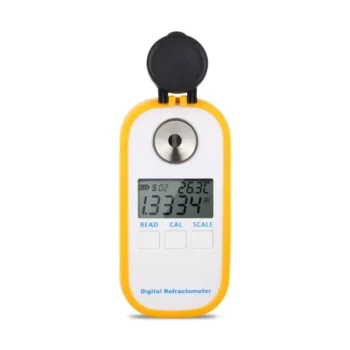
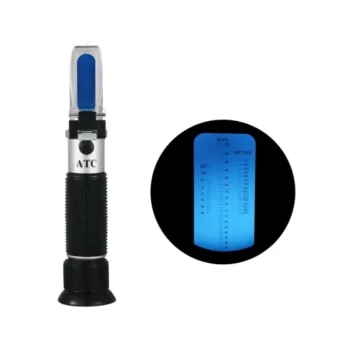
A refractometer is the definitive tool for honey moisture analysis because it provides the rapid, non-destructive precision required to prevent fermentation and ensure international trade compliance. By measuring the refractive index of light as it passes through a sample, the device calculates water percentage with extreme accuracy. This data is essential for verifying that honey falls below the critical 18% to 20% moisture threshold, safeguarding product stability throughout the global supply chain.
Moisture content is the primary indicator of honey maturity and shelf-life stability. Utilizing high-precision refractometry allows distributors to mitigate the risk of fermentation and guarantee that every batch meets rigorous international quality standards and regulatory requirements.
Safeguarding Product Integrity and Market Value
Preventing Spontaneous Fermentation
Honey is highly hygroscopic, meaning it actively absorbs moisture from the environment. If moisture levels exceed 20%, naturally occurring yeasts can trigger fermentation, leading to spoilage and significant economic loss.
Ensuring Long-Term Shelf Stability
For wholesalers and distributors, maintaining honey at or below 18% moisture is the gold standard for long-term storage. This level of dryness ensures the product remains chemically stable and commercially viable during extended transit and warehousing.
Maintaining Sensory Consistency
Moisture directly dictates the viscosity and texture of the honey. Precise monitoring via a refractometer ensures that every shipment meets the specific physical profiles expected by B2B buyers and high-end resellers.
Navigating Global Regulatory Standards
Compliance with Codex Alimentarius
International food standards, such as the Codex Alimentarius, set strict maximum moisture limits—generally 20%—for honey intended for human consumption. A refractometer provides the standardized proof of quality required for customs and safety audits.
Facilitating International Trade
Premium honey markets often demand moisture levels even lower than the legal maximum to account for fluctuations during shipping. Professional refractometry allows exporters to certify that their product meets the International Honey Commission standards before leaving the facility.
Non-Destructive Quality Assurance
Unlike laboratory evaporation methods, refractometry is non-destructive and requires minimal samples. This allows distributors to conduct real-time monitoring of raw honey and finished batches without sacrificing inventory.
Technical Precision in High-Volume Operations
The Role of Refractive Index
A refractometer works by measuring the Refractive Index (R.I.), which changes based on the concentration of sugars and water. This physical measurement is then converted into a moisture percentage through standardized tables or digital algorithms.
Importance of Temperature Correction
The refractive index of honey is sensitive to temperature fluctuations. Expert-grade refractometers utilize Automatic Temperature Compensation (ATC) to ensure that readings remain accurate regardless of the ambient environment in the warehouse or processing plant.
Rapid Response and Fulfillment
In a fast-moving supply chain, speed is critical. Refractometers provide instant feedback, allowing for rapid decision-making during order fulfillment and ensuring that high-volume shipments are processed without delay.
Understanding the Trade-offs and Pitfalls
Manual vs. Digital Instrumentation
While manual optical refractometers are cost-effective, they are prone to human error and subjective interpretation. Digital refractometers offer higher precision and data logging capabilities, though they require a larger initial investment.
The Necessity of Calibration
No refractometer is a "set and forget" tool. Regular calibration with standard oils or distilled water is essential to maintain accuracy; failing to do so can result in inaccurate readings that jeopardize an entire shipment's compliance.
Sensitivity to Impurities
A refractometer measures everything dissolved in the water, not just sugar. Significant levels of suspended solids or crystallization can skew the refractive index, necessitating proper sample preparation for the most reliable results.
How to Apply This to Your Distribution Strategy
Integrating high-precision moisture monitoring into your quality control protocol is essential for maintaining a premium brand reputation and ensuring seamless global logistics.
- If your primary focus is Risk Mitigation: Invest in digital refractometers with data-logging features to create a permanent quality record for every batch, protecting against future spoilage claims.
- If your primary focus is Regulatory Compliance: Ensure all sourcing partners provide refractometer-verified moisture certificates that align with the 18-20% international trade thresholds.
- If your primary focus is Operational Efficiency: Utilize handheld, ATC-equipped refractometers for rapid "on-the-dock" testing to streamline the inspection of incoming shipments and accelerate fulfillment.
By mastering moisture control through professional refractometry, you secure the stability, legality, and premium status of your honey portfolio in the global marketplace.
Summary Table:
| Key Factor | Impact on Honey Quality | Industry Standard / Requirement |
|---|---|---|
| Moisture Level | Prevents fermentation & spoilage | Ideally <18% to 20% |
| Refractive Index | Provides rapid, non-destructive data | High-precision measurement |
| ATC Technology | Ensures accuracy in varied climates | Automatic Temp Compensation |
| Compliance | Meets global regulatory mandates | Codex Alimentarius / IHC |
| Shelf Life | Guarantees long-term stability | Essential for B2B logistics |
Elevate Your Honey Business with HONESTBEE
As a premier partner for distributors, wholesalers, and B2B resellers, HONESTBEE offers a comprehensive one-stop sourcing solution for all your beekeeping needs. We specialize in providing a full spectrum of high-quality tools, machinery, and consumables—from precision refractometers and honey-filling machines to specialized hive-making hardware and cultural merchandise.
Why choose HONESTBEE?
- Maximize Margins: Competitive wholesale pricing and reliable supply chains.
- Industry Expertise: Deep professional knowledge to support your technical requirements.
- Rapid Fulfillment: Ultra-fast delivery and exceptional customer service to keep your operations running smoothly.
- Custom Solutions: OEM/ODM support and certified equipment tailored for commercial apiaries.
Don't let moisture issues compromise your product integrity. Contact HONESTBEE today to access premium equipment and streamline your global supply chain!
References
- Sabra Ambreen, Zahid Mehmood, Khalid Mehmood, Sabeena Rizwan, Farida Behlil, Uzma Jabeen, Ayesha Mushtaq, Farrukh Bashir. Overview on physical properties and biochemical composition of honey. DOI: 10.12692/ijb/18.4.8-21
This article is also based on technical information from HonestBee Knowledge Base .
Related Products
- Digital Honey Refractometer for Precision Measurement of Optimal Honey Quality
- Precision Honey Refractometer Instrument for Quality Assessment
- Premium Heat-Resistant Glass Honey Dipper
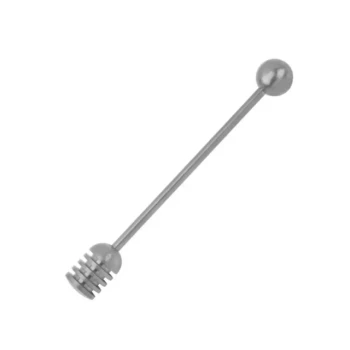
- Modern Stainless Steel Honey Dipper Stirrer
- Heavy Duty 304 Stainless Steel Honey Dipper
People Also Ask
- What role do high-precision refractometers play in determining the maturity and quality of honey? Ensure Honey Purity.
- Do the color and viscosity of honey affect its refractometer reading? Mastering Moisture Measurement Accuracy
- How do refractometers ensure technical precision when measuring honey moisture? Secure Quality and Prevent Fermentation
- How is the reading taken from a honey refractometer? A Guide to Accurate Moisture Measurement
- Why is a honey refractometer considered essential for commercial beekeepers? Ensure Honey Quality and Profitability