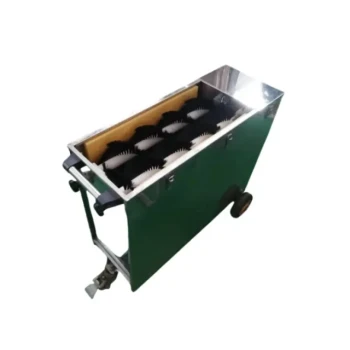
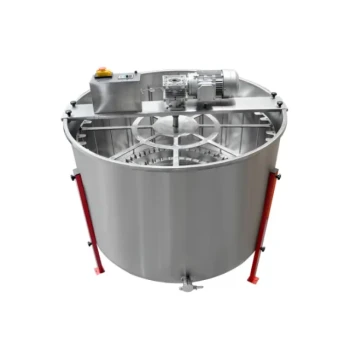
The primary purpose of an industrial-grade bee blower is to utilize high-velocity airflow for the rapid, non-contact removal of bees from honeycombs. This method significantly outperforms traditional manual techniques like shaking or brushing by accelerating the retrieval process during critical harvesting windows. Furthermore, it serves as a humane alternative that drastically reduces colony stress and bee mortality rates while preventing the contamination risks associated with chemical repellents.
By replacing physical contact with directed air pressure, the bee blower solves the dual challenge of operational speed and biological preservation, allowing apiarists to harvest efficiently without compromising the health of the hive or the purity of the honey.
Optimizing Operational Efficiency
Accelerating the Harvest Cycle
Time is a critical resource during the peak flowering window. Utilizing a bee blower allows beekeepers to clear supers (boxes of honeycomb) much faster than manual methods, ensuring the maximum amount of honey is retrieved while the weather and nectar flow are optimal.
Non-Contact Separation
Unlike brushes, which require repetitive physical motion on each frame, a blower treats the entire super or frame instantly. This physical removal method uses air to dislodge the bees, eliminating the labor-intensive bottleneck of handling individual frames to remove every single bee.
Protecting Honey Purity
Professional removal equipment, including blowers, helps maintain the physicochemical properties of the honey. By avoiding chemical repellents sometimes used to clear hives, the blower ensures the final product remains free of chemical contaminants and meets international export safety standards.
Prioritizing Colony Health
Reducing Stress and Mortality
Traditional shaking can injure bees, and brushing often agitates them, triggering a defensive response. The primary reference indicates that the airflow method is gentler and safer, effectively reducing the mortality rate of the bees during the relocation process.
Minimizing Aggression
When a colony is stressed by physical crushing or rough handling, alarm pheromones spread quickly. By using air rather than direct physical agitation, the blower helps minimize the stress response, making the environment safer for the apiarist and less traumatic for the colony.
Understanding the Trade-offs
Application Specificity
While blowers are ideal for standard frame hives, they are not the universal solution for all bee species. For example, stingless bee honey harvesting requires a different approach; specialized suction machines are used to extract honey from cerumen pots to avoid damaging the unique internal structure of those specific hives.
Equipment vs. Manual Handling
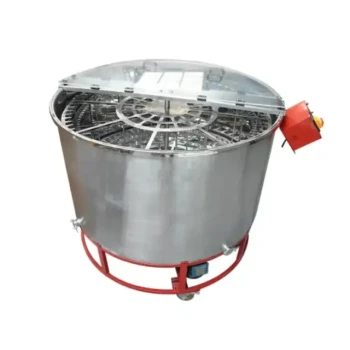
While highly efficient, industrial blowers are specialized equipment. They differ from centrifugal extractors, which are used after the bees are removed to spin honey out of the comb. It is important to distinguish that the blower clears the bees, while the extractor processes the honey; both are necessary for a fully modernized, industrial workflow.
Making the Right Choice for Your Goal
To determine if an industrial bee blower is the right investment for your operation, consider your primary objectives:
- If your primary focus is harvesting speed: This tool is essential for maximizing yield during short, intense flowering periods.
- If your primary focus is product purity: The blower eliminates the need for chemical fume boards, ensuring an organic, contaminant-free product.
- If your primary focus is colony preservation: This method offers the lowest risk of physical injury to the bees compared to shaking or brushing.
Mastering the use of forced air allows you to scale your operation without sacrificing the welfare of your biological assets.
Summary Table:
| Feature | Industrial Bee Blower | Traditional Manual Methods |
|---|---|---|
| Removal Method | High-velocity, non-contact airflow | Physical shaking or brushing |
| Operational Speed | High; clears entire supers rapidly | Low; requires frame-by-frame handling |
| Colony Stress | Minimal; gentle air displacement | High; potential for injury and agitation |
| Honey Purity | No chemical residues; preserves quality | Risk of contamination from repellents |
| Labor Intensity | Low; motorized efficiency | High; physically demanding manual work |
Scale Your Apiary Efficiency with HONESTBEE Professional Equipment
Are you ready to modernize your honey harvesting workflow? At HONESTBEE, we specialize in supporting commercial apiaries and distributors with high-performance solutions designed for scale. From industrial-grade bee blowers that ensure rapid, humane removal to precision honey-filling machines and specialized hive-making machinery, our comprehensive wholesale portfolio covers every stage of your operation.
Why partner with HONESTBEE?
- Full-Spectrum Supply: Access a complete range of beekeeping tools, machinery, and essential consumables.
- Industry Expertise: We provide the hardware and cultural merchandise needed to grow your brand and output.
- Value-Driven Growth: Our equipment is engineered to reduce labor costs, protect colony health, and guarantee honey purity for international standards.
Take the next step in industrial beekeeping. Contact us today to discuss your wholesale needs and see how our tools can transform your business!
References
- Alíz Feketéné Ferenczi, Andrea Bauerné Gáthy. Economic Sustainability Assessment of a Beekeeping Farm in Hungary. DOI: 10.3390/agriculture13061262
This article is also based on technical information from HonestBee Knowledge Base .
Related Products
- Heavy Duty Manual Bee Smoker Blower for Beekeeping
- Commercial Grade Vertical Electric Bee Sweeper for Bee Removal
- HONESTBEE 72 Frame Industrial Electric Honey Extractor for Beekeeping
- Professional Bee Smoker with Elongated Spout and Durable Bellows for Beekeeping
- Professional Replacement Bee Smoker Bellows for Beekeeping Equipment
People Also Ask
- What are bee smokers made out of? Choose the Right Material for Your Apiary
- What are the advantages of a manual bee smoker? Enhance Hive Safety with Controlled Cool Smoke Technology
- What is the primary function of a manual bee smoker? Master Hive Control for Safe Inspections
- What is the proper technique for applying smoke to a beehive? Master Calm and Effective Hive Management
- What is the purpose of using a bee smoker for Small Hive Beetle inspections? Master Chemical Control & Hive Safety