Food stores are a survival indicator during every hive inspection. Evaluating honey and pollen reserves around the brood nest shows whether a colony can maintain adult bees, feed larvae, and sustain brood production. When stores are depleted—especially in late winter, early spring, or during a nectar dearth—hive feeders supplying sugar syrup and pollen substitutes can prevent nutritional stress and help build a strong worker population before the next major nectar flow.
The central principle is simple: inspect food stores before the colony reaches crisis point. Sugar syrup supplies energy, while pollen substitutes provide protein and other nutrients needed for brood rearing; together, they support continuity when natural forage is insufficient.
Why Food Stores Matter During Hive Inspections
Stores directly support colony survival
Honey provides the colony’s primary energy reserve. Bees use it to maintain activity, regulate the hive environment, feed developing brood, and sustain the colony when weather or forage conditions restrict outside flight.
A colony may appear populous but still be at risk if its honey reserves are low. Regular frame inspections reveal whether the colony has enough accessible food to bridge the period until natural nectar becomes available.
Pollen supports brood development
Pollen supplies the proteins, vitamins, and minerals required by nurse bees to feed developing larvae. Adequate pollen stores are therefore closely linked to continuous brood production and population growth.
The most useful inspection focuses on the frames surrounding the brood nest. A colony with brood but little nearby pollen may be unable to sustain the next generation of workers.
Early-season shortages can cause rapid decline
In late winter and early spring, queens often resume or accelerate egg-laying before natural pollen and nectar are abundant. This creates a nutritional gap: brood production increases while stored food may already be heavily depleted.
Lack of pollen is a major contributor to colony failure during this build-up period. Similar risks occur during late-summer and autumn pollen dearths, particularly in regions where flowering temporarily declines.
What Beekeepers Should Evaluate on the Frames
Check honey quantity and accessibility
Inspect whether capped or usable honey is present near the brood area. Stores that are distant from the brood nest may be less immediately useful during cold weather or restricted flying conditions.
The assessment should consider the colony’s strength, current brood area, local weather, and expected timing of the next reliable nectar flow. A strong colony with expanding brood requires more food than a small colony with limited brood.
Look for pollen reserves
Pollen should be visible on brood frames or on frames immediately adjacent to the brood nest. Limited or absent pollen stores are a warning sign, particularly when the queen is laying actively or the colony contains substantial young brood.
Sluggish colony growth can also indicate inadequate protein availability, even when some honey remains.
Inspect before the shortage becomes critical
Feeding decisions are most effective when made proactively. Waiting until bees show severe weakness or starvation signs reduces the colony’s ability to recover and increases the risk of population collapse.
For commercial apiaries, consistent inspection records help identify seasonal demand for feeders, syrup supplies, pollen substitutes, and related hive equipment before urgent replenishment is required.
How Hive Feeders Support Colony Development
Sugar syrup supplies energy
Hive feeders deliver sugar syrup when stored honey is insufficient or natural nectar is unavailable. This supplemental energy helps bees maintain colony activity and supports brood-rearing operations.
Feeders do not replace the need to evaluate stores. They are a management tool used after inspection indicates that additional energy is needed.
Different feeder designs suit different operations
Common options include:
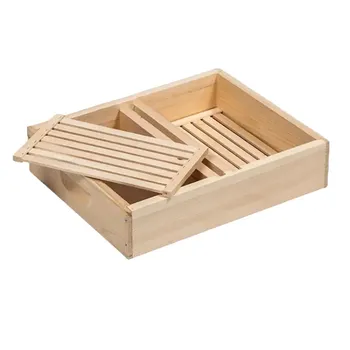
- Top feeders, which can provide larger syrup volumes and simplify servicing.
- Frame feeders, which sit inside the hive and place syrup close to the colony.
- Entrance feeders, which can be convenient but require careful management because exposed syrup may increase robbing risk.
The appropriate choice depends on apiary scale, hive configuration, servicing frequency, weather, and the beekeeper’s ability to limit access by robbers.
Feeding can support stronger pre-flow populations
Strategic syrup feeding can stimulate colony activity and help maintain brood production before a major nectar flow. The objective is to develop a sufficient population of healthy workers that can forage when natural resources become available.
For distributors and commercial beekeepers, dependable access to multiple feeder formats supports different hive systems and reduces delays during time-sensitive feeding windows.
How Pollen Substitutes Support Brood Rearing
They provide protein when natural pollen is scarce
Pollen substitutes are used when stored pollen is depleted, natural pollen has not yet become abundant, or a young colony is developing slowly. They help supply the nutritional inputs required by nurse bees and larvae during forage shortages.
Substitutes may be provided dry or incorporated into pollen patties using honey or sugar water, depending on the product and feeding method.
Placement affects accessibility
Pollen patties or other protein supplements should be positioned near the brood area. This makes them accessible to nurse bees and supports more continuous brood-rearing activity during seasonal shortages.
The supplement should be offered in a way that allows bees to consume it without creating unnecessary disturbance or contamination within the hive.
Timing should follow local forage conditions
In cooler or temperate regions, supplemental pollen feeding commonly begins in late winter through early spring, often around February to April. In warmer regions, it may be needed earlier in winter or during late-summer and autumn dearths, such as August through October.
These are planning windows rather than universal dates. Actual timing should follow local flowering patterns, weather, colony condition, and inspection findings.
Using Feeding to Prepare for Major Nectar Flows
Build worker numbers before demand peaks
A major nectar flow is most valuable when the colony has enough healthy foragers to exploit it. Supplemental feeding during the development phase can help maintain brood production and build the worker population ahead of that flow.
The goal is not simply to make bees consume more feed. It is to close a temporary nutritional gap while the colony develops naturally for the next forage opportunity.
Protect weaker colonies from additional pressure
Well-managed feeding can reduce the risk that stronger colonies will rob weaker colonies during periods of scarcity. Feeder selection, placement, and hive-management practices remain important because poorly controlled feeding can create the very robbing pressure it is intended to prevent.
Plan supplies across the whole season
An effective supply plan may include feeders, syrup-handling equipment, pollen substitutes, patties, and storage provisions for reserve pollen. Pollen traps used during peak bloom periods can also help collect pollen for later supplemental feeding, where appropriate.
For wholesalers and resellers, a full-spectrum inventory is more useful than a single-product offering because feeding requirements change with colony condition and season.
Understanding the Trade-offs
Supplemental feed is not a substitute for inspection
Feeding without evaluating the frames can mask underlying problems. A colony may lack food because of poor queen performance, disease, a small population, inadequate forage, or an incorrect estimate of its consumption rate.
Inspections should guide feeding decisions rather than treating feed as a universal remedy.
Protein supplements are not identical to natural pollen
Pollen substitutes are nutritional support products, not automatically equivalent to every benefit of diverse natural pollen sources. Their value depends on formulation, acceptance by the bees, timing, and the colony’s overall condition.
Beekeepers should monitor consumption and colony response instead of assuming that placing a patty in the hive guarantees improved development.
Feeders require careful management
Feeders can leak, promote robbing, or become difficult to service in poor weather if the design does not match the hive system. Entrance feeders may be especially vulnerable to unwanted access when colonies are under pressure.
Reliable products, correct installation, clean handling, and timely replenishment are essential. For B2B buyers, product consistency and rapid fulfillment matter because a delayed shipment during a dearth can have biological consequences.
Overfeeding can complicate hive management
Excessive syrup feeding may crowd available storage space and interfere with the beekeeper’s management objectives, particularly when the colony is approaching a natural nectar flow. Feeding should therefore be proportionate to actual need and coordinated with inspection results.
How to Apply This to Your Apiary or Supply Program
Use a repeatable inspection-and-response process rather than relying on calendar dates alone.
- If your primary focus is colony survival: Check honey and pollen surrounding the brood nest at every relevant inspection, then feed promptly when reserves are inadequate.
- If your primary focus is early-season population growth: Use sugar syrup for energy and pollen substitutes for protein support before natural forage becomes reliable.
- If your primary focus is commercial apiary efficiency: Standardize inspection records and maintain feeders, syrup supplies, and pollen supplements before predictable dearth periods.
- If your primary focus is distribution or resale: Offer multiple feeder formats and dependable pollen-substitute supplies, supported by fast response, consistent product availability, and efficient order fulfillment.
A disciplined assessment of food stores, matched with timely and appropriate supplemental feeding, gives colonies the nutritional foundation they need to develop strongly.
Summary Table:
| Key Aspect | Importance | Action |
|---|---|---|
| Honey Stores | Primary energy for survival | Inspect frames near brood; feed syrup if low |
| Pollen Reserves | Protein for brood rearing | Check adjacent frames; use substitutes if scarce |
| Timing | Prevent crisis before it occurs | Regular inspections; feed proactively |
| Feeder Types | Top, frame, entrance options | Choose based on scale, hive type, and robbing risk |
| Pollen Substitutes | Provide protein during dearth | Place near brood; monitor consumption |
| Management | Avoid overfeeding and robbing | Follow inspection data; adjust feeding |
Equip your apiary with reliable feeding solutions from HONESTBEE. Our comprehensive catalog of hive feeders, pollen substitutes, and professional beekeeping supplies ensures your colonies thrive through every season. As a trusted partner for commercial apiaries and distributors, we offer OEM/ODM support, fast order fulfillment, and expert guidance. Contact us today to secure your supply and maximize your operational efficiency.
Related Products
- Professional Hive Top Bee Feeder for Beekeeping
- Premium Wood Hive Top Feeder with Floating Rafts for Langstroth Hives
- HONESTBEE Professional Hive Top Bee Feeder Feeding Solution
- HONESTBEE Square Top Hive Bee Feeder Top Bee Feeder
- Professional Hive Front Entrance Bee Feeder
People Also Ask
- Do I need an inner cover with a hive top feeder? Optimize Your Hive Setup for Healthy Bees
- What is a hive top feeder? A Guide to Efficient, Low-Stress Beekeeping
- What is a hive top feeder, and how does it work? A Complete Guide to Efficient In-Hive Feeding
- What are the characteristics, advantages, and disadvantages of hive top feeders? Optimize Your High-Volume Feeding
- How does a hive top feeder work? Optimize Your Apiary's Nutrition and Security