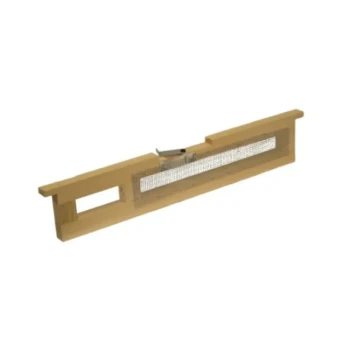
Honey bee artificial insemination equipment is the fundamental hardware required to bypass the inherent randomness of natural mating. It enables breeders to exert absolute manual control over reproduction, ensuring that a queen pairs only with specific, selected drones. This precision is non-negotiable for maintaining closed population systems, preventing the infiltration of unwanted genetics, and securing the purity of European honey bee germplasm.
Natural mating occurs uncontrollably in the open air, making genetic isolation nearly impossible in the wild. Artificial insemination acts as a biological firewall, guaranteeing the exclusion of invasive traits while enabling the systematic "stacking" of desirable characteristics like disease resistance and high productivity.
The Mechanics of Genetic Control
Bypassing Environmental Randomness
In a natural setting, a queen bee mates with multiple drones from unknown colonies. This introduces a high degree of genetic variability and uncertainty.
Artificial insemination equipment eliminates this variable entirely. By mechanically injecting semen from specific drone sources, breeders remove the "luck" factor from the equation.
Precision Microsystem Operations
This equipment is not merely a delivery device; it is a high-precision microsystem.
Operators use micro-syringes to inject exact volumes of semen (often as precise as 6 microliters) into the queen’s reproductive tract. This mechanical exactness allows for the stabilization of genetic traits that would be diluted in open-air mating.
Protecting Germplasm Resources
Enforcing Genetic Isolation
The primary reference highlights this technology as the core hardware for closed honey bee population management.
Without physical intervention, it is difficult to stop the infiltration of aggressive or undesirable genetics, such as Africanized genes. Insemination equipment creates a barrier, ensuring that the genetic lineage remains strictly within the breeder's defined parameters.
Preserving Subspecies Purity
For breeders focused on European honey bee germplasm, this equipment is the line of defense against hybridization.
It allows for the restoration and maintenance of specific subspecies, such as the Dark Bee (Apis mellifera mellifera). By controlling both the maternal and paternal lines, breeders can prevent hybrid contamination from external breeds.
Driving Genetic Improvement
Establishing Accurate Pedigrees
To improve a species, you must track its lineage. Natural mating makes true pedigree tracking impossible because the father is often unknown.
Artificial insemination is the core technical tool for establishing accurate pedigrees. This allows breeders to calculate inbreeding levels effectively and make informed decisions about future crosses.
Targeting Specific Traits
Once the lineage is controlled, breeders can select for specific performance metrics.
This technology enables the development of specialized populations. Breeders can isolate and reinforce traits such as the honey-producing capacity of Carniolan bees, the disease resistance of Caucasian bees, or general mite resistance and cold tolerance.
Understanding the Operational Demands
The Requirement for Specialized Skill
While the benefits are clear, this is not a "plug-and-play" solution.
Artificial insemination requires professional-grade equipment and advanced training. The operator must possess steady hands and mastery of microsystem operations to avoid injuring the delicate queen bee.
The Biological Trade-off
This process bypasses natural selection mechanisms.
Because the breeder selects the mates, the responsibility for genetic health rests entirely on human judgment. Poor selection choices can lead to a rapid accumulation of negative traits or excessive inbreeding if the pedigree is not managed with rigorous data.
Making the Right Choice for Your Goals
If you are considering integrating artificial insemination into your apiary management, consider your primary objective:
- If your primary focus is Germplasm Conservation: Use this equipment to create a "closed loop" system that strictly excludes Africanized genes and preserves the historical integrity of native subspecies.
- If your primary focus is Commercial Production: Leverage the technology to cross specific high-yield maternal lines with disease-resistant paternal lines to create a hybrid super-bee adapted to your local climate.
Ultimately, artificial insemination transforms beekeeping from a game of chance into a precise science of genetic engineering.
Summary Table:
| Feature | Natural Mating | Artificial Insemination |
|---|---|---|
| Genetic Control | Random / Uncontrollable | Precise / Manual Selection |
| Paternity | Multiple unknown drones | Single or pooled selected drones |
| Isolation | Hard to achieve in wild | Guaranteed biological firewall |
| Pedigree Tracking | Impossible / Estimated | 100% Accurate lineage records |
| Primary Goal | Natural Reproduction | Germplasm Protection & Performance |
Elevate Your Bee Breeding Precision with HONESTBEE
At HONESTBEE, we empower commercial apiaries and distributors with the professional-grade tools needed to transform beekeeping into a precise genetic science. Whether you are focused on preserving pure European honey bee germplasm or developing high-yield commercial hybrids, our comprehensive wholesale portfolio has you covered.
From advanced artificial insemination microsystems and specialized hive-making machinery to high-efficiency honey-filling equipment and honey-themed cultural merchandise, we provide the full spectrum of hardware and consumables for the modern industry.
Ready to secure your genetic lineage? Contact us today to explore our wholesale solutions and see how our expertise can scale your apiary operations.
References
- Miguel E. Arechavaleta-Velasco, Karla Itzél Alcalá Escamilla. Resultados e impacto de la investigación en genética y mejoramiento genético de las abejas melíferas desarrollada por el INIFAP en México. DOI: 10.22319/rmcp.v12s3.5919
This article is also based on technical information from HonestBee Knowledge Base .
Related Products
- Queen Bee Artificial Insemination Instrument Equipment for Instrumental Insemination
- Stainless Steel Beekeeping Queen Grafting Tool for Honey Bee Rearing
- Plastic Beekeeping Honey Bee Larvae Grafting Tools for Queen Rearing and Chinese Grafting
- Plastic Handle Single Row Artificial Fiber Bee Brush
- Twin Queen Styrofoam Honey Bee Nucs Mating and Breeding Box
People Also Ask
- Why is maintaining sanitary conditions important during artificial insemination? Protect Your Queen from Fatal Infections
- Why are artificial insemination instruments critical in bee hybridization? Master Genetic Control & Pure Breeding
- What is the core value of bee artificial insemination instruments in breed improvement? Achieve Precise Genetic Control
- Why is professional bee artificial insemination equipment considered a core tool for genetic control in honeybee breeding? Ensure 100% Purity
- Why is high-purity CO2 used for queen bee artificial insemination? Unlock Precision Breeding & Faster Egg-Laying