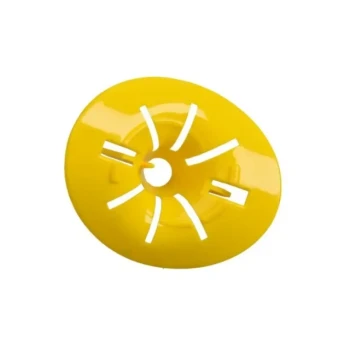
Specialized pollen traps are the critical hardware that transforms pollen harvesting from a manual impossibility into a scalable, automated industrial process. By installing these devices at the hive entrance, commercial apiaries can mechanically strip and collect pollen loads from returning foragers, ensuring the product is harvested efficiently and remains free of internal hive impurities.
The core value of a pollen trap lies in automated interception. It captures the raw material at the exact moment of arrival, securing high-purity commercial pollen or accurate environmental data without disrupting the colony's internal storage systems.
The Mechanics of Automated Harvesting
Strategic Interception
The trap functions as a physical filtration system installed directly at the hive entrance. It forces returning worker bees to pass through a specialized grid or mesh with precisely designed apertures.
The Stripping Mechanism
As the bee navigates the grid to enter the hive, the hardware gently scrapes the pollen pellets from the baskets on her hind legs. These dislodged pellets fall immediately into a collection tray or drawer located beneath the entry point.
Enabling Large-Scale Production
Without this hardware, harvesting pollen would require extracting it from hive cells, which is labor-intensive and destructive. These traps allow for continuous, automated collection, making them the fundamental production tool for modern, large-scale apiculture.
Ensuring Product Purity and Quality
Reducing Physical Impurities
The primary reference highlights that these traps act as a first line of defense against contamination. By collecting the pollen before it enters the hive environment, the system reduces impurities through immediate physical separation.
Preventing Microbial Degradation
Industrial-grade traps often feature dry collection trays designed to mitigate environmental humidity. This quick separation protects the pollen's biochemical activity and prevents microbial contamination or spoilage caused by moisture.
Standardization of Raw Material
For commercial sale, consistency is key. These traps provide a "clean" starting point for industrial processing, delivering a representative sample of the landscape’s floral resources without the debris found inside the brood nest.
The Role in Data and Analysis
Accurate Nutritional Assessment
Beyond sales, these traps are essential for monitoring colony health. They allow apiarists to acquire direct raw pollen data specific to the apiary's geography and climate.
Time-Specific Sampling
Because the traps intercept pollen in real-time, they allow for precise analysis of floral sources within specific timeframes. This is critical for assessing the nutritional intake of the colony throughout the changing seasons.
Understanding the Design Trade-offs
Precision vs. Safety
While the goal is harvest, the safety of the workforce—the bees—is paramount. High-quality traps rely on precise geometric control of the grid apertures.
Avoiding Injury
If the apertures are too small or poorly finished, they can harm the bees. Proper commercial traps are engineered to strip the pollen load without harming the insect or impeding their normal passage and breeding cycles.
Making the Right Choice for Your Goal
Whether you are managing a massive commercial operation or conducting environmental research, the utility of the trap depends on your specific objective.
- If your primary focus is Commercial Production: Prioritize traps with high-capacity, dry collection trays to ensure maximum cleanliness and prevent moisture-related spoilage.
- If your primary focus is Colony Health Monitoring: Utilize traps to gather representative samples over short intervals to analyze local plant species and nutritional abundance.
By integrating specialized pollen traps, you convert a biological by-product into a manageable, measurable, and profitable asset.
Summary Table:
| Feature | Commercial Benefit | Technical Mechanism |
|---|---|---|
| Automated Harvesting | Scalable production; eliminates manual cell extraction | Precision grid strips pollen pellets at the hive entrance |
| Purity Control | Prevents contamination from hive debris and moisture | Immediate separation into external dry collection trays |
| Nutritional Monitoring | Accurate data on floral sources and colony health | Real-time sampling of incoming pollen loads |
| Bee Safety Design | Maintains colony productivity without insect injury | Engineered geometric apertures for gentle stripping |
Scale Your Pollen Production with HONESTBEE
Elevate your apiary's profitability and efficiency with industrial-grade harvesting solutions. HONESTBEE specializes in supporting commercial apiaries and distributors with a comprehensive range of beekeeping machinery and essential consumables.
From precision-engineered pollen traps to advanced honey-filling machines and specialized hive-making hardware, we provide the tools you need to transform biological by-products into high-value assets.
Ready to upgrade your equipment? Contact us today to discuss our wholesale offerings and discover how we can optimize your large-scale apiculture operations.
References
- Katarína Fatrcová-Šramková, Janka Nôžková. Bee Pollen – Nutritional and Toxicological Aspects. DOI: 10.36547/ae.2019.1.4.41-47
This article is also based on technical information from HonestBee Knowledge Base .
Related Products
- Removable Plastic Pollen Trap With Ventilated Tray for Bees Pollen Collector
- 30 cm Plastic Entrance Hole Bee Pollen Trap and Collector
- Plastic Bee Pollen Trap Strips Comb Catcher Collector
- High-Efficiency Diamond Maze Bee Escape for Clearing Supers
- Professional Bucket Style Wasp and Moth Pheromone Trap
People Also Ask
- What are the design principles and advantages of pollen traps in the collection of bee pollen? Boost Your Apiary Yield
- What is the function of professional pollen traps in evaluating honey plants? Quantifying Pollination and Crop Potential
- What functions do pollen traps serve for bee bread production? Optimize Your Raw Material Collection
- What maintenance and pest prevention measures should be taken for pollen traps? Protect Your Hive and Harvest Quality
- How does the use of pollen traps in honeybee hives enhance crop fertilization? Boost Your Yield Through Induced Activity