Fixing honey bee wing samples on microscope slides is a critical preparatory step designed to force the organic structure of the wing into a quasi-two-dimensional planar state. By encapsulating the wing between high-flatness glass, you mechanically eliminate the natural folds, curls, and tilts that would otherwise introduce significant geometric distortion during the photography and analysis phases.
The ultimate purpose of fixation is to ensure that any shape variations detected by your analysis system reflect actual genetic differences between subspecies, rather than artificial errors caused by inconsistent sample placement.
The Physics of Geometric Accuracy
Achieving a Planar State
Honey bee wings are not naturally perfectly flat; they possess inherent curvature and flexibility. To perform accurate geometric morphometrics, you must convert this three-dimensional object into a quasi-two-dimensional plane.
Fixing the sample on a glass slide physically restricts the wing. This constraint prevents the wing from resting in a curled or folded position that would warp the geometric data.
Eliminating Spatial Displacement
Without fixation, a wing may curl upward or downward at the edges. This constitutes spatial displacement, where the physical coordinates of wing landmarks shift relative to the camera lens.
High-flatness slides compress the specimen effectively. This ensures the anatomical structures remain static and fully extended throughout the imaging process.
The Impact on Image Analysis
Reducing Photographic Distortion
When a wing is photographed without being fixed flat, even a slight tilt creates perspective errors. A tilted wing appears shorter or skewed in a 2D image, leading to inaccurate length and shape data.
Fixing the slide guarantees that the camera captures the wing's geometry from a perpendicular angle. This eliminates parallax errors caused by the z-axis depth of a non-flat object.
Unifying the Focal Plane
For the most precise measurements, the entire surface of the wing must sit within the same horizontal focal plane.
If a wing curls, parts of it may drift out of focus or appear foreshortened. Slide fixation ensures every vein and landmark is sharp and measurable in a single capture.
Isolating Genetic Data
Removing "Noise" from the Dataset
The goal of morphometrics is often to distinguish between subspecies based on subtle genetic variations. If samples are not fixed, the "noise" of random folds and tilts can mimic or mask these biological signals.
Proper fixation standardizes the physical state of every sample. This rigorous standardization ensures that differences in the data are biological, not methodological.
Preventing False Classifications
Errors caused by improper sample placement are often non-random; they can bias the data in specific directions. This could lead an analysis system to incorrectly classify a specimen based on how it was mounted rather than its true lineage.
Common Pitfalls to Avoid
The Risk of Specimen Damage
While flattening is essential, excessive pressure during fixation can crush or distort delicate vein structures. It is vital to use high-flatness slides that apply even pressure without destroying the anatomical landmarks you intend to measure.
The Illusion of Flatness
Simply placing a cover slip over a wing is often insufficient without a mounting medium or proper fixation technique. If the wing retains any capacity to move or lift under the glass, micro-tilts will persist, reintroducing the geometric errors you are trying to avoid.
Ensuring Precision in Your Morphometrics
To maximize the reliability of your data, you must align your preparation technique with your analytical goals.
- If your primary focus is Subspecies Identification: Prioritize the elimination of tilts and folds to ensure that shape variations are strictly genetic.
- If your primary focus is Anatomical Measurement: Ensure the wing is pressed into a single focal plane to prevent foreshortening errors in length data.
By treating the fixation process as a standardized scientific control rather than a mere mounting step, you guarantee that your analysis measures the biology of the bee, not the geometry of the curl.
Summary Table:
| Feature | Purpose of Fixation | Impact on Data Accuracy |
|---|---|---|
| Dimensionality | Converts 3D wing curvature to 2D plane | Prevents perspective and parallax errors |
| Stability | Eliminates folds, curls, and spatial displacement | Ensures landmarks remain static and extended |
| Focal Plane | Unifies the entire surface in one horizontal plane | Guarantees sharp, measurable images without foreshortening |
| Data Integrity | Removes methodological "noise" | Isolates genetic variation from mounting errors |
Elevate Your Research Precision with HONESTBEE
High-quality morphometric analysis begins with the right preparation. At HONESTBEE, we understand the technical demands of commercial apiaries and distributors. We provide a comprehensive range of professional beekeeping tools, specialized machinery, and high-precision equipment designed to streamline your operations and ensure scientific accuracy.
From honey-filling machines to essential industry consumables, our portfolio supports every facet of your business. Contact us today to discover how our wholesale solutions can enhance your productivity and deliver the quality your customers demand.
References
- Pedro Rodrigues, M. Alice Pinto. DeepWings©: Automatic Wing Geometric Morphometrics Classification of Honey Bee (Apis mellifera) Subspecies Using Deep Learning for Detecting Landmarks. DOI: 10.3390/bdcc6030070
This article is also based on technical information from HonestBee Knowledge Base .
Related Products
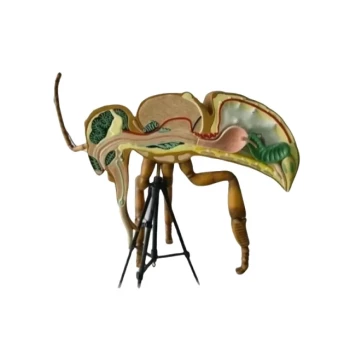
- HONESTBEE Anatomy Bee Model Detailed Anatomical Display for Education and Study
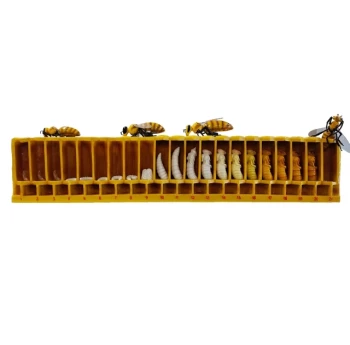
- Honey Bee Lifecycle Model: A Detailed Honeycomb Display of Bee Development
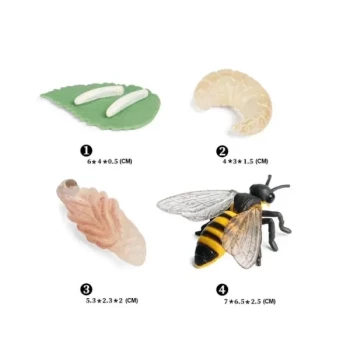
- Honey Bee Life Cycle Model 4 Stage Educational Set for Kids Learning
People Also Ask
- How do honey bees utilize water to regulate the internal temperature of the hive? Master Evaporative Cooling Methods
- Is it good to have honey bees in your yard? A Guide to Boosting Your Garden's Health
- What criteria should be considered in the selection process for honey bee breeding? Top Traits for Sustainable Apiaries
- What should be considered when learning the behavior of honey bees and their queens? Master Colony Management
- Why is maintaining specific relative humidity levels critical in caged honey bee experiments? Ensure Research Validity