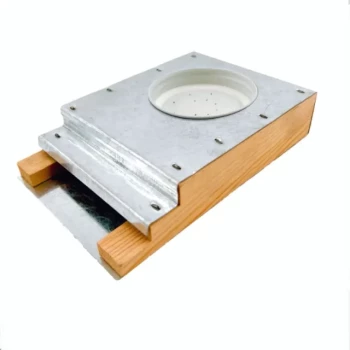
Maintaining colony stability during environmental stress requires precise manual intervention. During rainy seasons or summer dearths, feeding equipment allows you to dispense sugar solutions that simulate a natural nectar flow. This ensures the colony meets its basic energy requirements when external foraging is impossible.
Core Takeaway: Manual feeding is a strategic necessity to suppress the colony's instinct to abscond due to hunger. By artificially simulating a nectar flow, you preserve the colony's current strength to ensure a productive workforce is available for the next major harvest.
The Strategic Necessity of Manual Feeding
Mitigating the Risk of Absconding
The most critical function of feeding equipment during nectar-deficient periods is behavioral control.
When resources drop below a critical threshold, bee colonies develop a tendency to abscond—abandoning the hive to seek better resources elsewhere.
By consistently providing sugar syrup, you suppress this survival instinct, effectively anchoring the colony to the hive despite poor external conditions.
Simulating Natural Conditions
Feeding equipment does more than simply prevent starvation; it mimics a natural nectar flow.
This simulation tricks the colony into maintaining its standard biological rhythms.
It ensures that the metabolic activity of the hive continues uninterrupted, preventing the rapid decline in population that usually accompanies a dearth in resources.
Investing in Future Productivity
Bridging the Gap Between Flows
The goal of manual feeding extends beyond immediate survival; it is about continuity.
You are essentially bridging the gap between the current shortage and the next major nectar flow.
Without this bridge, the colony would emerge from the dearth too weak to gather honey effectively.
Maintaining Workforce Momentum
Honey production requires a massive, healthy population of worker bees.
Feeding ensures that the colony maintains sufficient strength throughout the rainy or dry season.
This guarantees that when the next bloom arrives, you have a ready and capable workforce prepared to maximize the harvest immediately.
Understanding the Trade-offs
The Requirement of Active Management
While feeding equipment is a powerful tool, it transforms beekeeping from a passive activity into an active management challenge.
You are taking full responsibility for the caloric intake of thousands of organisms.
Failure to maintain a consistent schedule with the equipment can result in a "stop-start" flow simulation, which may confuse the colony and fail to prevent absconding.
Making the Right Choice for Your Goals
To determine how aggressively you should utilize feeding equipment, consider your primary objective for the season:
- If your primary focus is Colony Retention: Prioritize consistent, maintenance-level feeding to suppress the absconding instinct and keep the hive populated.
- If your primary focus is Maximizing Future Yields: Increase feeding volume to simulate a strong flow, ensuring the population remains high and robust for the upcoming major nectar season.
Manual feeding is not merely life support; it is the bridge that connects a season of scarcity to a season of abundance.
Summary Table:
| Strategic Factor | Purpose of Manual Feeding | Impact on Colony Performance |
|---|---|---|
| Resource Scarcity | Simulates natural nectar flow | Prevents starvation and maintains metabolic rhythms |
| Behavioral Control | Suppresses absconding instinct | Keeps the colony anchored to the hive during dearth |
| Population Management | Maintains worker bee population | Ensures a ready workforce for the next major bloom |
| Seasonal Continuity | Bridges the gap between flows | Prevents hive decline during rainy or summer seasons |
Secure Your Apiary’s Future with HONESTBEE
Don't let nectar shortages or environmental stress compromise your colony's productivity. HONESTBEE provides commercial apiaries and distributors with high-quality feeding equipment and a full spectrum of beekeeping machinery—from hive-making tools to honey-filling systems.
Our comprehensive wholesale offering ensures your business has the essential consumables and specialized hardware needed to maintain hive stability and maximize future yields.
Ready to scale your beekeeping operations? Contact us today to discover how our industry-leading tools and merchandise can support your growth!
References
- Ghanshyam KC, Kapil Kafle. PRODUCTION AND MANAGEMENT OF HONEY BEE IN DANG DISTRICT OF NEPAL. DOI: 10.26480/faer.02.2021.101.106
This article is also based on technical information from HonestBee Knowledge Base .
Related Products
- HONESTBEE Entrance Bee Feeder Efficient Hive Front Liquid Feeding Solution for Beekeeping
- Rapid Bee Feeder White Plastic 2L Round Top Feeder for 8 or 10-Frame Bee Hives
- HONESTBEE Professional Hive Top Bee Feeder Feeding Solution
- Classic Boardman Entrance Bee Feeder Hive Front Feeding Solution
- Boardman Entrance Bee Feeder Durable Galvanized Steel and Wood Construction for Beekeeping
People Also Ask
- What types of bee feeders are available for beginners? Start with the Simple Entrance Feeder
- What are the advantages and disadvantages of using an entrance feeder for bees? Balance Convenience and Hive Security.
- What is a bee entrance feeder and what are its drawbacks? Essential Guide to Hive Security and Feeding Efficiency
- How does a bee entrance feeder work? A Simple Guide to Convenient Hive Feeding
- How to make an entrance feeder for bees? A DIY Guide for Safe & Effective Feeding