Wiring a frame serves as the essential internal reinforcement for wax foundation. Because beeswax is a soft, pliable material, it lacks the inherent structural integrity to support the heavy load of honey and brood on its own. The wire acts as a skeleton, preventing the foundation from sagging under hive temperatures and ensuring the comb does not shatter during the mechanical stress of honey extraction.
The Core Takeaway While wax foundation offers a natural substrate that bees accept readily, it is mechanically weak. Embedding wire into the foundation transforms fragile wax into a durable, reusable asset capable of withstanding the heat of the hive, the vibrations of transport, and the centrifugal force of harvesting.
The Mechanics of Structural Support
Preventing Thermal Sagging
The internal temperature of a beehive is high, often softening the wax foundation. Without the rigid support of wire, the sheet can stretch, sag, or buckle under its own weight. This deformation leads to irregular comb construction, which can complicate future hive inspections.
Stability During Transport
Hives are often moved to follow nectar flows or for pollination services. The vibrations and shocks associated with transport can cause unsupported combs to collapse. Wiring secures the comb to the frame, maintaining structural integrity even when the hive is in motion.
Guiding Efficient Construction
Wired frames act as a structured template. By keeping the foundation sheet flat and centered within the frame, the wire ensures that worker bees build straight, uniform honeycombs. This orderly construction allows beekeepers to remove and inspect frames without accidentally crushing bees or damaging adjacent combs.
Protecting the Comb During Harvest
Withstanding Centrifugal Force
The most critical need for wiring arises during the honey extraction process. Modern extractors spin frames at high speeds to force honey out of the cells using centrifugal force.
Preventing "Blowouts"
A full frame of honey is heavy, and the force of spinning puts immense pressure on the wax. Without wire reinforcement, the comb is likely to break apart or "blow out" of the frame inside the extractor. Wire holds the wax firmly in place, allowing the beekeeper to extract the honey and reuse the empty drawn comb, which saves the bees the significant energy required to build new wax.
Understanding the Trade-offs
Durability vs. Edibility
While wire is crucial for frames intended for extraction and reuse, it creates an obstacle if your goal is to eat the wax. For "comb honey" or "chunk honey," you generally cannot use wired foundation because the metal wires make the product inedible and difficult to cut.
Assembly Complexity
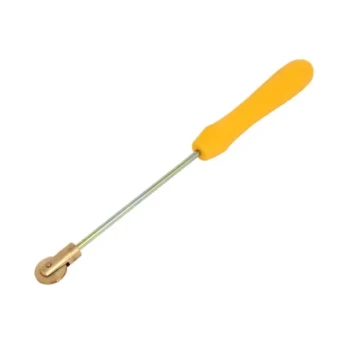
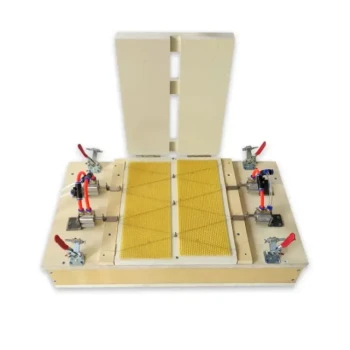
Using wired wax foundation requires more labor than using plastic foundation or foundationless frames. You must ensure the wire is tensioned correctly and then embed it into the wax (often using a battery or transformer to heat the wire). If the wire is too loose, it offers no support; if the embedding is too deep, it cuts through the wax sheet.
Making the Right Choice for Your Goal
Whether you choose to wire your frames depends entirely on your production goals for the hive.
- If your primary focus is extracted liquid honey: You must use wired foundation to prevent the heavy combs from disintegrating in the extractor.
- If your primary focus is cut comb or chunk honey: You should use unwired, "thin surplus" foundation to ensure the entire product is edible.
- If your primary focus is minimizing assembly time: You might consider plastic foundation, which is rigid enough to require no wiring, though bees may build on it less quickly than natural wax.
Wiring effectively bridges the gap between the natural appeal of beeswax and the mechanical demands of modern beekeeping equipment.
Summary Table:
| Benefit of Wiring | Impact on Beekeeping | Key Advantage |
|---|---|---|
| Structural Support | Prevents wax sagging and buckling | Maintains straight, inspectable combs |
| Thermal Stability | Resists deformation in high hive heat | Preserves cell shape for brood/honey |
| Extraction Safety | Prevents "blowouts" in centrifuges | Allows for reuse of drawn combs |
| Transport Security | Absorbs vibration during hive moving | Minimizes risk of comb collapse |
Maximize Your Apiary Productivity with HONESTBEE
At HONESTBEE, we understand that high-quality foundations and sturdy frames are the backbone of a successful harvest. As a dedicated partner to commercial apiaries and distributors, we provide a comprehensive wholesale range of beekeeping tools, from precision hive-making machinery to specialized honey-filling equipment and essential consumables.
Whether you are scaling up your production or seeking reliable hardware for your retail inventory, our expert-grade solutions ensure your operations run smoothly and efficiently.
Ready to elevate your beekeeping business? Contact us today to discuss our wholesale offerings and discover how our industry-leading equipment can support your growth.
Related Products
- Assembled Wooden Bee Frames with Beeswax Foundation Ready to Use by HONESTBEE
- Professional Frame Preparation: The HONESTBEE Electric Wire Embedder
- HONESTBEE Wired and Assembled Wooden Bee Frames Foundation for a Thriving Hive
- Assembled Wooden Bee Frames with Plastic Foundation for Durability and Convenience by HONESTBEE
- Notebook Style Beeswax Foundation Mould Wax Foundation Mold
People Also Ask
- Under what circumstances should bee frames be destroyed? Protect Your Apiary from American Foulbrood
- Do bee frames need foundation? Choose the Right Approach for Your Apiary
- How should frames be rearranged as a bee colony grows? Master Hive Expansion and Nest Management
- What are bee frames and how are they sized? A Professional Guide to Standardization & Material Choice
- How do you re-wax bee frames? A Simple Guide to Faster Comb Building