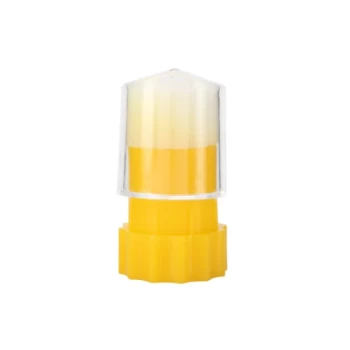
Natural beeswax is the preferred material for artificial queen cell cups because it possesses specific chemical signatures that honeybees biologically recognize and accept. Unlike pure paraffin, which is a foreign synthetic material, beeswax triggers natural instincts in worker bees, leading to higher acceptance of grafted larvae, faster construction, and immediate secretion of royal jelly.
Success in queen rearing is determined by how quickly and enthusiastically the colony adopts the grafted larva. Natural beeswax bridges the gap between artificial intervention and natural instinct, ensuring the colony invests its resources in the developing queen from the very first moment.
The Biological Advantage
Chemical Familiarity
Honeybees rely heavily on chemical cues to navigate their environment. Natural beeswax contains chemical signatures that are intimately familiar to the colony.
Because the material smells and feels like the hive's own infrastructure, worker bees do not perceive the artificial cup as a foreign object.
Increased Acceptance Rates
The core metric in queen rearing is the "acceptance rate"—the percentage of grafted larvae the bees choose to raise.
Using beeswax significantly increases the likelihood of acceptance compared to pure paraffin. The bees are less likely to clean out or reject a cup made from a material they produce themselves.
Stimulating Royal Jelly Secretion
The development of a high-quality queen depends on the volume of royal jelly fed to the larva.
Beeswax cups encourage worker bees to begin secreting royal jelly immediately and abundantly. This direct stimulation improves the early-stage developmental quality of the queen bee.
Physical Integrity and Stability
Superior Thermal Resistance
Beyond biological traits, beeswax offers superior physical properties for the hive environment.
Beeswax has a relatively high melting point of approximately 63.5 to 64.5 °C. This allows the cell cups to maintain their shape and structure even in the high heat of a crowded hive or during hot summer transfers.
Mechanical Strength
While paraffin can be brittle or soft depending on the blend, beeswax provides a robust mechanical structure.
This physical stability ensures the cell cup retains its structural integrity during handling and the bees' subsequent construction efforts.
Understanding the Trade-offs
The Cost of Quality
While pure paraffin is often cheaper and more uniform, it lacks the biological triggers necessary for high-performance beekeeping.
The "savings" in material cost with paraffin are often negated by lower success rates and developing queens of lesser physiological quality.
Material Consistency
Natural beeswax is a variable biological product, whereas paraffin is chemically consistent.
However, in the context of queen rearing, the biological compatibility of beeswax far outweighs the industrial consistency of paraffin.
Making the Right Choice for Your Goal
To maximize your success in queen rearing, align your material choice with your specific objectives:
- If your primary focus is Maximizing Acceptance Rates: Prioritize natural beeswax to leverage the bees' chemical recognition and ensure the colony accepts the graft immediately.
- If your primary focus is Queen Quality: Use beeswax to stimulate rapid and abundant royal jelly secretion, which is critical for the queen's early development.
- If your primary focus is Structural Reliability: Rely on beeswax for its high melting point (approx. 64°C), ensuring the cells withstand hive temperatures without deforming.
Ultimately, using natural beeswax aligns your artificial methods with the bees' natural instincts, turning the hive into a partner rather than an obstacle.
Summary Table:
| Feature | Natural Beeswax | Pure Paraffin |
|---|---|---|
| Biological Acceptance | High (Natural Chemical Cues) | Low (Synthetic/Foreign) |
| Royal Jelly Stimulation | Immediate & Abundant | Delayed or Minimal |
| Melting Point | High (~64°C) Stability | Variable (Potential Deforming) |
| Larvae Success Rate | Superior | Lower/Unpredictable |
| Worker Bee Response | Instinctive Integration | Initial Rejection/Cleaning |
Elevate Your Queen Rearing Productivity with HONESTBEE
High-quality queen production starts with materials that work in harmony with nature. At HONESTBEE, we understand that commercial apiaries and distributors require more than just supplies—you need tools that guarantee results.
Our comprehensive wholesale portfolio includes everything from premium beeswax processing equipment to automated honey-filling machines and specialized beekeeping hardware. Whether you are scaling your commercial queen rearing operations or supplying the next generation of beekeepers, we provide the industrial-grade machinery and essential consumables needed to succeed.
Partner with HONESTBEE today to secure high-performance equipment for your apiary business.
Contact Our Wholesale Team Now
References
- Anisha Poudel, Bhawana Aryal. Effect of Queen Cell Cup Types on Graft Acceptance And Queen Bee Emergence in Apis mellifera L.. DOI: 10.3126/jpps.v9i2.85021
This article is also based on technical information from HonestBee Knowledge Base .
Related Products
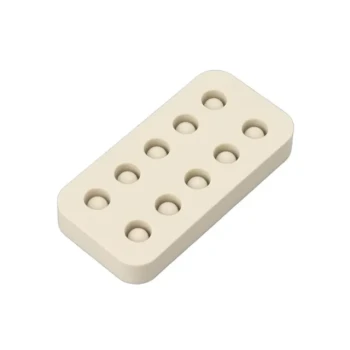
- 10-Cell Silicone Beeswax Bee Queen Cups Forming Mold
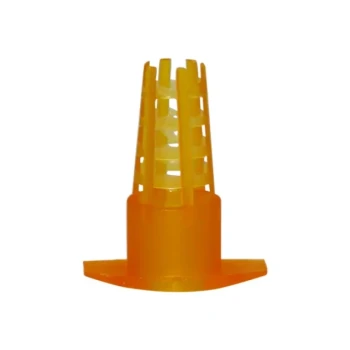
- JZBZ Type Wide Base Plastic Queen Cell Cups for Base Mounting and Queen Rearing
- Brown Nicot Queen Cell Cups for Breeding Queen Bees Beekeeping
- JZBZ Push-In Queen Cell Cups for Beekeeping
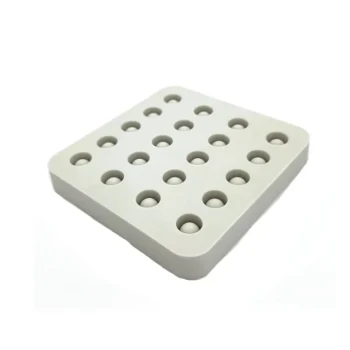
- High-Efficiency 20-Cell Silicone Mold for Beeswax Bee Queen Cup Production
People Also Ask
- How do beeswax queen cell cups function? Optimize Queen Rearing with Biological Mimicry
- What is the biological function of beeswax queen cell cups? Boost Acceptance in Artificial Queen Rearing
- What role do specialized queen rearing tools play in developing mite-resistant honeybee stock? Master Genetic Selection
- What materials are used to make artificial queen cell cups for grafting? Beeswax vs. Plastic Guide
- What roles do specialized queen cell cups play in royal jelly production? Optimize Your Hive's Secretion and Yield