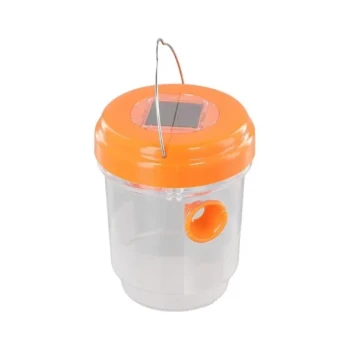
Red-filtered light is utilized primarily because Greater and Lesser Wax Moths exhibit a distinct behavioral sensitivity to long-wavelength radiation. Unlike standard white or yellow light sources, specific red wavelengths trigger a stronger attraction response in these pests. This targeted attraction mechanism forms the basis for effective physical control traps.
By leveraging the biological sensitivity of wax moths to the red spectrum, these traps offer a highly efficient method of physical pest control. This approach maximizes capture rates while eliminating the need for chemical pesticides.
The Science of Attraction
To understand why these traps are effective, we must look at the biological response of the target pest.
Behavioral Sensitivity
Wax moths do not respond to all light sources equally. They possess a heightened behavioral sensitivity specifically geared toward the red end of the light spectrum.
Long-Wavelength Specificity
This sensitivity focuses on long-wavelength light. Traps designed with these specific wavelengths exploit a natural biological inclination to draw the insects in more effectively than broad-spectrum light.
Efficiency in Physical Control
Using red light changes the efficacy of the trap from a passive device to an active lure.
Superiority Over Standard Lighting
Empirical evidence indicates that red light outperforms common alternatives. Traps configured with red wavelengths attract a higher proportion of both Greater and Lesser Wax Moths compared to those using standard white or yellow bulbs.
Chemical-Free Operation
This method allows for precise physical control. By relying on light attraction rather than toxicity, beekeepers and pest managers can reduce populations without applying chemical pesticides.
Understanding the Trade-offs
While red-light traps are effective, it is important to understand their operational context.
Specificity vs. General Capture
Red light is a specialized tool. Because it targets the specific long-wavelength sensitivity of wax moths, it may be less effective for other pests that are primarily attracted to UV or green spectrums.
Deployment Requirements
Physical control relies on the insect traveling to the source. Unlike fumigants that permeate a space, light traps require strategic placement to ensure visibility and accessibility to the moths.
Making the Right Choice for Pest Management
When integrating light traps into your pest control strategy, align your equipment with your specific objectives.
- If your primary focus is maximizing capture rates: Prioritize traps specifically engineered to emit long-wavelength red light rather than generic white or yellow bulbs.
- If your primary focus is chemical-free safety: Utilize red-light physical traps to manage populations without risking chemical contamination of honeycomb or hives.
Leveraging the specific biological response of wax moths to red light provides a cleaner, more targeted approach to colony protection.
Summary Table:
| Feature | Red-Filtered/Long-Wavelength Light | Standard White/Yellow Light |
|---|---|---|
| Attraction Level | High (Targeted sensitivity) | Moderate to Low |
| Pest Specificity | Greater & Lesser Wax Moths | General Insects |
| Method | Active Biological Lure | Passive Light Source |
| Safety | Chemical-free & Non-toxic | Chemical-free & Non-toxic |
| Primary Benefit | Maximized capture rates | General visibility |
Protect Your Hives with Professional Beekeeping Solutions
Are you a commercial apiary or distributor looking to scale your pest management efficiency? HONESTBEE provides the specialized tools you need to safeguard your operations. From advanced hive-making and honey-filling machinery to a comprehensive range of beekeeping consumables and hardware, we are your dedicated wholesale partner.
Why partner with HONESTBEE?
- Comprehensive Wholesale Range: Access everything from specialized machinery to honey-themed cultural merchandise.
- Industry Expertise: We supply the full spectrum of tools designed for the rigorous demands of commercial beekeeping.
- Enhanced Productivity: Our high-quality equipment is engineered to maximize your yield and minimize pest interference.
Ready to elevate your apiary's performance? Contact us today to discuss our wholesale offerings and discover how our expertise can drive your business forward.
References
- Mahmoud Mabrouk, Mohamed Mahbob. Effect of Different Coloured Light Traps on Captures and Controlling Wax Moth (Lepidoptera: Pyralidae).. DOI: 10.21608/eajbsa.2015.12883
This article is also based on technical information from HonestBee Knowledge Base .
Related Products
- Professional Bucket Style Wasp and Moth Pheromone Trap
- Compact Multi-Funnel Hanging Wasp Trap
- Gourd Shaped Hanging Wasp Trap Professional Wasp Catcher
- 30 cm Plastic Entrance Hole Bee Pollen Trap and Collector
- Professional Multi-Component Bucket Wasp Trap
People Also Ask
- What is the function of Pheromone Traps in the biosecurity monitoring of apiaries? Precision Tools for Pest Control
- What role do Pheromone Traps play in the IPM for Large African Hive Beetles? Essential Surveillance & Control Tips
- How do professional wasp traps function? Master Physical Control of Oriental Hornets to Protect Your Apiary
- What are the practical advantages of using professional wasp traps and protective equipment in apiary management? Scale Up
- Why replace sugar syrup bait in wasp traps every three days? Ensure Maximum Attraction and Catch Rates