Sanitary harvesting equipment and honey-filling machinery are the operational foundation of commercial beekeeping. They replace destructive nest-raiding with controlled extraction, protect colony health, reduce contamination, and convert variable raw honey into consistent, traceable products suitable for distributors, retailers, and regulated markets.
The transition from wild honey hunting to sustainable apiary production requires control at both ends of the process: harvesting must preserve the colony and comb structure, while filling must protect purity, consistency, and hygiene. Together, these systems turn honey production from an irregular collection activity into a repeatable commercial operation.
Why Wild Honey Hunting Cannot Support Long-Term Supply
Destructive harvesting damages the production asset
Wild honey hunting may involve breaking open nests, destroying combs, or killing bees to access the honey. This removes the colony’s future production capacity and makes supply dependent on continually locating new nests.
A managed apiary treats the bee colony, hive structure, and genetic stock as productive assets. Sustainable equipment allows producers to collect part of the yield while leaving the colony capable of rebuilding and producing again.
Uncontrolled handling creates quality risks
Honey collected in exposed or improvised conditions can come into contact with smoke residue, dirt, insects, damaged comb, unsuitable containers, or other contaminants. These risks become more serious when the product is sold through formal commercial channels.
Sanitary harvesting tools, food-grade contact surfaces, filtration, and sealed storage create a controlled path from hive to container.
How Harvesting Equipment Enables Sustainable Apiary Operations
Centrifugal extraction protects combs
A professional centrifugal honey extractor removes honey from the comb through controlled spinning rather than destroying the comb structure. Intact combs can be returned to the hive, reducing colony disturbance and the energy bees must spend rebuilding wax.
This improves the continuity of production and can increase the usable recovery from each managed hive.
Standardized tools improve repeatability
Commercial harvesting requires more than a single extractor. Knives, uncapping equipment, strainers, pumps, food-grade containers, and storage systems must work together as a sanitary process.
Standardized equipment reduces variation between harvests, supports cleaner workflows, and gives operators a repeatable method that can be taught across a production team.
Controlled extraction supports colony protection
Sustainable harvesting means taking only an appropriate portion of the hive’s yield and avoiding unnecessary damage to brood areas, combs, and colony structure. Equipment does not make harvesting sustainable by itself, but it makes this controlled approach practical at commercial volumes.
The result is a production model based on repeated harvest cycles, rather than one-time extraction from wild nests.
Why Sanitary Processing Matters to Commercial Buyers
Clean contact surfaces reduce contamination risk
Stainless steel and other appropriate food-contact materials are easier to clean, inspect, and maintain than improvised equipment. They help prevent residues and contaminants from entering the honey during extraction and transfer.
For wholesalers, distributors, and B2B buyers, this is essential because product quality must remain reliable across batches and suppliers.
Filtration improves presentation without replacing quality control
Physical filtration can remove visible wax particles and other impurities after extraction. It should be selected and operated carefully so that the producer achieves the required cleanliness without applying unnecessary processing.
Filtration is one step in a broader hygiene system that also includes clean equipment, suitable storage, controlled handling, and documented procedures.
Food-grade storage protects the finished product
Honey needs suitable sealed containers to reduce exposure to moisture, dust, odors, and secondary contamination. Appropriate storage helps preserve its natural flavor and quality before filling or dispatch.
Storage conditions and container selection remain important even when the filling line itself is highly automated.
How Filling Machinery Enables Commercial Scale
Precise filling creates consistent products
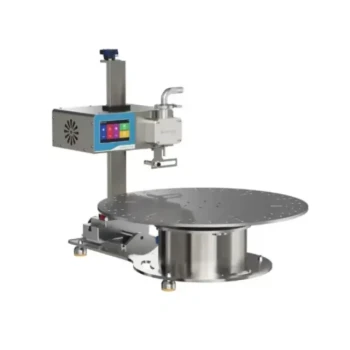
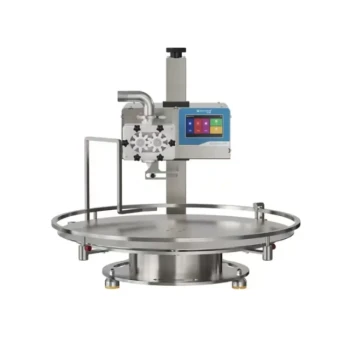
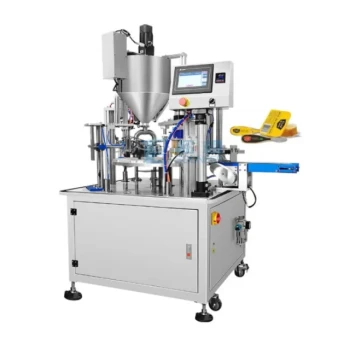
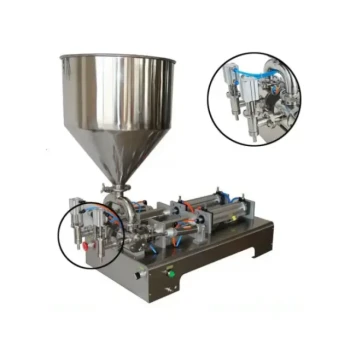
Honey-filling machines use controlled flow and calibrated dosing to place consistent quantities into each container. This improves pack accuracy, reduces giveaway and material loss, and supports dependable inventory planning.
Consistent fill volumes also make products more suitable for retail specifications, private-label programs, and distributor requirements.
Enclosed filling improves hygiene
An enclosed or controlled filling environment reduces opportunities for secondary contamination during packaging. The machine should form part of a complete sanitation program that includes cleaning, inspection, maintenance, and operator hygiene.
Automation improves process control, but it does not eliminate the need for sound food-safety procedures.
Standardized packaging supports market access
Commercial buyers need more than bulk honey. They often require products with consistent weights, professional presentation, reliable seals, and repeatable specifications.
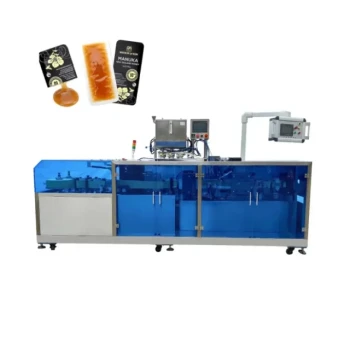
Filling machinery helps producers move from workshop-style or informal sales toward standardized branded products that can enter organized distribution and retail channels.
Automation improves fulfillment capacity
Manual filling becomes a bottleneck as order volumes, container formats, or customer requirements increase. Automated or semi-automated machinery can improve throughput and make production schedules more predictable.
For distributors and resellers, dependable capacity supports faster order fulfillment and reduces the risk of inconsistent supply during demand peaks.
How the Equipment Supports Traceability and Compliance
Standardized processes make quality measurable
Commercial equipment creates defined process points for harvesting, filtering, storage, filling, and sealing. These points can be documented and monitored more effectively than informal collection and packaging methods.
This supports batch consistency and makes it easier to investigate quality issues if they occur.
Packaging control strengthens commercial credibility
Accurate filling and reliable sealing help producers meet customer specifications and maintain a professional product appearance. These details influence whether a supplier can serve formal distribution networks.
For B2B buyers, equipment capability is therefore part of supplier qualification—not merely a production preference.
Organic and premium products require process discipline
High-value wild, organic, or medicinal honey varieties are particularly vulnerable to quality damage because their commercial value depends on purity and authenticity. Sanitary handling and controlled packaging help protect those characteristics.
Specific certification requirements vary by market, so equipment must be combined with the applicable documentation, testing, labeling, and traceability systems.
Understanding the Trade-offs
Equipment requires investment and operating discipline
Extractors, filtration systems, storage tanks, and filling machines require capital, space, utilities, cleaning, maintenance, and trained operators. Buying equipment that is too large for current production can create unnecessary cost and complexity.
The appropriate choice should match hive numbers, seasonal yield, container formats, labor availability, and realistic growth plans.
Automation does not replace good procedures
A filling machine cannot correct poor raw-material handling, dirty containers, inaccurate calibration, or inadequate sanitation. Equipment performance depends on cleaning schedules, inspection routines, operator training, and preventive maintenance.
The machine should be evaluated as part of the entire process rather than as a standalone solution.
Excessive processing can undermine product positioning
Heating, decrystallization, filtration, or pumping must be controlled according to the product’s quality objectives. Overprocessing can conflict with a producer’s positioning around minimally processed or specialty honey.
Buyers should confirm the machine’s temperature control, filtration configuration, product-contact materials, and operating method before purchase.
Supplier support affects total value
The lowest purchase price may not represent the lowest operating cost if spare parts, technical guidance, installation support, or response times are inadequate. Commercial operations need dependable access to service and replacement components.
For distributors and resellers, a supplier’s product range, technical expertise, responsiveness, and fulfillment capability are important parts of the sourcing decision.
Making the Right Choice for Your Goal
The transition should be planned as an integrated harvesting, processing, packaging, and supply operation.
- If your primary focus is colony sustainability: Prioritize non-destructive harvesting systems that preserve combs, minimize colony disturbance, and support repeated harvest cycles.
- If your primary focus is hygiene and product purity: Select food-grade harvesting, filtration, storage, and filling equipment designed for controlled cleaning and sealed handling.
- If your primary focus is commercial distribution: Choose filling and packaging equipment that delivers accurate volumes, reliable seals, consistent presentation, and documented batch control.
- If your primary focus is production growth: Match extractor capacity, filtration, storage, and filling speed to current output while allowing practical expansion without excessive overinvestment.
- If your primary focus is reliable sourcing: Work with a supplier that can provide a coordinated equipment portfolio, responsive technical service, replacement support, and efficient order fulfillment.
With the right equipment and disciplined operating procedures, apiaries can protect bee populations while delivering the consistent, hygienic, market-ready honey that sustainable commercial growth requires.
Summary Table:
| Aspect | Wild Honey Hunting | Commercial Apiary with Sanitary Equipment |
|---|---|---|
| Colony Impact | Destructive; kills bees often | Non-destructive; preserves colony |
| Quality Control | High contamination risk | Controlled hygiene, reduced contamination |
| Production | Irregular, one-time | Repeatable, consistent cycles |
| Packaging | Informal, inconsistent | Standardized, accurate filling |
| Scalability | Limited | Supports growth and market access |
Ready to upgrade your beekeeping operation? At HONESTBEE, we supply comprehensive commercial harvesting and filling solutions—from extractors to honey-filling machines—with fast delivery and dedicated support. Contact us today for a tailored quote and ensure sustainable growth for your apiary. Get in touch now!
Related Products
- Precision Durable Efficient HONESTBEE Rotary Honey Filling Machine
- Economy Small Honey Filling Machine Honey Bottle Filler Packaging Machine
- Fully Automatic Honey Filling Packaging Machine for Processing Line
- Semi Automatic Small Honey Bottle Filling Machine Honey Filler
- Automatic Honey Filling and Filtering Machine for Beekeeping Bottle Filling
People Also Ask
- How do honey filling machines work? Achieve Precision & Speed for Your Apiary
- What is a key feature of the new generation of the honey filling machine? The Advanced Electronic Control Unit
- How do honey filling and processing machines aid native bee product conservation? Boost Value with HONESTBEE Technology
- What are the common types of bottling machines used for honey? Choosing the Right Solution for Your Apiary
- What quality control role does professional honey filling equipment perform? Ensure Consistency and Product Stability