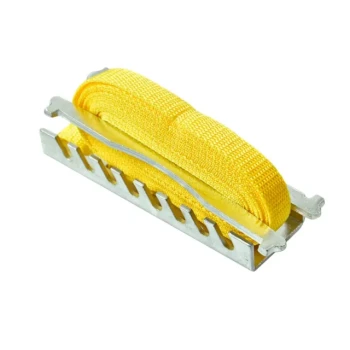
Specialized beekeeping netting acts as the primary containment barrier during the long-distance truck transportation of honey bee colonies. It serves to physically prevent bees from exiting the hives or becoming separated from the load due to inevitable vehicle vibrations. This equipment is critical for maintaining the physical integrity of the shipment and ensuring public safety on the road.
By effectively containing the population, specialized netting does more than secure the cargo; it preserves the statistical validity of research data regarding the health impacts of migration on honey bee colonies.
The Mechanics of Containment
Counteracting Road Vibration
Truck transportation generates significant vibration that can disturb the colony. This often causes bees to become dislodged from the hive structure.
Specialized netting secures these displaced bees, keeping them within the designated transport area rather than allowing them to be lost to the environment.
Public Safety Protocols
Uncontained bees pose a significant risk to the public on highways and at rest stops.
Netting establishes a secure perimeter around the cargo. This prevents bees from flying out into uncontrolled environments, mitigating liability and safety hazards.
The Role in Research and Data Quality
Preserving Colony Population
For research initiatives, maintaining the specific population of a colony is paramount.
If bees escape during transit, the colony's population density changes artificially. Netting ensures the biological "sample size" remains intact from departure to arrival.
Tracking Migration Impacts
Researchers often study the health effects of long-distance migration on specific populations.
Accurate tracking of these impacts is impossible if the population is compromised by loss. Netting allows scientists to attribute health changes to the migration process itself, rather than the loss of bees during transit.
Understanding the Limits of Netting
Netting vs. Ventilation Management
While netting effectively secures the bees, it is not a complete climate control solution.
Netting contains the bees, but screened transport lids are required to manage internal temperatures. Without the heat dissipation provided by screened lids, colonies risk heat stroke or mass mortality despite being securely netted.
Structural Dependencies
Netting secures the biological assets, but it relies on the underlying woodenware for structure.
Technicians must still ensure the hive bodies and bottom boards are structurally sound. Netting serves as a safety layer, not a replacement for high-strength hive components.
Making the Right Choice for Your Goal
Whether you are a commercial hauler or a researcher, the application of netting serves distinct objectives.
- If your primary focus is Research Integrity: Use specialized netting to ensure zero biomass loss, guaranteeing that post-transport health data accurately reflects the impact of migration.
- If your primary focus is Public Safety: Deploy netting to strictly contain defensive populations and dislodged bees, preventing interactions between the colony and the general public.
Secure containment is the absolute prerequisite for both valid scientific data and safe logistical operations.
Summary Table:
| Feature | Purpose | Key Benefit |
|---|---|---|
| Physical Containment | Prevents bees from exiting hives due to vibration | Maintains colony population and biomass |
| Safety Perimeter | Blocks bees from highways and rest stops | Mitigates public liability and safety risks |
| Data Preservation | Ensures zero biomass loss during migration | Guarantees statistical validity for research |
| Environmental Shield | Keeps dislodged bees within the transport area | Prevents loss of assets to the environment |
Secure Your Apiary Logistics with HONESTBEE
Transporting honey bee colonies over long distances requires more than just a truck—it requires professional-grade protection. At HONESTBEE, we specialize in supporting commercial apiaries and distributors with high-performance beekeeping netting, screened lids, and a full spectrum of heavy-duty machinery.
Whether you are managing a massive migratory operation or supplying the next generation of beekeepers, our comprehensive wholesale portfolio of hive-making machines, honey-filling equipment, and essential consumables ensures your business remains efficient and safe.
Ready to upgrade your transportation and production standards?
Contact our expert team today to learn how our hardware and tools can safeguard your colonies and scale your operations.
References
- Samantha A. Alger, Leif L. Richardson. Home sick: impacts of migratory beekeeping on honey bee ( <i>Apis mellifera</i> ) pests, pathogens, and colony size. DOI: 10.7717/peerj.5812
This article is also based on technical information from HonestBee Knowledge Base .
Related Products
- Professional Galvanized Hive Strap with Secure Locking Buckle for Beekeeping
- Professional Beekeeper Suit with Square Folding Cotton Veil
- Premium Cotton Beekeeper Suit with Reinforced Fencing Veil
- Beekeeping Jacket with Hood and Veil for Beekeepers
- Professional Square Folding Wire Mesh Beekeeping Veil
People Also Ask
- What is a good way to store hive straps to keep them organized? Master the Art of Tangle-Free Hive Transport
- What are the two main styles of hive straps? Choosing Between Cam Buckles and Ratchet Mechanisms for Your Apiary
- What role do standardized beehive fastening and protective consumables play? Secure Colonies Against Natural Disasters
- What maintenance do hive straps require? Keep Your Hives Secure with Simple Care Tips
- What is the best choice for hive straps? Ratchet vs. Cam Buckle for Your Apiary