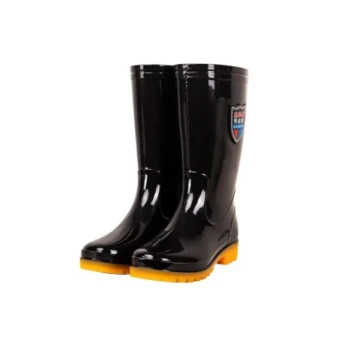
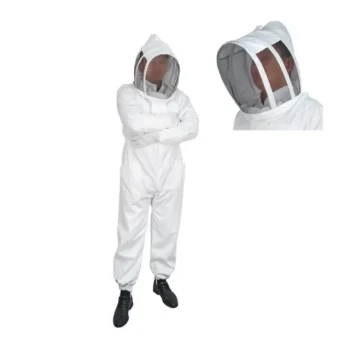
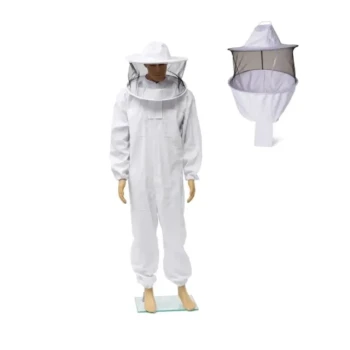
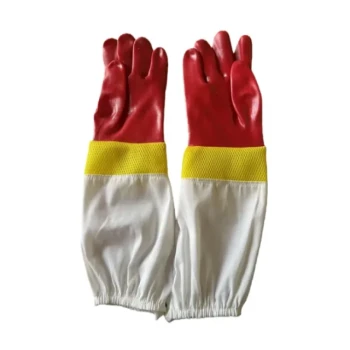
Secure footwear is critical for apiary safety. Specific footwear, particularly boots, is recommended for children to ensure a seamless barrier against stings. By tucking the legs of the bee suit inside the boots, you create a closed seal that prevents bees from accessing the vulnerable ankle area or crawling up inside the pant legs.
The primary function of beekeeping boots is to close the gap between the protective suit and the ground. By tucking the suit legs into the boots, you eliminate the entry point for bees to crawl upwards, ensuring the child's ankles and legs remain protected.
The Mechanics of Protection
Eliminating the Upward Path
Bees have a natural tendency to crawl upwards when they land on a surface. If the bottom of a child's pant leg is loose or hanging open, it acts as an inviting tunnel for bees to enter.
Boots provide the necessary containment to stop this. By tucking the fabric of the bee suit inside the boot, you physically block this pathway, forcing bees to stay on the outside of the protective gear.
Securing the Ankle Gap
The ankle is a frequent target for stings because it often becomes exposed when a person moves, bends, or squats.
Boots serve as a rigid shield over this sensitive area. A boot that is sufficiently high ensures that the skin remains covered by sturdy material, even if the suit fabric shifts during movement.
Critical Features in Footwear
Material and Fit
To be effective, the boots must be made of sturdy materials capable of resisting stings. Soft canvas sneakers often lack the thickness required to stop a stinger.
The fit should be snug enough to hold the tucked suit legs firmly in place. If the boot is too loose, the suit leg may pull out, breaking the safety seal.
Height Requirements
The boots must be high enough to fully cover the ankle bone.
While specialist boots are not always required, the footwear must provide enough depth to tuck the pant legs in securely without them slipping out after a few steps.
Understanding the Trade-offs
Heat Management vs. Coverage
Knee-high rubber boots generally offer the best protection because they maximize the overlap between the suit and the footwear.
However, these boots can trap heat and become uncomfortable during hot summer inspections. Overheating can be a distraction for a child, which is a safety risk in itself.
Mobility and Grip
Heavy, clunky boots can impair agility. Apiaries often have uneven ground, and a child needs to move confidently without tripping.
You must balance the need for thick protection with the need for good grip and reasonable weight. A fall in an apiary can be dangerous, so footwear must support stable movement.
Making the Right Choice for Your Child
Selecting the right footwear involves balancing absolute security with the child's comfort and ability to move.
- If your primary focus is maximum safety: Choose knee-high rubber boots to guarantee the suit stays tucked and ankles are fully shielded against all intrusion.
- If your primary focus is comfort in heat: Opt for sturdy ankle-high hiking boots, but pair them with boot bands to tightly seal the pant legs against the footwear.
Ultimately, the goal is to create a gap-free barrier that allows the child to observe bees with confidence and without fear.
Summary Table:
| Feature | Importance for Children | Recommended Solution |
|---|---|---|
| Protection Path | Prevents bees from crawling up legs | Tuck bee suit legs into high boots |
| Material | Must resist sting penetration | Sturdy rubber or thick leather |
| Boot Height | Protects the sensitive ankle gap | Over-the-ankle or knee-high boots |
| Mobility | Prevents trips on uneven apiary ground | Lightweight boots with non-slip grips |
| Comfort | Manages heat during summer inspections | Breathable materials or moisture-wicking socks |
Secure Your Apiary with Professional-Grade Gear from HONESTBEE
At HONESTBEE, we understand that safety is the foundation of a successful beekeeping operation, especially for the next generation. Whether you are a commercial apiary or a distributor, we provide the comprehensive wholesale solutions you need to keep beekeepers protected. From specialized hive-making and honey-filling machinery to high-quality protective tools and essential consumables, our portfolio covers every facet of the industry.
Ready to elevate your beekeeping equipment standards?
Contact us today to explore our wholesale range and see how we can bring value to your business through expert-led tool design and honey-themed cultural merchandise.
Related Products
- Professional PVC Beekeeping Shoes with Integrated Non-Slip Sole
- White PVC Beekeeping Shoes with Non-Slip Safety Sole
- Metal Bee Hive Stand Bee Box Stand for Beekeeping
- Yellow Plastic Bucket Pail Perch for Beekeeping
- Premium Cotton Beekeeper Suit with Reinforced Fencing Veil
People Also Ask
- What dual protection do professional beekeeping boots provide in tropical environments? Essential Safety for Apiarists
- What should be done if a bee gets inside a beekeeping shoe? A Guide to Safe, Sting-Free Removal
- What are the common types of shoes used by beekeepers? Select the Best Footwear for Apiary Safety and Comfort
- How does proper coverage contribute to the effectiveness of beekeeping shoes? Secure Your Feet Against Stings
- Why is it beneficial for beekeeping shoes to be easy to clean? Enhance Safety and Traction in Your Apiary