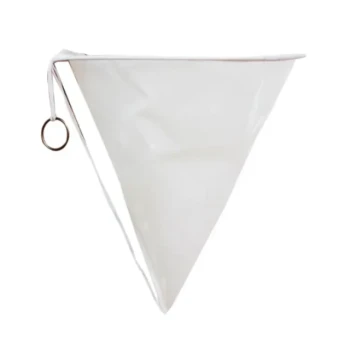
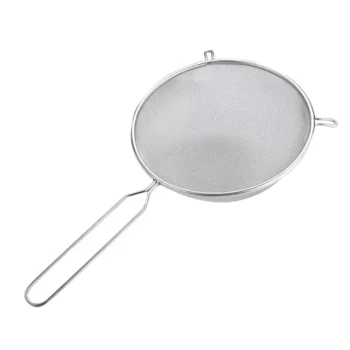
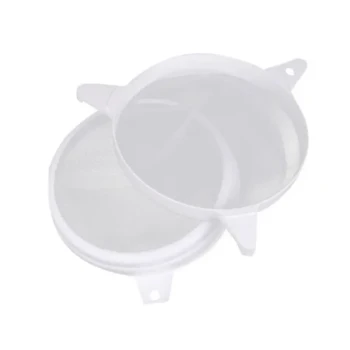
The honey filtering process is effectively the gateway between raw harvest and commercial viability. It utilizes equipment with specific pore sizes to physically separate wax residue, bee body fragments, and large pollen grains from the liquid honey. By executing this standard procedure, producers ensure their product meets the strict quality definitions and sensory requirements mandated by wholesalers and food processors.
Core Takeaway: Filtration is not merely about hygiene; it is a critical stabilization step that controls the honey’s physical state and market value. It removes the impurities that cause premature crystallization and visual defects, transforming raw extraction into a consistent, commercially eligible product.
The Mechanics of Purification
Removal of Physical Contaminants
The primary function of filtration is the removal of macroscopic debris introduced during extraction.
As honey is released from the extractor, it inevitably contains wax particles, bee fragments, and other hive debris.
Filtering, often done using fine nylon or metal meshes, acts as the essential barrier that eliminates these contaminants to produce a "clean" final product.
Elimination of Suspended Particles
Beyond large debris, raw honey often contains suspended particles and air bubbles that affect texture and appearance.
High-precision equipment is utilized to trap these finer impurities.
This step is vital for ensuring the honey achieves the visual clarity expected in the retail market.
Enhancing Product Stability and Clarity
Preventing Abnormal Crystallization
One of the deep technical reasons for filtration is the management of the honey's liquid state.
Impurities such as wax bits or dust act as "nucleation sites" where sugar crystals begin to form.
By removing these particles, the filtering process significantly delays crystallization, ensuring the honey remains liquid and shelf-stable for longer periods.
Preserving Visual Appeal
Visual clarity is a direct determinant of sensory quality.
Physical filtration removes the cloudiness caused by suspended solids, resulting in a bright, transparent product.
This "polished" look is a baseline requirement for consumer acceptance in the general food industry.
Commercial Implications
Meeting Industry Standards
For a producer to enter the formal retail market or sell to large-scale packers, raw honey is insufficient.
Wholesalers have rigid quality definitions that dictate maximum allowable insoluble matter.
Filtration is the "standard procedure" cited in industry guidelines to verify market eligibility.
Increasing Market Competitiveness
Industrial-grade filtration directly impacts the economic value of the harvest.
Honey that displays superior clarity and purity allows producers to command higher price premiums.
It enables entry into high-end markets where consistency and aesthetic perfection are non-negotiable.
Understanding the Trade-offs
While filtration is essential for commercial standardization, it requires careful management of process variables.
Heat Management: Some filtration systems use mild heat to lower viscosity and speed up the flow through pumps and meshes. However, excessive heat can degrade the honey's nutritional profile and increase HMF (hydroxymethylfurfural) levels, damaging quality.
Over-Filtration: There is a balance between clarity and authenticity. Ultra-fine filtration can remove all pollen, which is often used to verify the honey's floral source and geographical origin.
Pressure Factors: High-pressure pumps increase efficiency but must be calibrated carefully. Improper pressure management combined with fine filters can inadvertently alter the honey’s natural characteristics.
Making the Right Choice for Your Goal
To maximize the value of your honey, align your filtration strategy with your target market.
- If your primary focus is Mass Market Retail: Prioritize high-precision filtration with crystallization control to ensure long shelf life and perfect visual clarity.
- If your primary focus is Bulk Wholesale: Focus on standard filtration that meets the specific "cleanliness" definitions and purity standards of your buyer contracts.
Ultimately, proper filtration turns a variable agricultural output into a reliable, high-value commodity.
Summary Table:
| Feature | Purpose of Filtration | Commercial Impact |
|---|---|---|
| Debris Removal | Eliminates wax, bee parts, and hive particles | Ensures food safety and hygiene compliance |
| Crystallization Control | Removes nucleation sites (dust/wax) | Extends shelf life and maintains liquid state |
| Visual Clarity | Eliminates suspended particles and cloudiness | Increases consumer appeal and sensory quality |
| Market Eligibility | Meets rigid insoluble matter standards | Permits entry into high-end retail and wholesale |
| Quality Stability | Prepares honey for bulk transport and storage | Minimizes spoilage and preserves market value |
Scale Your Apiary Operations with HONESTBEE
Transitioning from raw harvest to a high-value commercial product requires the right industrial precision. At HONESTBEE, we specialize in supporting commercial apiaries and distributors with a comprehensive wholesale range of professional beekeeping machinery and equipment.
From high-efficiency honey-filling machines and specialized hive-making hardware to the essential consumables that keep your production line running, we provide the tools you need to maximize market competitiveness. Our solutions are designed to ensure your honey meets the strictest industry standards for clarity and purity.
Ready to upgrade your processing capabilities? Contact our expert team today to discuss your equipment needs
References
- Besha Teresa Borena. HONEY VALUE CHAIN ANALYSIS: THE CASE OF ABUNA GINDEBERET DISTRICT OF OROMIA REGIONAL STATE, ETHIOPIA. DOI: 10.22159/ijags.2023.v11i3.46713
This article is also based on technical information from HonestBee Knowledge Base .
Related Products
- Professional Stainless Steel Honey Filtering Machine with Water Bath Heating for Beekeeping
- Electric Double Wall Honey Filtering Machine Purifier Equipment for Honey Processing Plant
- Honey Concentrating and Filtering Dehumidifier Machine 2T Capacity for Honey
- Automatic Honey Filling and Filtering Machine for Beekeeping Bottle Filling
- 0.5T Capacity Honey Dehumidifier Dryer with Vacuum Heating and Thickening Filtering Machine
People Also Ask
- Why do people filter honey? For Clarity, Stability, and Consumer Appeal
- Is it necessary to filter honey after extraction? A Guide to Straining vs. Raw Honey
- What is the best way to filter honey? A Guide to Quality, Clarity, and Raw Preservation
- Why is filtering honey an important step in honey processing? Ensure Purity, Clarity & Marketability
- What are the benefits of using honey filters? Achieve Purity, Efficiency, and Market Appeal