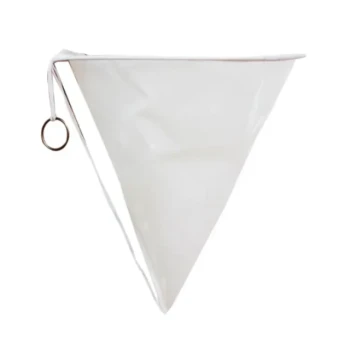
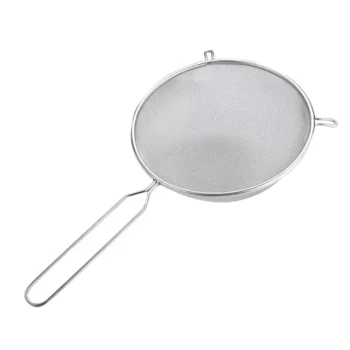
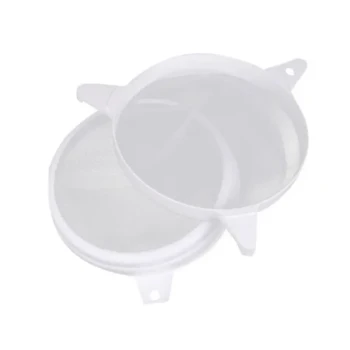
The simple straining method is a foundational technique ideal for processing freshly harvested honey. It involves uncapping the honeycomb and allowing the liquid to pass through a folded straining cloth—typically nylon—secured over a clean, wide-mouth container. This gravity-fed process effectively separates wax debris from the honey without requiring complex machinery.
Ideally suited for small-scale extraction, this method relies on gravity and a settling period to purify the honey. By filtering through double-layered fabric and allowing air bubbles or scum to rise overnight, you produce a clean product that retains its natural enzymes.
The Mechanics of Simple Straining
Essential Equipment
To execute this method efficiently, you require a clean, dry container with a wide mouth. The wide opening ensures the honey can drip through the filter without bottling up or spilling over the sides.
The filtration medium is equally critical; a straining cloth or net, specifically nylon, is the standard recommendation. For optimal filtration, this cloth should be folded into two layers to catch finer particulate matter.
The Filtration Process
The cloth is tied securely over the mouth of your collection container. The honey is then uncapped—or in some variations, the comb is crushed—and poured or allowed to drip through the cloth.
Gravity draws the liquid honey down into the container. Meanwhile, the double-layered nylon traps wax cappings, bee parts, and other debris, leaving them behind on the cloth.
The Critical Settling Phase
Filtration alone does not yield a perfectly finished product; a settling period is mandatory. Once the honey has passed through the cloth, it must be left undisturbed in the container overnight.
During this time, air bubbles and fine impurities rise to the top, forming a layer of scum. You must skim this scum off the surface with a spoon before the honey is ready for final packing.
Storage and Preservation Principles
Controlling Moisture
While the primary focus is straining, managing moisture is essential to prevent fermentation. If the honey has absorbed excess moisture, do not heat it, as this destroys vital enzymes and flavor profiles.
Instead, use a fan to blow air over a pan of honey for several hours. This mechanical evaporation reduces water content safely without thermal damage.
Proper Containment
After the scum is removed, the honey should be packed immediately into glass jars, food-grade plastic buckets, or metal containers.
The lids must seal tightly. If the seal is compromised, the hygroscopic nature of honey will cause it to pull moisture from the air, leading to spoilage.
Understanding the Trade-offs
Simplicity vs. Speed
The primary advantage of this method is the low barrier to entry; it requires no centrifuges or expensive extractors. However, it is a slow process that relies entirely on gravity and the viscosity of the honey.
Clarity vs. Processing Time
While double-layered nylon provides a good level of clarity, it restricts flow more than a single layer or a coarse metal sieve.
The "settling overnight" step adds time to the process but is non-negotiable for a high-quality finish. Skipping this step results in cloudy honey topped with unappealing foam in the jar.
Making the Right Choice for Your Goal
To determine if this method suits your specific operation, consider the following recommendations:
- If your primary focus is keeping costs low: Utilize the simple straining method with nylon cloth, as it avoids the need for specialized stainless-steel extractors.
- If your primary focus is maximum purity: Ensure you fold the nylon cloth into two layers and strictly adhere to the overnight settling process to remove micro-bubbles and scum.
- If your primary focus is long-term storage: Verify that your final containers are airtight and stored in a cool, dark place to prevent fermentation.
By combining gravity filtration with a disciplined settling period, you ensure your honey remains clean, stable, and chemically unaltered.
Summary Table:
| Feature | Simple Straining Method Details |
|---|---|
| Core Equipment | Wide-mouth container, double-layered nylon straining cloth |
| Mechanism | Gravity-fed filtration followed by an overnight settling phase |
| Key Benefits | Low cost, preserves natural enzymes, no complex machinery required |
| Maintenance | Skim surface scum after settling; ensure airtight storage to prevent fermentation |
| Ideal For | Small-scale extraction, commercial starters, and cost-conscious apiaries |
Scale Your Honey Production with HONESTBEE
Whether you are refining your artisanal process or scaling up to a commercial operation, HONESTBEE provides the professional-grade tools you need to succeed. As a leading supplier for commercial apiaries and global distributors, we offer a comprehensive wholesale range—from precision honey-filling machines and hive-making equipment to high-durability straining systems and essential consumables.
Ready to enhance your efficiency and product quality? Contact us today to explore our full spectrum of beekeeping machinery and hardware tailored to your business goals.
Related Products
- Nylon Honey Strainer Square Filter Cloth for Honey Filters
- Conical Nylon Honey Strainer Filter Bag for Beekeeping and Honey Filtration
- Stainless Steel Triangle Support Honey Strainer and Filters
- Stainless Steel Double Layer Honey Strainer Sieve Filters
- Professional Cone-Shaped Honey Filter with Reinforced Steel Ring
People Also Ask
- What is the significance of using professional filter cloths or sieves in honey processing? Ensure Purity and Quality
- What cloth for straining honey? The Best Materials for Clean, High-Quality Honey
- What size mesh to strain honey? A Guide to the Standard Double-Sieve Method
- Why is specialized filter cloth preferred over the traditional squeezing method for wild honey? Achieve Higher Purity
- What size mesh for straining honey? Master the Two-Stage System for Clean, Raw Honey