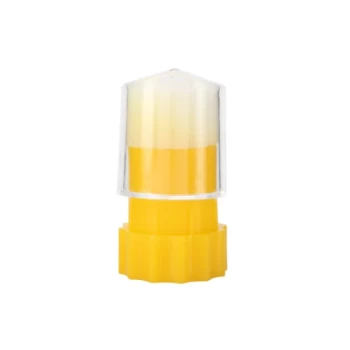
The use of high-precision scales is critical because birth weight serves as a primary biological proxy for a queen’s internal reproductive quality. Measuring a virgin queen immediately upon emergence provides hard data on her potential, as birth weight is closely correlated with the number of ovarioles and the diameter of the spermatheca. This objective metric allows breeders to move beyond visual estimates and scientifically evaluate how specific rearing conditions impact the queen's fertility.
By quantifying birth weight, breeders gain an objective window into a queen's future reproductive capacity, enabling data-driven adjustments to rearing variables like nutrition, grafting techniques, and environmental interventions.
The Biological Significance of Birth Weight
Correlation with Reproductive Anatomy
The physical weight of a newly emerged queen is not merely a measure of size; it is an indicator of internal development.
Heavier queens typically possess a higher number of ovarioles (egg-producing tubes) and a larger spermatheca (sperm storage organ).
Predicting Egg-Laying Potential
These anatomical features are the biological foundation of a colony's future success.
A positive correlation exists between body weight and egg-laying potential, meaning heavier virgins are statistically more likely to become prolific layers.
Objective Quality Assessment
Without precise measurement, quality control relies on subjective visual inspection.
High-precision scales transform queen quality from a guess into a standardized data point, allowing for consistent grading of stock.
Evaluating Rearing Processes
Measuring the Impact of Interventions
Queen rearing involves numerous variables, from diet to environmental manipulation.
Scales allow technicians to isolate and measure the specific effects of interventions, such as magnetic field treatments or variations in feed types.
Validating Grafting Techniques
Different grafting methods can yield varying results in larval development.
By weighing the resulting queens, beekeepers can objectively determine which technical approaches yield superior physical specimens.
Standardizing Production
In a controlled rearing environment, consistency is key.
Regular weighing ensures that the process remains within defined quality parameters, quickly flagging any deviation in the rearing environment.
Understanding the Limitations
Timing is Critical
For data to be valid, measurements must be taken immediately after emergence.
A virgin queen's weight fluctuates rapidly as she ages and metabolizes energy; failing to measure at the precise moment of birth introduces significant data errors.
Weight is a Proxy, Not a Guarantee
While weight correlates with reproductive anatomy, it does not account for all factors of queen quality.
A heavy queen may still suffer from issues unrelated to mass, such as poor mating flight conditions or genetic defects, meaning weight should be part of a holistic assessment rather than the sole metric.
Making the Right Choice for Your Goal
To effectively implement weight-based quality control, align your approach with your specific objectives:
- If your primary focus is process optimization: Use weight data to A/B test specific variables, such as comparing the effects of different royal jelly priming dosages or magnetic field exposure.
- If your primary focus is commercial distribution: Establish a minimum weight threshold to guarantee that every queen sold meets a baseline standard for ovariole count and potential longevity.
High-precision weighing bridges the gap between biological theory and practical application, turning queen rearing into a measurable science.
Summary Table:
| Metric | Biological Significance | Impact on Quality Control |
|---|---|---|
| Birth Weight | Predicts ovariole count and spermatheca size | Provides an objective, standardized data point |
| Egg-Laying Potential | Directly correlated with physical mass | Ensures prolific performance in future colonies |
| Rearing Variables | Validates diet, grafting, and environmental factors | Allows for data-driven process optimization |
| Timing | Weight fluctuates rapidly post-emergence | Immediate measurement ensures data accuracy |
Elevate Your Queen Rearing Standards with HONESTBEE
Precision is the backbone of successful commercial beekeeping. At HONESTBEE, we understand that high-quality virgin queens are the engine of your apiary's productivity. We provide commercial apiaries and distributors with a comprehensive range of professional beekeeping tools, from specialized hive-making machinery to high-precision equipment designed to optimize your production line.
Whether you are looking to scale your wholesale operations or refine your queen rearing techniques, our expert-grade consumables and hardware are built to meet the rigorous demands of the industry.
Ready to professionalize your production and guarantee superior queen quality?
Contact HONESTBEE Today for Wholesale Solutions
References
- Ahmed M. Abdelaal. Effect of Rearing Queen Bees, Apis mellifera L. Raised from Grafted Larvae Under Magnetic Field Conditions on Its Characteristics. DOI: 10.21608/eajbsa.2020.131159
This article is also based on technical information from HonestBee Knowledge Base .
Related Products
- Queen Bee Artificial Insemination Instrument Equipment for Instrumental Insemination
- Professional Large-Format Hive Number Set for Beekeeping
- Modern Flat-Mount Hive Number Set for Beekeeping
- Queen Bee Marking Tube Cage Bottle Catcher Holder with Clear Plastic Plunger Marker
- Heavy Duty Stainless Steel Queen Bee Catcher Clip
People Also Ask
- Why is maintaining sanitary conditions important during artificial insemination? Protect Your Queen from Fatal Infections
- Why are artificial insemination instruments critical in bee hybridization? Master Genetic Control & Pure Breeding
- What is the core value of bee artificial insemination instruments in breed improvement? Achieve Precise Genetic Control
- Why is professional bee artificial insemination equipment considered a core tool for genetic control in honeybee breeding? Ensure 100% Purity
- Why is high-purity CO2 used for queen bee artificial insemination? Unlock Precision Breeding & Faster Egg-Laying