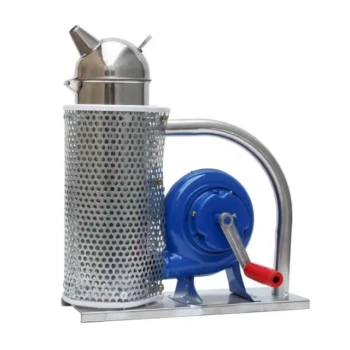
Standardized beekeeping smokers are a fundamental requirement for maintaining data integrity in toxicological research. In experiments evaluating the impact of neonicotinoid insecticides, these devices produce cool smoke to calm honey bees, facilitating safe and effective colony inspections. More importantly, strict adherence to Standard Operating Procedures (SOP) regarding their use ensures that smoke exposure intensity is consistent across all treatment groups, eliminating handling differences as a source of experimental error.
The primary function of standardization in this context is to isolate the variable of interest—the insecticide—by ensuring that behavioral changes are not caused by inconsistent smoke exposure or handling stress.
The Role of Smoke in Toxicological Experiments
Facilitating Researcher Observation
The immediate purpose of the beekeeping smoker is to manage colony defensiveness. By producing cool smoke, the researcher calms the honey bees, allowing for thorough inspections without inciting aggression.
Without this calming effect, detailed observations of colony health and behavior would be dangerous or impossible. However, the application of this smoke cannot be arbitrary.
Strict Adherence to SOPs
In a controlled scientific setting, the use of smokers must follow rigorous Standard Operating Procedures (SOP). This goes beyond simple functionality; it dictates the method, duration, and volume of smoke applied.
Following an SOP ensures that every colony, regardless of the treatment group, receives the exact same handling experience. This consistency is the bedrock of comparative analysis.
Preventing Data Contamination
Eliminating Secondary Variables
In neonicotinoid studies, the researcher is looking for subtle effects of the chemical on bee health. If smoke is applied inconsistently, it introduces a "secondary variable."
If one group receives heavy smoke and another receives light smoke, differences in bee behavior might be attributed to the smoke rather than the insecticide. Standardization removes this interference.
Avoiding Behavioral Abnormalities
Improper handling or excessive smoke can cause stress-induced behavioral abnormalities in honey bees. These abnormalities can mimic or mask the toxicological effects of the insecticide being tested.
By standardizing the smoker usage, researchers prevent human-induced stress from skewing the data. This ensures that any observed abnormalities are genuinely the result of the neonicotinoid exposure.
Understanding the Trade-offs: The Risk of Poor Standardization
The Threat to Reproducibility
The ultimate goal of scientific research is reproducibility—the ability for other scientists to repeat the experiment and get the same results.
If smoker usage is not standardized and documented, the experiment cannot be accurately replicated. Future researchers will be unable to determine if their results differ due to the chemical or due to differences in how the bees were handled.
The "Cool Smoke" Requirement
The primary reference specifies the production of "cool smoke." Hot smoke can physically injure bees or cause panic, which is a massive confounding factor.
Standardized equipment helps ensure the smoke remains at a safe temperature, protecting the biological subjects from physical harm that would invalidate the study.
Making the Right Choice for Your Experimental Design
To ensure your toxicological study yields valid, publishable results, you must treat the smoker not just as a tool, but as a controlled variable.
- If your primary focus is Data Accuracy: Strict adherence to SOPs regarding smoke intensity is required to prevent false positives caused by handling stress.
- If your primary focus is Reproducibility: You must document the specific smoker equipment and application methods used so that the study can be validated by peer researchers.
Standardization turns a potential source of chaos—human handling—into a controlled constant, ensuring your findings accurately reflect the impact of the insecticide.
Summary Table:
| Feature of Standardization | Benefit to Toxicological Research |
|---|---|
| Cool Smoke Production | Prevents physical heat injury and panic in test subjects. |
| Strict SOP Adherence | Ensures consistent smoke volume and intensity across all groups. |
| Variable Isolation | Eliminates handling stress as a secondary variable in data. |
| Data Reproducibility | Allows researchers to replicate experiments with identical conditions. |
| Colony Management | Calms bees for safe, detailed observation without aggression. |
Elevate Your Apiary Operations with HONESTBEE
At HONESTBEE, we understand that precision is the foundation of success for commercial apiaries and distributors alike. Whether you are conducting rigorous scientific research or managing large-scale commercial honey production, our comprehensive wholesale portfolio delivers the reliability you need.
Our value to your business includes:
- Precision Machinery: Advanced honey-filling and hive-making machines to scale your production.
- Professional Tools: Standardized beekeeping smokers and high-quality hardware designed for durability.
- Industry Consumables: A full spectrum of essential supplies to keep your operations running smoothly.
- Cultural Merchandise: Unique honey-themed products to diversify your retail offerings.
Partner with a supplier that values data integrity and operational excellence as much as you do. Contact HONESTBEE today to discuss our wholesale solutions and let us help you grow your beekeeping enterprise.
References
- G. Christopher Cutler, Cynthia Scott‐Dupree. Bee Ecotoxicology and Data Veracity: Appreciating the GLP Process. DOI: 10.1093/biosci/biw136
This article is also based on technical information from HonestBee Knowledge Base .
Related Products
- Stainless Steel Honey Bee Smoker Hive and Honeycomb Smoker for Beekeeping
- Miniature Stainless Steel Bee Smoker for Beekeeping
- Professional Bee Smoker with Elongated Spout and Durable Bellows for Beekeeping
- Electric Bee Smoker European Style Bee Hive Smoker for Beekeeping
- Galvanized Beekeeping Smoker for Honey Bee and Apiculture
People Also Ask
- What are bee smokers made out of? Choose the Right Material for Your Apiary
- Why is a stainless steel bee smoker considered indispensable? Master Hive Management with Cool Smoke Technology
- What type of bee smoker is recommended for a beginner? Top Picks for Easy Hive Management
- What is the best material for a bee smoker? Choose the Right Fuel for a Calm Hive
- Why is a specialized bee smoker considered a critical tool for apiary safety? Master Hive Control & Productivity