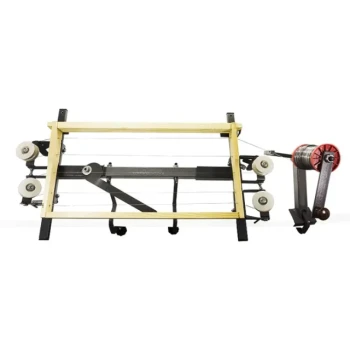
Shaving frames to increase hive capacity was a fundamentally flawed practice because it violated the precise engineering required for a functional hive. By removing wood from the end bars to squeeze in an extra frame, beekeepers inadvertently destroyed the critical "bee space" required for bees to navigate and for beekeepers to manage the colony.
Core Takeaway While altering frame dimensions might offer a theoretical increase in capacity, it fails in practice because it ignores the biology of the hive. The loss of proper spacing leads to severe operational headaches, as propolis accumulation eventually fuses the frames together, making them nearly impossible to manipulate.
The mechanics of the Failure
Compromising Critical Bee Space
Modern hive components are designed with exact tolerances. The width of the end bars is calculated to ensure that when frames are pushed together, the correct gap remains between the combs.
Shaving these bars eliminates that buffer. This disruption of bee space—the specific gap bees leave open for movement—forces the colony to alter how they build comb and seal cracks.
The Propolis Problem
The primary reason this practice is considered a "step backward" becomes evident only after the hive has been in use. Bees naturally use propolis (a resinous glue) to seal crevices and stabilize the hive structure.
When frames are new and clean, the shaved spacing might seem functional. However, as soon as the bees coat the components in propolis, the tighter tolerances work against the beekeeper.
Loss of Frame Mobility
The accumulation of propolis in the reduced gaps acts like cement. Because the frames are packed too tightly without the standard clearance, breaking the propolis seal becomes incredibly difficult.
This leads to a situation where moving frames for inspection or extraction is a struggle. Furthermore, trying to re-insert frames or add new ones into a box with accumulated propolis becomes nearly impossible due to the lack of wiggle room.
The Illusion of Efficiency
Short-Term Capacity vs. Long-Term Maintenance
The motivation behind shaving frames is usually to maximize the internal volume of the super. The logic suggests that one extra frame equals more surface area for honey or brood.
However, this is a false economy. The time and effort lost struggling to pry apart stuck frames far outweigh the benefit of a single additional frame.
Standardization Issues
Modifying equipment breaks interchangeability. Once you shave frames, they are no longer standard. Mixing modified frames with standard frames in other hives creates chaotic spacing issues throughout the apiary.
Recommendations for Hive Management
Prioritizing Function Over Capacity
Success in beekeeping relies on the ability to inspect and manipulate the hive with minimal disturbance. Adhering to standard dimensions ensures that equipment functions as intended, regardless of propolis buildup.
- If your primary focus is Ease of Management: Stick to standard frame widths to ensure "bee space" is preserved and frames remain movable for years.
- If your primary focus is Maximizing Yield: Focus on colony health and forage availability rather than attempting to mechanically force more capacity into a single box.
Respect the design of the hive, and the bees will work with you rather than against you.
Summary Table:
| Aspect | Standard Frames | Shaved Frames |
|---|---|---|
| Bee Space | Precisely maintained at 6-9mm | Compromised or eliminated |
| Frame Mobility | Easy to lift for inspection | Often fused by propolis |
| Interchangeability | High (Universal standard) | Low (Customized/Non-standard) |
| Management Effort | Low; designed for efficiency | High; difficult to manipulate |
| Long-term Result | Sustainable hive health | Operational "step backward" |
Maximize Your Apiary Productivity with Professional Equipment
Don't let DIY modifications hinder your harvest. HONESTBEE empowers commercial apiaries and distributors with precision-engineered tools designed to respect natural bee space while maximizing efficiency.
From industrial-grade hive-making machinery and honey-filling systems to a complete catalog of wholesale beekeeping consumables and hardware, we provide the standardized reliability your business needs to scale.
Ready to upgrade your operation? Contact us today to explore our comprehensive wholesale solutions and see how HONESTBEE can streamline your honey production!
Related Products
- Wooden Bee Hive Frames for Beekeeping and Wholesale
- Heavy-Duty Stainless Steel Clip-On Frame Perch
- Assembled Wooden Bee Frames with Plastic Foundation for Durability and Convenience by HONESTBEE
- HONESTBEE Wired and Assembled Wooden Bee Frames Foundation for a Thriving Hive
- Professional Galvanized Steel Frame Rest for Beehives
People Also Ask
- How do wooden and plastic hive frames compare in terms of durability? Wood vs. Plastic Longevity & Repairability
- How does balancing the number of frames impact hive productivity? Optimize Your Apiary's Biological Output
- What are the main considerations when choosing between wooden and plastic bee hive frames? Optimize Your Apiary's Efficiency
- How should beehive frames be maintained to prolong their lifespan? 5 Pro Tips for Durable Beekeeping Equipment
- What is the primary function of frames within a beehive system? Structural Foundation and Hive Management