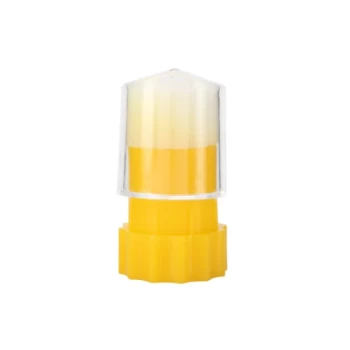
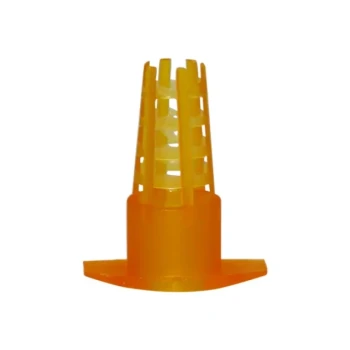
Queen marking colors and numbered tags serve as the foundation of precise colony management. By adhering a specific identifier to the thorax of a queen bee, apiary managers and researchers can instantly verify the origin of a colony and monitor its lineage. This visual system transforms the queen from an anonymous insect into a trackable entity, allowing for the accurate recording of movement and genetic history.
Individual identification is the key to decoding colony behavior. By distinguishing specific queens, managers can accurately differentiate between primary swarms led by the original matriarch and secondary swarms led by new virgin queens, ensuring data integrity in both management and research.
The Mechanics of Identification
Visualizing Lineage
The core function of marking is individual identification. A tag applied to the queen's thorax provides an immediate visual cue. This allows managers to link a specific queen to her original colony without invasive genetic testing.
Tracking Movement
Honey bee colonies are dynamic; they move and split. Numbered tags allow for the tracking of these movements. If a marked queen is found in a different hive or a swarm trap, her origin is immediately known.
Establishing Chronology
Colors and numbers act as a timestamp. They tell the observer exactly when a queen was introduced. This is essential for determining the age of the queen and predicting her potential reproductive longevity.
Decoding Swarming Dynamics
Identifying Primary Swarms
Swarming is the natural method of colony reproduction. A primary swarm typically consists of the original, older queen leaving the hive with a portion of the workers.
If you encounter a swarm with a marked, numbered queen, you can confirm it is a primary swarm. This indicates the "parent" genetics are leaving the original location.
Distinguishing Secondary Swarms
After the primary swarm leaves, the remaining colony raises new queens. Subsequent swarms, known as secondary swarms, are headed by these new virgin queens.
Because these virgin queens are newly hatched, they are unmarked. The absence of a tag (or a tag with a different date code) allows managers to instantly classify the swarm as secondary.
Mapping Colony Evolution
By recording which queens leave and which stay, researchers can map the evolution of the colony. This tracking ensures that the genetic history of the apiary is not lost during the chaotic swarming season.
Operational Considerations and Trade-offs
Application Precision
Marking requires a steady hand. Improper application of glue or paint can inhibit the queen's movement or block her spiracles (breathing tubes). Safety determines success.
Tag Retention
Tags are not permanent fixtures. Over time, grooming workers may remove the tag, or it may naturally fall off. A missing tag can lead to data gaps or the mistaken belief that a queen has been superseded.
Supersedure Confusion
Bees often replace failing queens (supersedure) without the beekeeper noticing immediately. If a marked queen is replaced by her daughter, the new queen will be unmarked. Without regular inspections, this can break the chain of custody in your records.
Making the Right Choice for Your Goals
To effectively utilize marking for colony tracking, align your method with your management objectives:
- If your primary focus is swarm management: Prioritize high-visibility colors to quickly distinguish the old queen in a primary swarm from the virgin queens in secondary swarms.
- If your primary focus is breeding or research: Use unique numbered tags to maintain granular records of individual lineage, exact age, and specific colony origins.
Systematic marking converts complex biological behavior into actionable data, giving you control over the genetic destiny of your apiary.
Summary Table:
| Identification Tool | Primary Function | Swarm Dynamics Role | Management Insight |
|---|---|---|---|
| Color Coding | Visual Age/Year Tracking | Identifies Primary Swarms (Old Queen) | Predicts reproductive longevity |
| Numbered Tags | Individual Lineage ID | Tracks precise colony movement | Detailed genetic history recording |
| Unmarked Queens | New Queen Identification | Indicates Secondary Swarms (Virgins) | Signifies colony supersedure |
| Thorax Placement | Secure Identification | Ensures visibility during inspections | Minimizes interference with bee health |
Elevate Your Commercial Apiary with HONESTBEE
Precise queen tracking is the first step toward professional-grade colony management, but the right tools make the difference. At HONESTBEE, we support commercial apiaries and distributors with a comprehensive wholesale selection of beekeeping essentials.
From high-precision queen marking supplies and beekeeping tools to industrial-scale honey-filling machines and hive-making equipment, our portfolio is designed to enhance your operational efficiency and genetic tracking accuracy.
Ready to scale your beekeeping business? Contact us today to explore our wholesale machinery and consumables tailored for industry leaders.
References
- Ingemar Fries, Peter Rosenkranz. Swarming in honey bees (<i>Apis mellifera</i>) and <i>Varroa destructor</i> population development in Sweden. DOI: 10.1051/apido:2003032
This article is also based on technical information from HonestBee Knowledge Base .
Related Products
- One Hand Yellow Queen Marking Catcher Tube Cage Beekeeper Tool Accessory for Queen Bee
- Queen Bee Marking Pen POSCA Queen Marking Pens for Beekeeping Bee Markers
- Plastic Long Marker Device for Catching and Marking Bees Queen Bee Marking Tube and Cage
- Professional Engraved Round Hive Number Tags for Beekeeping
- Queen Bee Catcher Plastic Bee Marker Bottle with Piston Marking Tube
People Also Ask
- What tools are commonly used for marking queen bees? A Guide to Safe and Effective Marking
- What are the steps to mark a queen bee? A Safe, 3-Step Guide for Beekeepers
- What physical risks are involved in marking a queen bee? Expert Safety Tips for Successful Hive Management
- What are the specific advantages of using international standard marking tools in queen bee production and management?
- What is the significance of using queen marking tools in apiary performance monitoring? Optimize Your Hive Productivity