The Illusion of a Small Mistake
Picture a beekeeper installing a new queen. The air hums. The task feels momentous, centered on the tiny cage holding the colony's future. It's easy to focus on the queen and miss the almost trivial detail: the small bits of wax—burr comb—the bees have already built on the cage.
A new beekeeper might see this as insignificant. An experienced one sees it as the first, and perhaps most critical, architectural decision they will make for the hive.
This isn't about tidiness. It's about a foundational law of hive physics: Bee Space.
The Unseen Blueprint of the Hive
Bee space is the hive's operating system. It is the precise gap, roughly 3/8 of an inch (9.5mm), that bees maintain between their combs to use as corridors. It is a law they do not break.
Your job as a beekeeper is to design a home where this law can be followed.
When the space between frames is correct, the bees respect it.
- If the space is too wide, they fill it with extra wax called burr comb.
- If the space is too narrow, they seal it with propolis.
Both outcomes turn a well-ordered city into a chaotic, unmanageable structure.
The Cognitive Trap: Why We Hesitate to Intervene
The most common reason for failure here isn't ignorance; it's psychology. It's the fear of "bothering the bees."
A beekeeper, holding that new queen, feels a deep-seated instinct to be gentle, to cause minimal disruption. Scraping wax off the cage feels intrusive. So, they leave it.
This is a classic cognitive trap: we choose to avoid a small, immediate, and controlled disruption at the cost of a massive, destructive, and uncontrolled disruption later. The small act of cleaning the cage prevents the future violence of prying apart frames welded together with rogue comb.
A Cascade of Chaos
Leaving that initial burr comb on the queen cage does not just create one small problem. It initiates a system-wide failure.
The cage, now bulkier than intended, acts as a wedge. It prevents you from pushing the first few frames together correctly. This creates an oversized gap.
The bees, following their architectural instincts, immediately fill that oversized gap with more burr comb. This new burr comb then creates another incorrect gap with the next frame. The error propagates, one frame to the next.
Soon, the hive is no longer a series of independent, removable frames. It is one solid, interlocked mass of wax and propolis.
Inspections cease to be diagnostic; they become destructive.
- You can't pull a single frame without tearing the comb from its neighbors.
- Honey and nectar spill, inviting pests and robbing.
- Brood is torn and killed, weakening the colony.
- Worst of all, as you struggle to pull apart the stuck frames, you inevitably "roll" and crush bees against the comb—dramatically increasing the odds of killing the very queen you sought to protect.
The Engineer's Mandate: Enforcing Order
The solution is to act like an architect, not just a keeper. Your first responsibility is to establish the hive's foundational blueprint.
- Remove All Obstructions: Before placing the queen cage between frames, scrape off every piece of burr comb.
- Establish Perfect Spacing: Press your frames together firmly to ensure the distance between them is exact, enforcing perfect bee space across the entire box.
- Remove the Temporary Tool: After a few days, when the queen is released, remove the empty cage. It has served its purpose and is now just another obstruction.
This small, deliberate sequence of actions is the difference between a hive that works with you and a hive that fights you at every turn.
The Foundation for a Scalable Apiary
For commercial apiaries and distributors, this principle is not just about convenience; it's about operational efficiency. A hive with correct bee space is predictable, inspectable, and productive. An unmanageable hive is a liability that costs time, money, and colony health.
Maintaining this foundational order requires equipment built with precision. At HONESTBEE, we supply durable, accurately manufactured frames, hive bodies, and tools designed for commercial operations that cannot afford to compromise on the laws of the hive. We help you build a foundation for success, one perfectly spaced frame at a time.
For equipment that respects the fundamental principles of a productive apiary, Contact Our Experts.
Visual Guide

Related Products
- Portable Bee Mating Hive Boxes Mini Mating Nucs 8 Frames for Queen Rearing
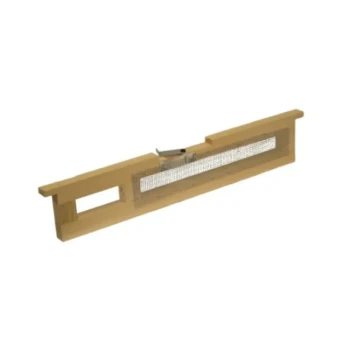
- Classic Wooden and Mesh California Queen Cage
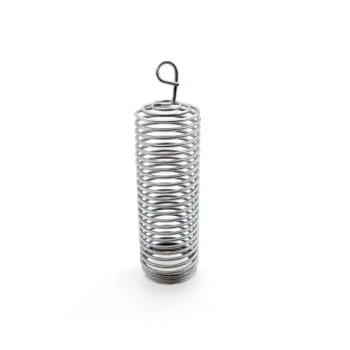
- Durable Galvanized Steel Spring Queen Bee Cage
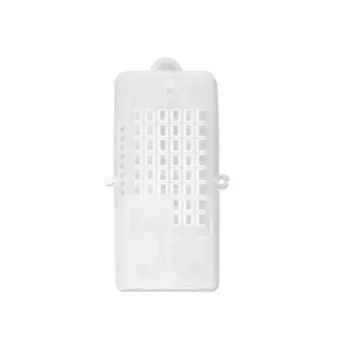
- Professional Multi-Functional Queen Bee Cage
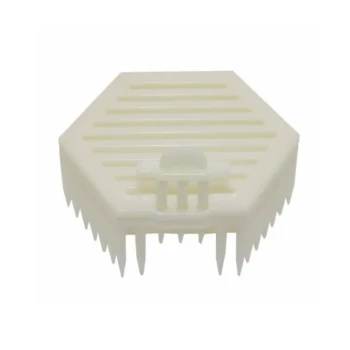
- Hexagonal Direct Comb Introduction Queen Bee Cage
Related Articles
- The Essential Guide to Beehive Boxes: Maximizing Colony Health and Productivity
- Why Your Bee Boxes Don't Match: The Secret to Flawless Apiary Scaling
- How Smaller Nuc Box Frames Improve Brood Health Through Thermal Regulation
- The Thermodynamics of a New Colony: Why a Smaller Nuc Box Is a Stronger Start
- Architecting Royalty: The Nuc Box as a Queen's Crucible