The Wrong Question
For a commercial beekeeper, a day's work is measured in hundreds of small decisions and thousands of pounds lifted. One common question that arises is tactical: "Should I hang my Kenyan top-bar hive?"
The answer is simple. Hanging the hive provides excellent protection from ground-based pests like ants and beetles. It’s an effective physical barrier.
But this is the wrong question. It's like asking if a surgeon's most important tool is the suture. The real question is strategic: "Why should I choose this system in the first place?" The decision to hang a hive is a small feature within a much larger, more elegant operational philosophy.
An Architecture of Efficiency
The greatest challenge in a commercial apiary isn't a single event; it's the cumulative physical toll of repetitive work. The design of a hive dictates the physical and psychological relationship a beekeeper has with their colonies.
The Ergonomic Imperative
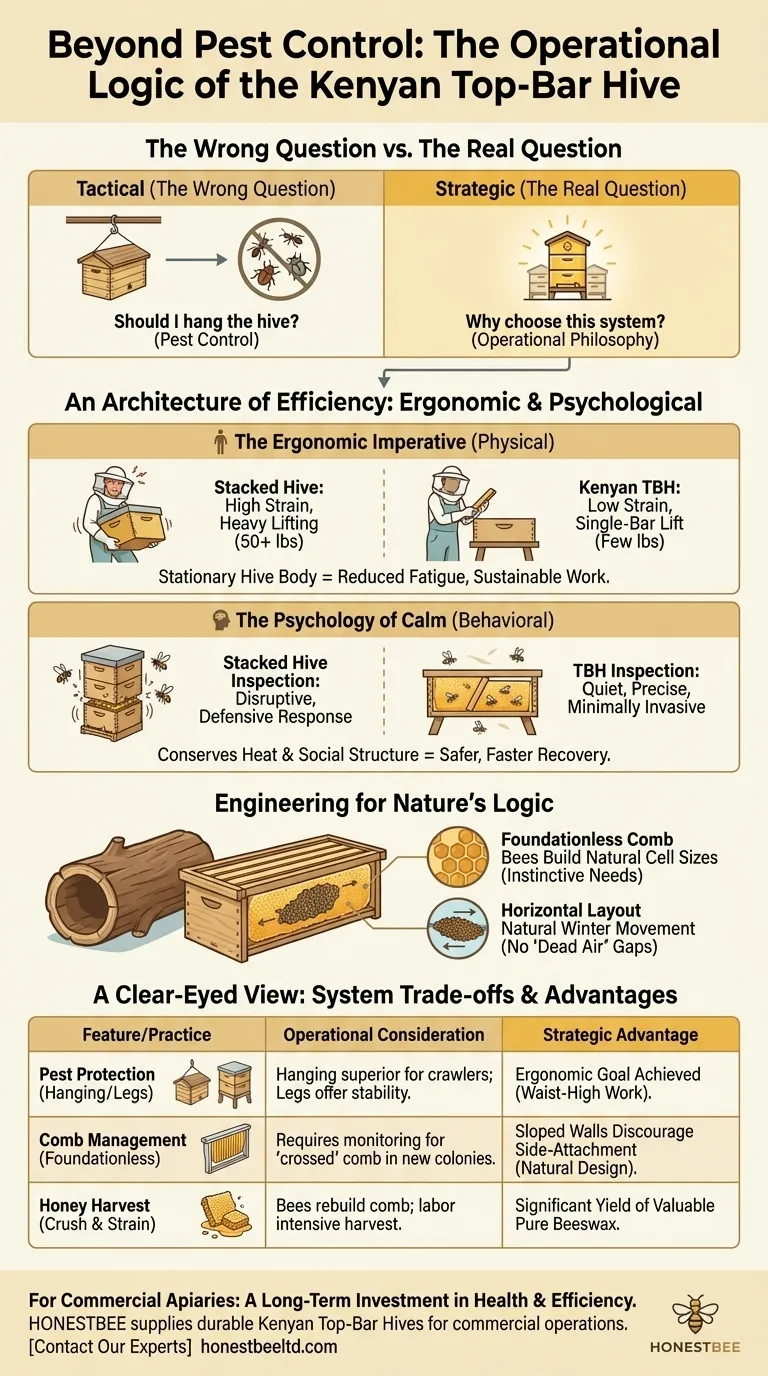
Traditional stacked hives demand a strong back. Lifting a super full of honey can mean hoisting 50 lbs (23 kg) or more. Over a day, across dozens or hundreds of hives, this work accumulates into a significant physical strain and a potential source of injury.
The Kenyan top-bar hive (TBH) sidesteps this problem entirely.
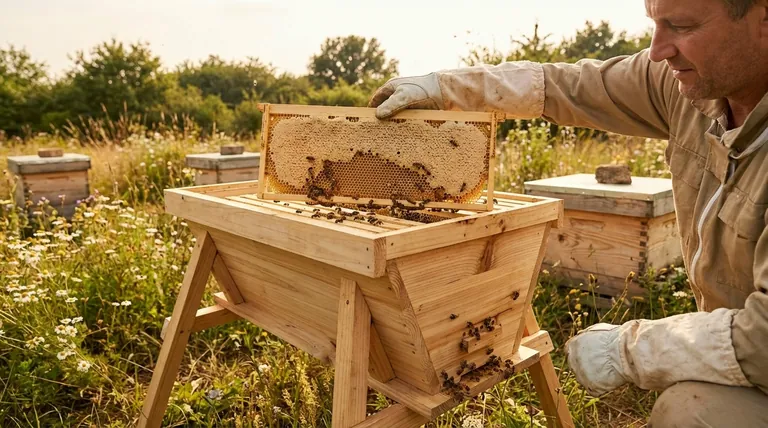
The hive body is stationary. Whether it’s hung or placed on legs, it remains at a fixed, comfortable waist height. Management involves lifting one component at a time: a single top bar, weighing only a few pounds. This isn't just a convenience; it's a fundamental shift in the physical demands of beekeeping, reducing fatigue and making the work more sustainable.
The Psychology of Calm
Opening a stacked hive is a disruptive event. Removing the roof and peeling back layers sends vibrations and light shockwaves through the entire colony. The bees' defensive response is a natural and predictable reaction to having their home disassembled.
Inspections in a TBH are fundamentally different. They are quiet and precise.
You remove a single bar, inspect it, and return it. The rest of the colony's roof remains intact. Heat is conserved. The social structure is minimally disturbed. This isn’t just about being "nicer" to the bees; it's about operational efficiency. A calm colony is safer to work with and returns to productivity faster after an inspection. The design fosters a less intrusive, more observant beekeeping style.
Engineering for Nature's Logic
The most resilient systems are those that work with natural tendencies, not against them. The internal architecture of the TBH is designed to mirror the conditions of a wild colony, such as one found in a hollow log.
- Foundationless Comb: Bees build their own comb directly from the top bars. This allows them to construct the cell sizes they instinctively need for brood, pollen, and honey, rather than conforming to a pre-stamped foundation.
- Horizontal Layout: The horizontal design allows the winter cluster to move through its honey stores naturally and progressively, without having to cross the "dead air" gaps found between boxes in a vertical hive.
A colony operating in an environment that aligns with its biology is often healthier and more self-sufficient. For a commercial operator, a resilient, healthy colony is the most valuable asset in the apiary.
A Clear-Eyed View of the System
No design is without trade-offs. Understanding them is key to mastering the system.
| Feature/Practice | Operational Consideration | Strategic Advantage |
|---|---|---|
| Pest Protection | Hanging the hive is superior for crawling pests; legs offer more stability and placement flexibility. | Both methods achieve the ergonomic goal of a waist-high working environment. |
| Comb Management | Foundationless design requires monitoring to prevent "crossed" comb, especially in new colonies. | The sloped walls of the Kenyan design naturally discourage side-wall attachment. |
| Honey Harvest | The "crush and strain" method means bees must rebuild comb after harvest. | This process yields a significantly higher volume of pure beeswax, a valuable secondary product. |
These are not flaws; they are simply parameters of a different operating system. A system designed for sustainability, colony health, and reduced physical labor.
For a commercial apiary or distributor, the choice of hive is a long-term investment in a specific workflow. The Kenyan top-bar hive offers a system that prioritizes the beekeeper's physical longevity and the colony's natural resilience. Sourcing equipment built to withstand the demands of commercial use is the critical next step. At HONESTBEE, we supply durable, high-quality Kenyan top-bar hives designed for the rigors of commercial operations and distribution.
If you're ready to build a more efficient and sustainable apiary, we can provide the foundational equipment you need. Contact Our Experts
Visual Guide
Related Products
- Top Bar Beehive for Beekeeping Wholesales Kenya Top Bar Hive
- Long Langstroth Style Horizontal Top Bar Hive for Wholesale
- HONESTBEE Top Bar & Bottom Bar Forming Machine | Bee Frame Machine
- HONESTBEE Square Top Hive Bee Feeder Top Bee Feeder
- HONESTBEE Round Hive Top Bee Feeder for Syrup
Related Articles
- How to Inspect Top Bar Hives Without Damaging Comb: A Beekeeper’s Guide
- How Top Bar Hives Naturally Boost Bee Health and Simplify Beekeeping
- How to Optimize Honey Storage in Top Bar Hives for Healthier Colonies
- Top Bar Hives: A Sustainable Approach to Bee-Friendly Beekeeping
- Hive Architecture and the Winter Paradox: Why Heat Retention Isn't Enough





