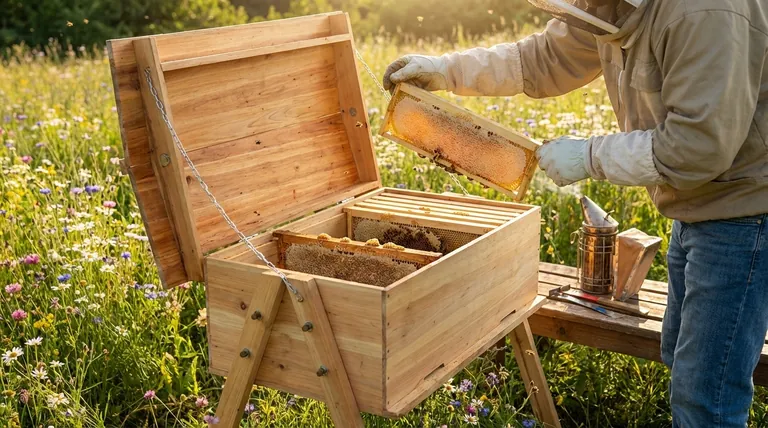
For beekeepers using top bar hives, managing honey storage zones isn’t just about maximizing yield—it’s about creating a sustainable environment where colonies thrive. Unlike Langstroth hives, which prioritize commercial-scale production, top bar systems demand strategic comb placement and seasonal adjustments to maintain colony health. This guide breaks down the science, practical management techniques, and harvesting best practices to help you achieve balanced hive productivity.
Understanding Hive Zonation
The Science Behind Brood-Honey Separation
Bees naturally separate brood (where larvae develop) from honey storage areas. In top bar hives, this division is fluid and influenced by comb-building patterns. Research shows that bees prioritize brood-rearing space over honey storage, meaning unchecked comb expansion can lead to "honey-bound" hives—where honey crowds out brood areas, stressing the colony.
Key takeaways:
- Directional comb building: Bees tend to build combs sequentially from the hive entrance.
- Self-regulation: Unlike Langstroth hives, bees in top bar systems won’t overfill rear spaces with honey unless managed.
Natural Comb Building Patterns
Top bar hives mimic wild colonies, where bees build downward-facing combs along a single axis. This organic structure means:
- Minimal interference: Less need for frame inspections, reducing colony disruption.
- Space management: Beekeepers must manually shift empty combs forward to prevent honey from encroaching on brood zones.
Hive Management Strategies
Creating Ideal Conditions for Honey Storage
- Comb rotation: Move empty bars closer to the entrance to encourage bees to store honey there, reserving the rear for brood.
- Barrier techniques: Use follower boards to isolate honey storage areas during peak nectar flows.
Monitoring Comb Development Stages
- New combs: Translucent and light; bees use these for brood or fresh nectar.
- Mature combs: Darker and capped; ready for harvest.
Pro tip: Inspect combs every 2–3 weeks in summer to prevent overcrowding.
Harvesting Optimization
Identifying Ready-to-Harvest Combs
- Capping: Fully sealed combs indicate ripe honey.
- Color: Honeycombs darken as they age; newer combs are lighter.
Barrier Techniques for Brood Protection
During harvest, insert a divider (e.g., a screened board) between honey and brood areas to:
- Protect larvae from temperature fluctuations.
- Prevent bees from reclaiming harvested honey.
Harvest method (for top bar hives):
- Cut comb from the bar and place it in a jar.
- Crush gently to release honey.
- Strain through cheesecloth into a clean container.
Seasonal Considerations
Winter Cluster Positioning
In colder months, bees cluster near stored honey for warmth. Ensure:
- Honey stores are adjacent to the broodnest.
- Ventilation is adequate to prevent moisture buildup.
Summer Nectar Flow Adjustments
- Expand space: Add empty bars during heavy flows to avoid honey-bound scenarios.
- Shade: Position hives to avoid overheating, which can melt combs.
Key Takeaways
- Top bar hives yield 3–5 gallons annually—less than Langstroth systems but with lower maintenance.
- Strategic comb placement prevents colony stress and boosts productivity.
- Seasonal adjustments are critical for long-term colony health.
Ready to streamline your beekeeping? HONESTBEE’s wholesale-focused supplies help commercial apiaries and distributors manage hives efficiently—from durable top bars to precision harvesting tools. [Explore our solutions] today!
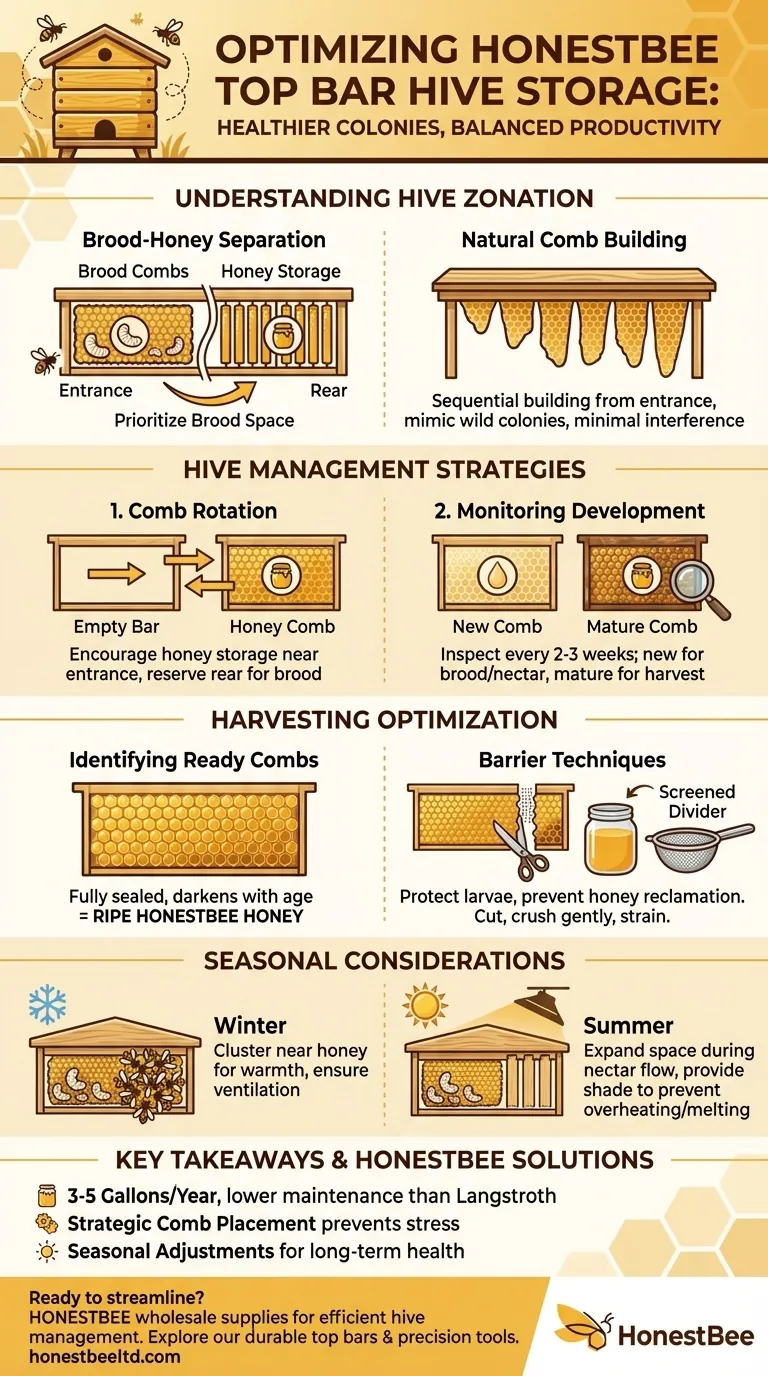
Visual Guide
Related Products
- Top Bar Beehive for Beekeeping Wholesales Kenya Top Bar Hive
- Long Langstroth Style Horizontal Top Bar Hive for Wholesale
- HONESTBEE Top Bar & Bottom Bar Forming Machine | Bee Frame Machine
- HONESTBEE Square Top Hive Bee Feeder Top Bee Feeder
- HONESTBEE Round Hive Top Bee Feeder for Syrup
Related Articles
- How to Inspect Top Bar Hives Without Damaging Comb: A Beekeeper’s Guide
- Beyond Pest Control: The Operational Logic of the Kenyan Top-Bar Hive
- How Top Bar Hives Naturally Boost Bee Health and Simplify Beekeeping
- Top Bar Hives: A Sustainable Approach to Bee-Friendly Beekeeping
- Hive Architecture and the Winter Paradox: Why Heat Retention Isn't Enough



















