Introduction to Uncapping
Importance of Uncapping
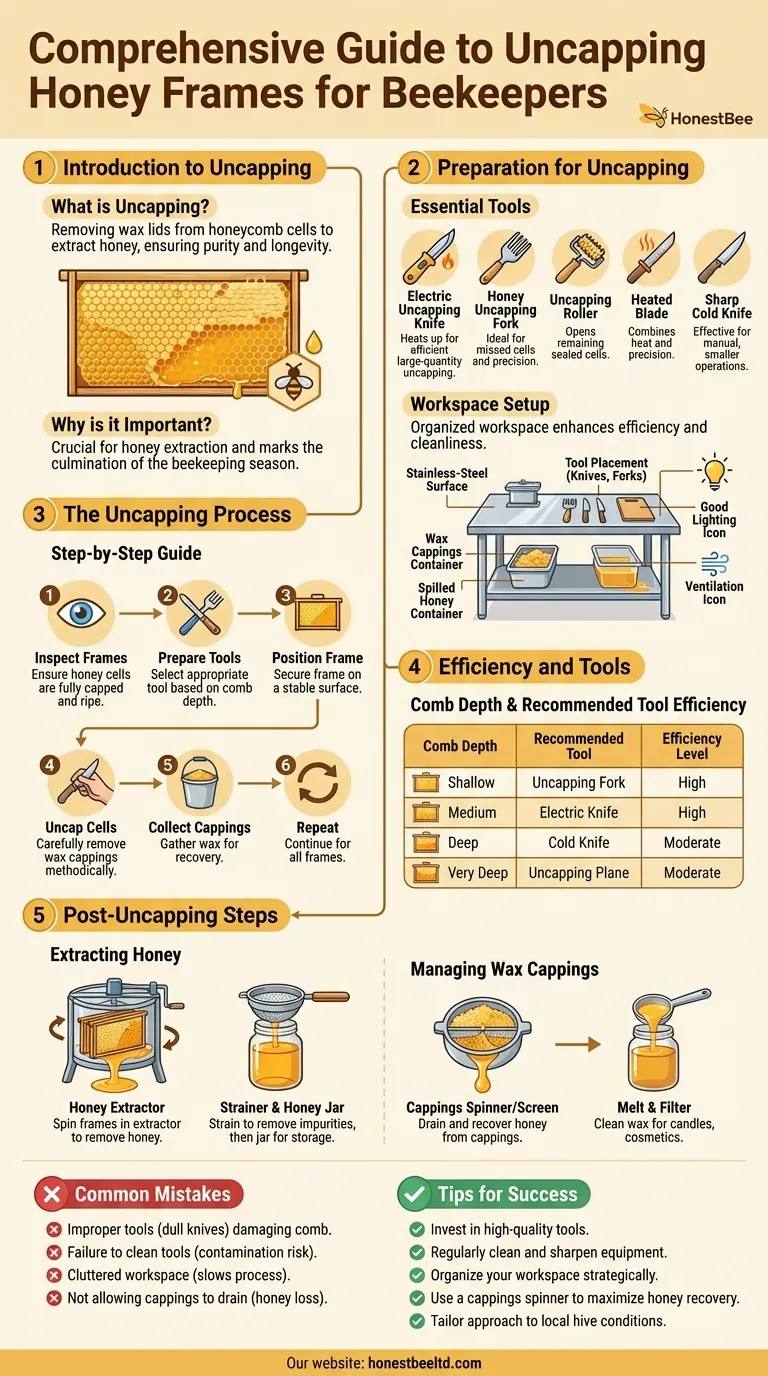
Uncapping frames is a critical process that transforms your diligent work into harvestable honey, marking the culmination of a season's effort. This practice involves removing the wax lids that honey bees use to seal honey comb cells, a necessary step before honey extraction. The wax caps prevent the honey from reabsorbing moisture from the air, ensuring its purity and longevity.
The purpose of uncapping honey frames is to remove the wax cap from each individual cell so that the honey can be extracted. This process signifies the beekeeping community's commitment to excellence, as beekeepers share knowledge and refine their skills to achieve the best results.
Overview of Uncapping Tools
This guide introduces the essential practice of uncapping, a process pivotal for beekeepers aiming to extract honey efficiently. It’s a step that demands precision and the right tools to ensure the maximum yield without compromising the integrity of the combs.
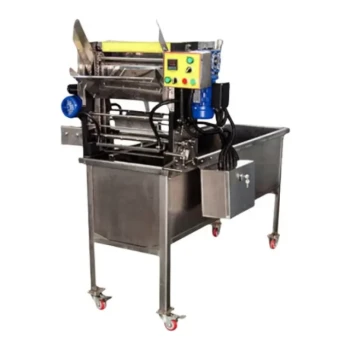
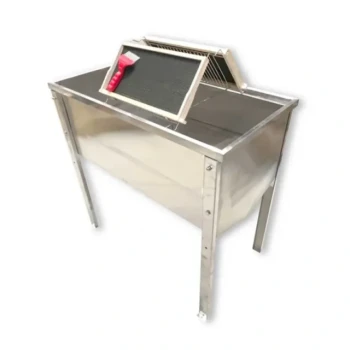
An uncapping tank typically features stainless steel construction, a large capacity, a heating element for efficient uncapping, a transparent lid for monitoring, and removable trays for easy cleaning and maintenance. These features make it an indispensable tool for beekeepers looking to streamline their uncapping process.
For those who prefer a more hands-on approach, manual uncapping using a cold knife is a viable option. While this method may result in more cappings and honey residue compared to using a chain uncapper, many beekeepers have been satisfied with the results of their manual uncapping process. The choice of tool ultimately depends on the specific needs and preferences of the beekeeper.
Preparation for Uncapping
Essential Tools
When preparing to uncap honey frames, having the right tools is crucial for efficiency and ease of use. Beekeepers have a variety of options to choose from, each suited to different needs and preferences. Here are some of the most recommended tools:
- Electric Uncapping Knife: This tool heats up to smoothly slice through wax cappings, making it one of the most efficient options for uncapping large quantities of frames.
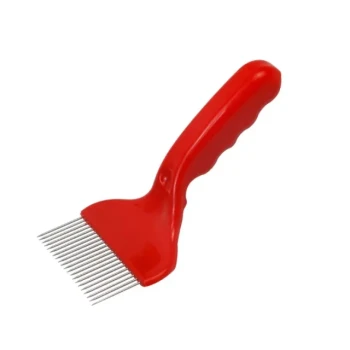
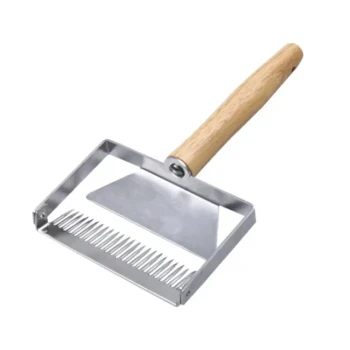
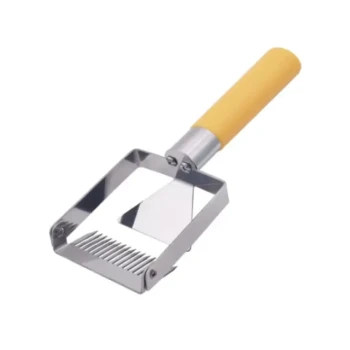
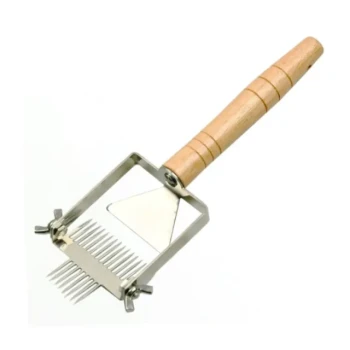
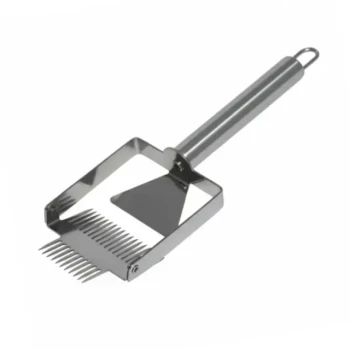
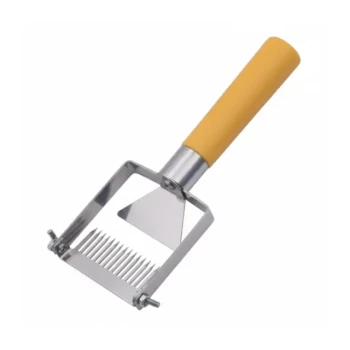
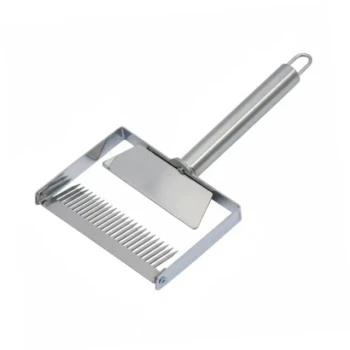
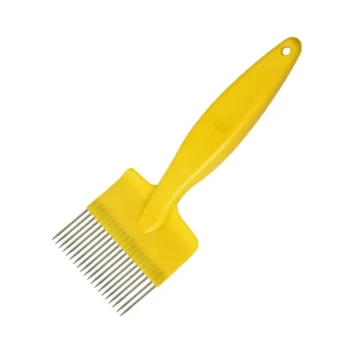
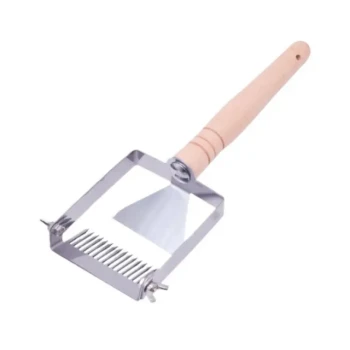
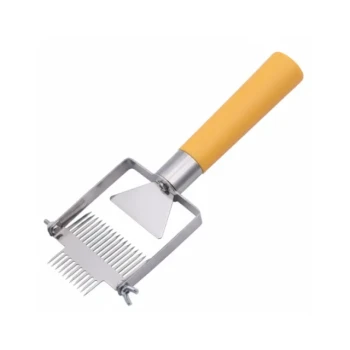
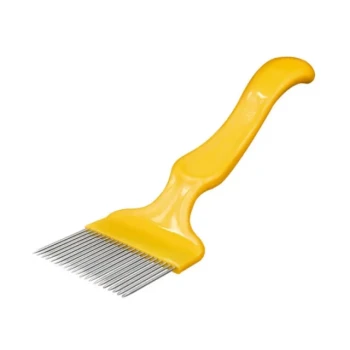
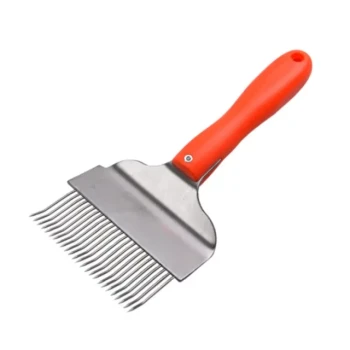
- Honey Uncapping Fork: Ideal for opening cells that the knife might miss, this tool ensures that every cell is properly uncapped.
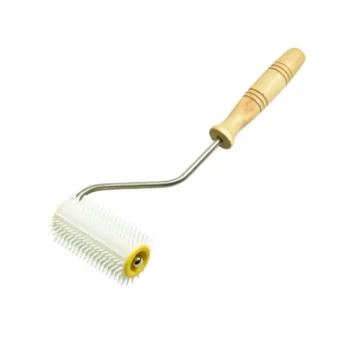
- Uncapping Roller: This device helps open any remaining sealed cells, ensuring that no honey is left behind.
- Heated Blade: A versatile tool that combines the efficiency of heat with the precision of a blade, making it a popular choice among beekeepers.
- Sharp Knife: A simple yet effective tool for manual uncapping, especially useful for smaller operations or specific frame types.
- Homemade Tools: Some beekeepers prefer crafting their own tools, such as a wooden handle with a blade or a stretched stainless steel piano or guitar wire, tailored to their specific needs.
Choosing the right tool depends on factors like the scale of your operation, the type of frames you use, and your personal preference for manual versus automated processes.
Workspace Setup
A well-organized workspace can significantly enhance the efficiency and ease of the uncapping process. Here are some key considerations for setting up your uncapping area:
- Surface: Use a large, easily cleaned surface such as a stainless-steel table. This provides a stable base for your frames and makes cleanup simpler.
- Tool Placement: Arrange your tools and containers within easy reach to minimize movement and streamline the workflow. This includes having a designated spot for your uncapping knife, fork, and any other tools you might need.
- Containers: Place containers for wax cappings and any spilled honey strategically around your workspace. This helps keep the area clean and ensures that you can collect and reuse any by-products.
- Lighting: Ensure that your workspace is well-lit to help you see the cappings clearly and work more precisely.
- Ventilation: Good ventilation is important, especially if you’re using heated tools, to keep the air fresh and comfortable.
By thoughtfully arranging your workspace, you can create an environment that supports a smooth and efficient uncapping process, ultimately leading to a more successful honey harvest.
The Uncapping Process
Step-by-Step Guide
Uncapping frames is a meticulous process that, when done correctly, can significantly impact the quality and quantity of honey harvested. This step-by-step guide will provide beekeepers with a clear and efficient method for uncapping, ensuring the best possible outcomes.
- Inspect the Frames: Before uncapping, inspect each frame to ensure the honey cells are fully capped. This ensures the honey is ripe and ready for extraction.
- Prepare Your Tools: Depending on the depth of the comb, select the appropriate uncapping tool. Ensure your tool is clean and in good working condition.
- Position the Frame: Place the frame securely on a stable surface or in a frame holder to prevent movement during uncapping.
- Uncap the Cells: Using your chosen tool, carefully remove the wax cappings from the honey cells. Work methodically to avoid damaging the comb.
- Collect the Cappings: As you uncap, collect the wax cappings in a separate container. These can be processed later for wax recovery.
- Repeat the Process: Continue uncapping each frame until all are ready for honey extraction.
Efficiency and Tools
The efficiency of uncapping tools can vary significantly depending on the depth of the comb in honey frames. Understanding this relationship is essential for beekeepers to select the most appropriate tool for their frames, ensuring a smooth and effective uncapping process.
| Comb Depth | Recommended Tool | Efficiency Level |
|---|---|---|
| Shallow | Uncapping Fork | High |
| Medium | Electric Knife | High |
| Deep | Cold Knife | Moderate |
| Very Deep | Uncapping Plane | Moderate |
Choosing the right tool not only enhances efficiency but also minimizes damage to the comb, ensuring a higher yield of quality honey. Beekeepers should evaluate their specific needs, budget, and preferences when selecting an uncapping tool. Options range from electric knives and planes for speed and efficiency to non-electric forks and rollers for simplicity and cost-effectiveness.
Post-Uncapping Steps
Extracting Honey
After uncapping frames, several critical steps must be taken to ensure the harvested honey is processed efficiently, the equipment is maintained, and all by-products are utilized effectively. The process begins with collecting the supers, which are the boxes containing the honey-filled frames. These supers are then brought to the extraction area, where the frames are carefully uncapped to expose the honey.
Uncapping is the process of removing the wax caps from the honeycomb cells to expose the honey. Beekeepers use tools like a heated knife, uncapping fork, or a specialized machine for this purpose. Once the frames are uncapped, they are placed in a honey extractor, which spins the frames to remove the honey through centrifugal force. The extracted honey is then strained to remove any impurities, such as wax particles or debris, ensuring a clean and pure final product.
An uncapping tank typically features stainless steel construction, a large capacity, a heating element for efficient uncapping, a transparent lid for monitoring, and removable trays for easy cleaning and maintenance. After extraction, the honey is jarred for storage, ready to be enjoyed or sold.
Managing Wax Cappings
After uncapping, wax cappings should be collected and allowed to drain to recover any remaining honey. This process can be facilitated by using a cappings spinner or a simple mesh screen. The wax cappings are placed in the spinner or on the screen, where the remaining honey is separated from the wax through spinning or gravity.
Once the honey is recovered, the wax cappings can be cleaned by melting and filtering out impurities. This purified wax can then be used for various applications, such as candle-making or cosmetic products. After straining, any remaining honey can be removed by rinsing the wax cappings in cool water, ensuring that all valuable by-products are utilized effectively.
By following these steps, beekeepers can ensure that their honey extraction process is efficient, and that all by-products are managed and utilized to their fullest potential.
Common Mistakes and Tips
Common Mistakes
Even seasoned beekeepers can make missteps that may compromise their honey crop's quality or the efficiency of their operations. Identifying common pitfalls can help ensure the harvested honey maintains its purity and value.
One frequent mistake is using improper tools for uncapping, such as dull knives or scratchers that damage the comb. This not only reduces the efficiency of the process but can also lead to contamination of the honey. Another common error is failing to properly clean and maintain uncapping tools, which can introduce bacteria or mold into the honey.
Beekeepers sometimes overlook the importance of a well-organized workspace. A cluttered or poorly set up area can slow down the uncapping process and increase the risk of spills or accidents. Additionally, not allowing the wax cappings to drain fully can result in significant honey loss.
Tips for Success
With the right tools and techniques, beekeepers can efficiently unlock the sweet bounty of their hives. Advancements in uncapping methods have made this step more effective, improving both the quantity and quality of honey harvested.
Here are some essential tips for success:
-
Use the Right Tools: Invest in high-quality uncapping tools such as heated knives or honey uncapping tub that ensure consistent and clean cuts. This minimizes damage to the comb and maximizes honey yield.
-
Maintain Your Equipment: Regularly clean and sharpen your uncapping tools to prevent contamination and ensure they remain effective over time.
-
Organize Your Workspace: Set up a large, easily cleaned surface with all necessary tools and containers within reach. This will streamline the uncapping process and reduce the risk of spills.
-
Allow Cappings to Drain: Use a cappings spinner or mesh screen to ensure all honey is recovered from the wax cappings, minimizing waste.
-
Consider Local Conditions: Remember the advice: 'It depends,' 'All the challenges are local,' and 'Every colony is an individual.' Tailor your uncapping approach to the specific needs and conditions of your hives.
By following these tips and avoiding common mistakes, beekeepers can enhance the efficiency and quality of their honey harvest, ensuring a successful and rewarding beekeeping experience.
Visual Guide
Related Products
- Automatic Honey Frame Uncapper Machine for Beekeeping
- Professional Wide Head Honey Uncapping Fork for Beekeeping
- Lightweight Plastic Uncapping Roller with Tines
- All-Stainless Steel Pivoting Honey Uncapping Fork for Beekeeping
- Extra Wide Stainless Steel Honey Uncapping Fork with Scraper Beekeeping Tool
Related Articles
- Your Honey is Perfect. Your Bottle Sealing Isn't. Here's Why.
- How to Uncap Honeycomb Safely: Professional Methods for Maximum Yield and Wax Preservation
- How Automated Frame-Making Revolutionizes Beehive Production Efficiency
- The Physics of a Perfect Seal: Beyond the Twist in Bottle Capping
- Unlock Self-Sufficiency: The HONESTBEE Semi-Automatic Bee Frame Machine – Your All-in-One Workshop Solution