The Benevolent Trap
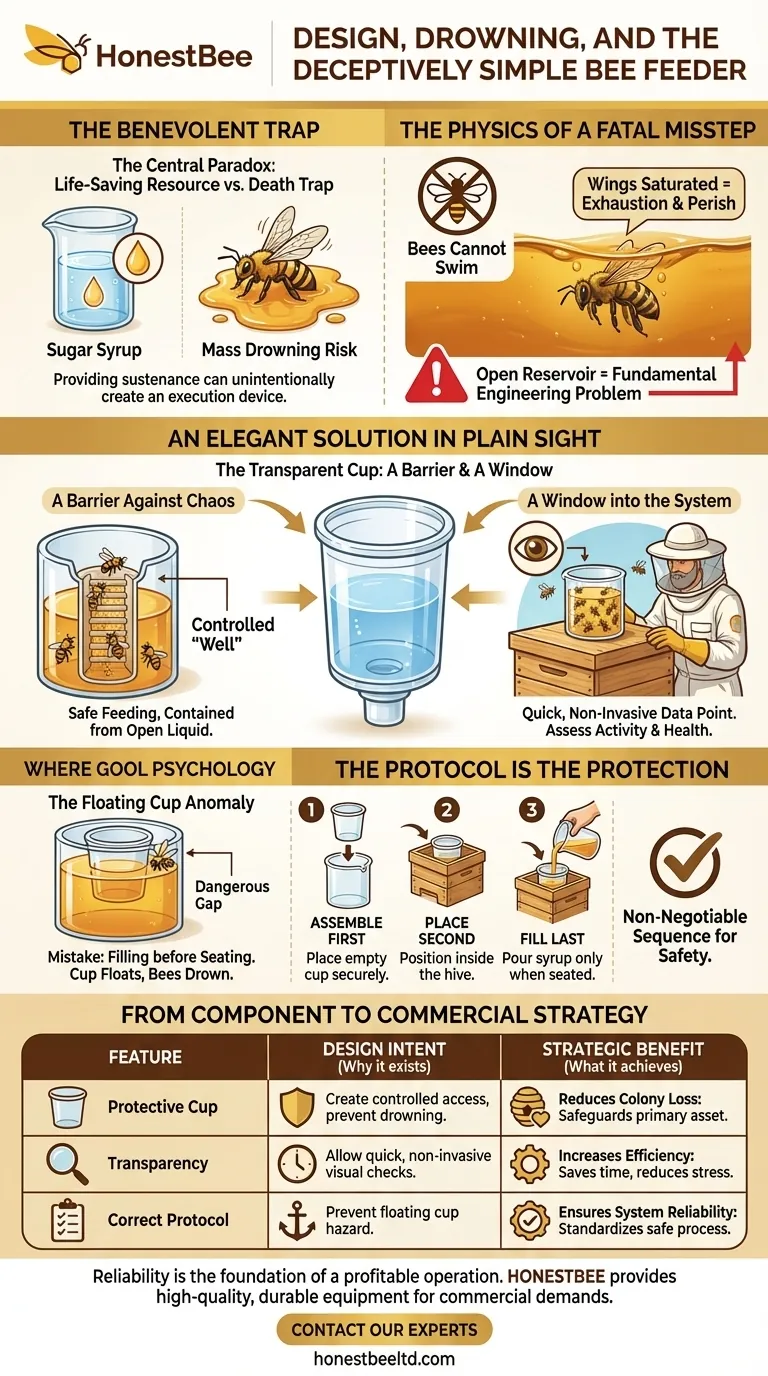
In beekeeping, our best intentions can become our biggest liabilities. We provide sugar syrup to sustain a struggling colony, only to find our efforts have created a death trap.
The central paradox of any liquid bee feeder is this: how do you offer a life-saving resource without it becoming a site of mass drowning? The answer lies in a deceptively simple piece of plastic.
The Physics of a Fatal Misstep
Bees cannot swim. When a bee falls into a viscous liquid like sugar syrup, its wings become saturated and useless. It struggles, exhausts its energy, and perishes.
An open reservoir of syrup, therefore, is an unintentional but highly effective execution device. This isn't a minor risk; it's a fundamental engineering problem that every feeder design must solve. The bees we aim to nourish are the very ones most vulnerable to the flaws in our methods.
An Elegant Solution in Plain Sight
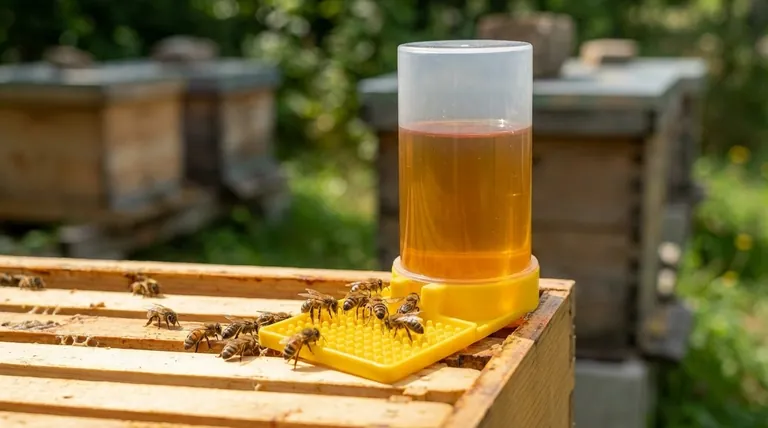
The transparent cup found in many in-hive feeders is not just for observation. It is a brilliant piece of safety engineering born from this harsh reality.
A Barrier Against Chaos
The cup's primary role is to act as a protective barrier. It creates a small, controlled "well" inside the main feeder.
Bees descend into this protected chamber to access the syrup through textured surfaces, ladders, or small openings. They can feed safely, contained and segregated from the treacherous open liquid of the main reservoir. They get the nourishment without the risk.
A Window into the System
The cup's transparency is a secondary, but crucial, feature. It provides the beekeeper with a quick, low-stress data point.
A glance tells you if the bees are actively feeding. This allows you to assess the colony's health and needs without a full, disruptive hive inspection. It transforms a simple piece of plastic into a non-invasive diagnostic tool.
Where Good Design Meets Human Psychology
Even the most elegant solution can fail when it encounters human behavior. The most common failure of this feeder design stems from a simple, predictable cognitive error.
The Floating Cup Anomaly
The critical mistake is filling the feeder with syrup before seating the transparent cup.
The lightweight plastic cup will float. This creates a dangerous gap between the cup's rim and the feeder's outer wall. Foraging bees slip into this gap, become trapped underneath the floating cup, and drown. The safety device becomes the instrument of their demise.
The Protocol Is the Protection
The solution is not a better component, but a better process. The correct sequence is non-negotiable for bee safety:
- Assemble First: Place the empty transparent cup securely into the empty feeder body.
- Place Second: Position the fully assembled, empty feeder inside the hive.
- Fill Last: Only then should you pour the sugar syrup into the feeder.
This protocol ensures the cup remains seated at the bottom, fulfilling its purpose as a protective barrier.
From Component to Commercial Strategy
For commercial apiaries, equipment is not about single hives; it's about scalable systems. A small design flaw or a common user error, multiplied across hundreds or thousands of colonies, represents a significant operational loss.
Understanding the 'why' behind each component's design moves beekeeping from a series of tasks to a strategic practice.
| Feature | Design Intent (Why it exists) | Strategic Benefit (What it achieves) |
|---|---|---|
| Protective Cup | To create a controlled access point and prevent drowning. | Reduces Colony Loss: Protects the bee population during feeding, safeguarding your primary asset. |
| Transparency | To allow for quick, non-invasive visual checks. | Increases Efficiency: Enables rapid assessment of feeding activity, saving time and reducing hive stress. |
| Correct Protocol | To prevent the cup from floating and creating a drowning hazard. | Ensures System Reliability: Standardizes a safe process, minimizing equipment-related bee deaths. |
Reliability isn't a luxury; it's the foundation of a profitable operation. For distributors and large-scale apiaries, sourcing equipment that is both intelligently designed and robustly built is paramount. This is the principle behind HONESTBEE's wholesale supply operations. We provide high-quality, durable beekeeping equipment designed to meet the rigorous demands of commercial use.
To ensure your colonies are supported by safe and effective systems, Contact Our Experts.
Visual Guide
Related Products
- Rapid Bee Feeder White Plastic 2L Round Top Feeder for 8 or 10-Frame Bee Hives
- HONESTBEE Entrance Bee Feeder Professional Hive Nutrition Solution for Beekeeping
- White Plastic 0.5L Beekeeping Entrance Feeder for Bees
- HONESTBEE Entrance Bee Feeder Efficient Hive Front Liquid Feeding Solution for Beekeeping
- HONESTBEE Professional Entrance Bee Feeder Hive Nutrition Solution
Related Articles
- How to Choose Between Frame and Gravity Feeders for Healthy Honey Bee Colonies
- How to Choose the Right Bee Feeder for Your Hive’s Health and Efficiency
- The Weight of Winter: A Systems Approach to Pre-Season Bee Feeding
- Beyond the Jar: The Hidden Engineering of Bee Feeder Safety
- How to Accelerate Bee Colony Growth with Science-Backed Feeding Strategies