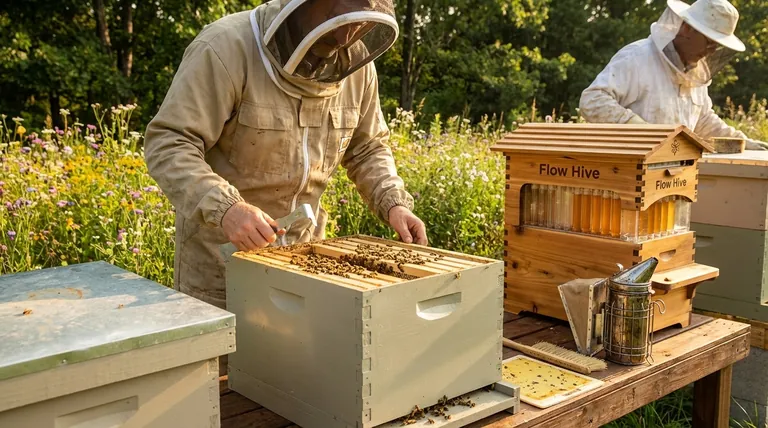
Disease management is the cornerstone of successful beekeeping. Whether you manage Langstroth or Flow Hives, early detection and proactive prevention are critical to maintaining colony health and maximizing honey yields. This guide provides hive-specific protocols to address unique risks in both systems, backed by actionable inspection methods and real-world case studies.
Safeguarding Your Hives: Why Disease Management Matters
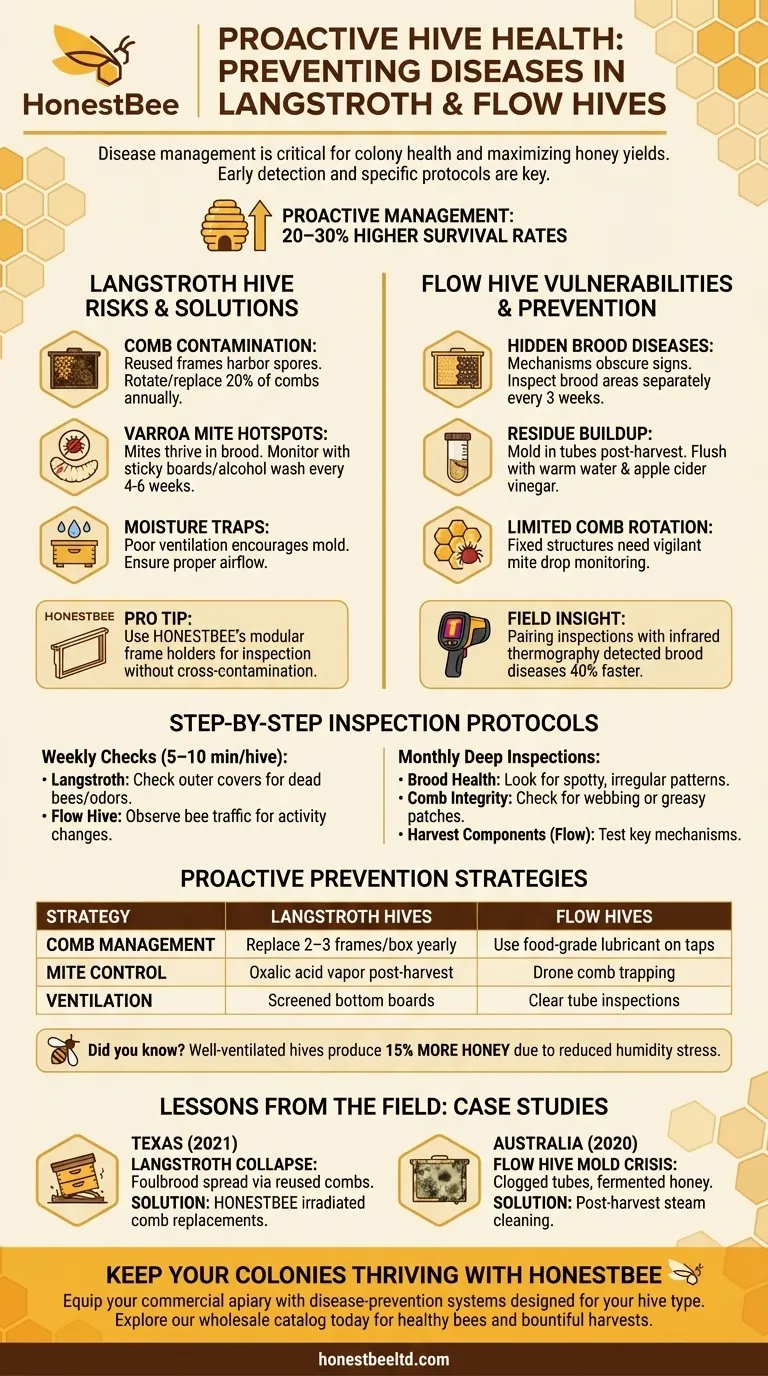
Bee colonies face threats from pathogens like American Foulbrood, Varroa mites, and Nosema. Left unchecked, these can decimate hives and spread to neighboring apiaries. Research shows that proactive beekeepers who implement regular inspections and hive-specific prevention strategies maintain 20–30% higher survival rates in overwintered colonies.
Key considerations:
- Langstroth Hives: Modular design allows for easier brood inspection but requires frequent disassembly, increasing disease transmission risks.
- Flow Hives: Reduced physical disruption during harvesting minimizes stress but may hide early signs of infestation in sealed honeycombs.
Unique Risks in Langstroth Hives: Comb Layout and Disease Spread
Langstroth’s vertical stacking system promotes efficiency but creates vulnerabilities:
- Comb Contamination: Reused frames can harbor spores from Foulbrood. Rotate or replace 20% of combs annually.
- Varroa Mite Hotspots: Mites thrive in brood chambers. Monitor with sticky boards or alcohol washes every 4–6 weeks.
- Moisture Traps: Poorly spaced boxes encourage condensation, leading to fungal growth. Ensure proper ventilation.
Pro Tip: Use HONESTBEE’s modular frame holders to inspect combs without cross-contaminating healthy frames.
Flow Hive Vulnerabilities: Harvesting Mechanisms and Hidden Threats
While Flow Hives reduce physical stress during harvest, their design poses distinct challenges:
- Hidden Brood Diseases: Harvesting mechanisms may obscure early signs of chalkbrood or wax moth larvae. Inspect brood areas separately every 3 weeks.
- Residue Buildup: Honey tubes can accumulate mold if not cleaned post-harvest. Flush with warm water and apple cider vinegar.
- Limited Comb Rotation: Fixed honeycomb structures require vigilant monitoring for mite drops.
Field Insight: A 2022 apiary study found that Flow Hive users who paired routine inspections with infrared thermography detected brood diseases 40% faster.
Step-by-Step Inspection Protocols for Both Hive Types
Weekly Checks (5–10 minutes/hive):
- Langstroth: Lift outer covers to check for dead bees or unusual odors (indicates Foulbrood).
- Flow Hive: Observe bee traffic; reduced activity may signal Varroa infestation.
Monthly Deep Inspections:
- Brood Health: Look for irregular patterns (e.g., spotty brood = mite damage).
- Comb Integrity: Check for webbing (wax moths) or greasy patches (American Foulbrood).
- Harvest Components: In Flow Hives, test key mechanisms for smooth operation.
Proactive Prevention: Hive-Specific Best Practices
| Strategy | Langstroth Hives | Flow Hives |
|---|---|---|
| Comb Management | Replace 2–3 frames per box yearly | Use food-grade lubricant on taps |
| Mite Control | Oxalic acid vapor post-harvest | Drone comb trapping |
| Ventilation | Screened bottom boards | Clear tube inspections |
Did you know? Bees in well-ventilated hives produce 15% more honey due to reduced humidity stress.
Lessons from the Field: Case Studies of Disease Outbreaks
- Langstroth Collapse (Texas, 2021): Reused combs spread Foulbrood to 80% of colonies. Solution: Adopted irradiated comb replacements from HONESTBEE’s sanitized stock.
- Flow Hive Mold Crisis (Australia, 2020): Clogged tubes led to fermented honey. Solution: Instituted post-harvest steam cleaning.
Keep Your Colonies Thriving with HONESTBEE
From mite-resistant frames to hygienic hive tools, HONESTBEE equips commercial apiaries with disease-prevention systems designed for your hive type. Explore our wholesale catalog today—because healthy bees mean bountiful harvests.
Ready to optimize your apiary’s health? Partner with a supplier that understands scalable beekeeping.
Visual Guide
Related Products
- Long Langstroth Style Horizontal Top Bar Hive for Wholesale
- Ergonomic Two Person Foldable Hive Lifter
- High-Performance Langstroth Bee Hives for Global Professional Beekeeping
- Plastic Bee Hive Stand for Beekeeping
- Solid Bottom Board Australian Pine Wood Langstroth Bottom Board for Wholesale
Related Articles
- How to Inspect Top Bar Hives Without Damaging Comb: A Beekeeper’s Guide
- How Top Bar Hives Simplify Natural Beekeeping for Hobbyists
- Top Bar Hives: A Sustainable Approach to Bee-Friendly Beekeeping
- Hive Architecture and the Winter Paradox: Why Heat Retention Isn't Enough
- Beyond the Box: The Psychology of Space in Top Bar Beekeeping











