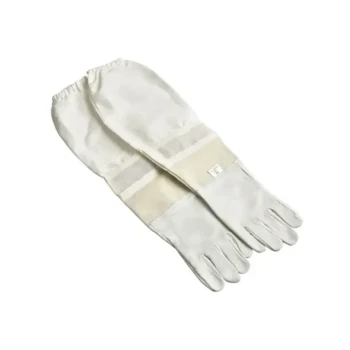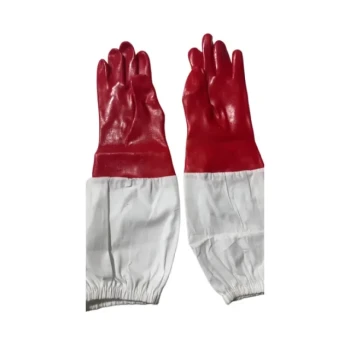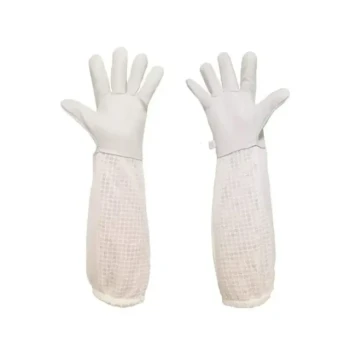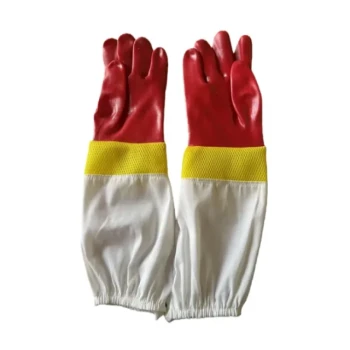
For beekeepers, glove selection isn’t just about avoiding stings—it’s about finding gear that supports hours of productive work. Leather gloves remain a top choice for their unique combination of durability and defense, but their suitability depends on your beekeeping style. This guide examines leather’s advantages, addresses common concerns, and helps you decide when they’re the right fit.
Leather Beekeeping Gloves: Key Advantages
Sting Resistance and Material Science
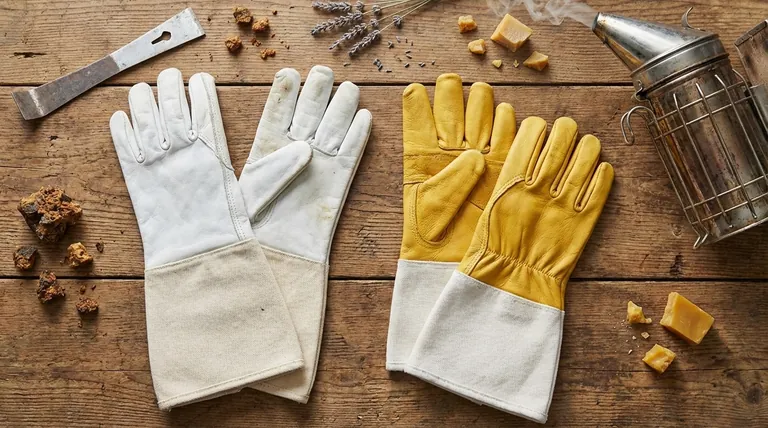
Leather’s dense fiber structure naturally resists bee stings better than thinner materials like cotton. Research shows that thicker, untreated leather (1.5–2mm) blocks stingers effectively while remaining flexible enough for hive inspections. Unlike synthetic fabrics, leather’s natural rigidity disperses pressure from stings, reducing penetration risk.
Practical Tip: Opt for goatskin or cowhide leather—these offer superior puncture resistance without excessive bulk.
Durability in Challenging Environments
Leather outperforms synthetics in longevity, especially for migratory beekeepers or those working in rough terrain. A single pair can last multiple seasons with proper care, resisting tears from hive tools and rough handling. Field reports note that leather maintains its protective qualities even after repeated exposure to propolis and moisture, whereas synthetic gloves often degrade faster.
Addressing Common Concerns
Strategies to Improve Flexibility and Breathability
Some beekeepers avoid leather due to perceived stiffness. However, modern designs address this with:
- Pre-curved fingers for better grip
- Perforated panels at sweat-prone areas
- Elasticized wrists to reduce fatigue
Pro Tip: Break in new gloves by flexing them manually before use.
Maintenance Practices for Long-Term Comfort
Leather requires care to retain usability:
- Clean gently with a damp cloth after use to remove propolis.
- Condition monthly with beeswax-based balms to prevent cracking.
- Air-dry naturally—avoid direct heat, which hardens the material.
Alternatives and Contextual Recommendations
When to Choose Leather vs. Synthetic Materials
| Scenario | Best Choice | Reason |
|---|---|---|
| Heavy hive work | Leather | Superior sting/sharp tool protection |
| Hot climates | Synthetic (vented) | Lighter weight, better airflow |
| Allergy-prone users | Nitrile-lined leather | Extra barrier against venom |
User-Specific Guidance
- Hobbyists: Leather provides reliable all-around protection for weekend beekeepers.
- Migratory Beekeepers: Reinforced leather palms withstand frequent transport and hive manipulations.
- Allergy-Prone Individuals: Pair leather with nitrile liners for added safety.
Final Verdict: Is Leather Right for You?
Leather gloves excel in durability and sting defense but require break-in time and maintenance. For high-intensity beekeeping or those prioritizing longevity, they’re an investment worth making.
Ready to gear up? Explore HONESTBEE’s wholesale-focused beekeeping supplies—designed for commercial apiaries and distributors who demand equipment that balances protection and productivity.
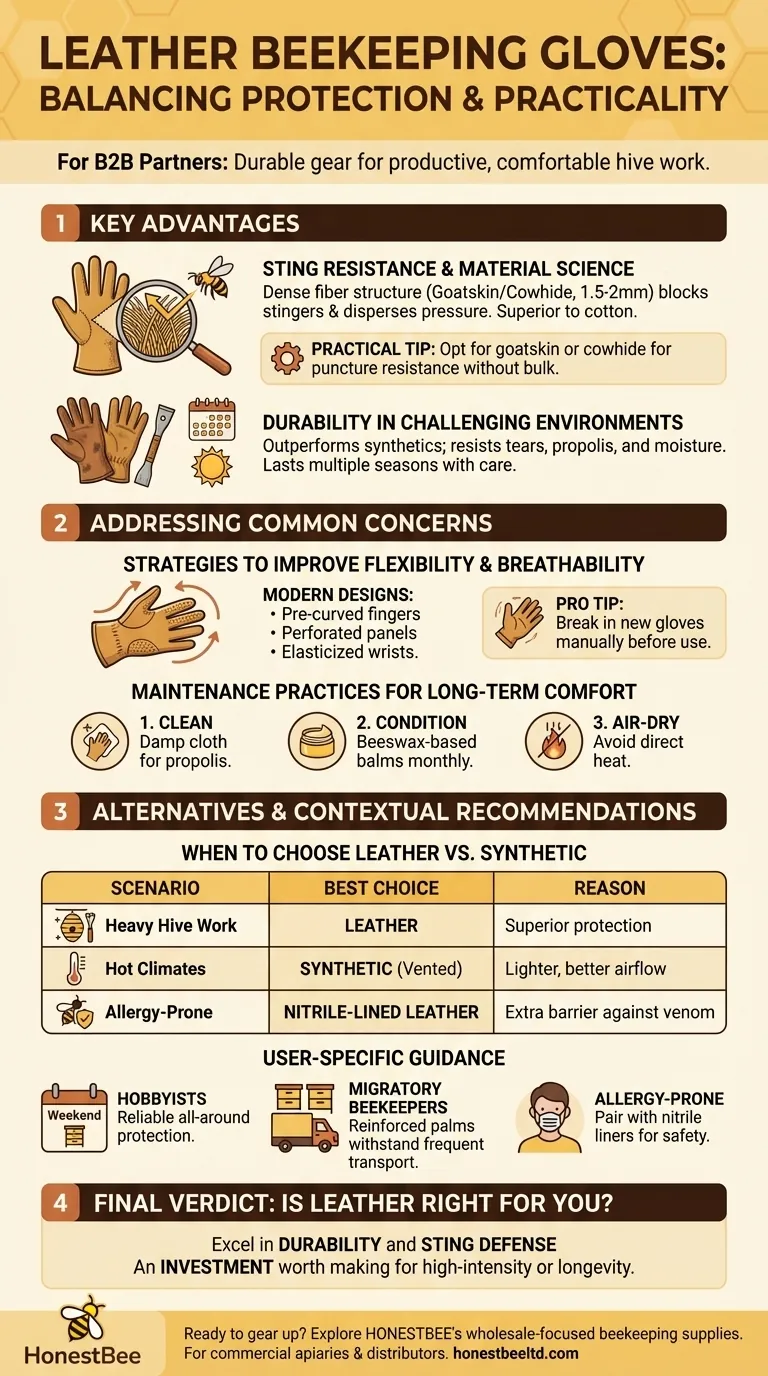
Visual Guide
Related Products
- Goatskin Leather Beekeeper Gloves with Vent Long Sleeve for Beekeeping Honey Bee Sting Proof Protection
- Beekeeping Gloves Goatskin Leather with Long Cotton Sleeve for Beekeepers
- Goat Skin Leather Bee Sting Proof Beekeeping Gloves with Canvas Sleeve
- Heavy Duty Red Rubber Beekeeping Gloves with Extended Pure Cotton Sleeves for Beekeepers
- Premium Ventilated Goatskin Beekeeping Gloves with Full 3-Layer Mesh Sleeve
Related Articles
- How to Extend the Life of Beekeeping Leather Gloves: A Science-Backed Maintenance Guide
- How Proper Storage Extends Beekeeping Glove Lifespan by Multiple Seasons
- The Second Skin: A Beekeeper's Guide to Glove Longevity and Apiary Health
- How to Choose Beekeeping Gloves: Protection, Dexterity & Budget for Beginners
- How to Choose Beekeeping Gloves: Material Science for Optimal Protection & Dexterity