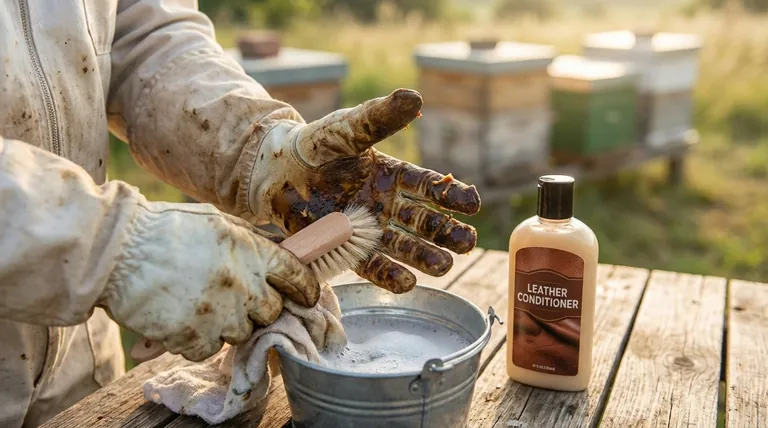
The Moment of Truth After the Inspection
The hive inspection is done. Frames are back in place, the lid is on, and the bees are settling. You peel off your gloves, sticky with propolis and honey, and face a seemingly trivial decision: clean them now or toss them in the truck for later?
This small moment is not about tidiness. It's a critical decision point in risk management.
From a psychological standpoint, it's easy to postpone. The immediate threat (the open hive) is gone, and the risk posed by dirty gloves is invisible and abstract. But in professional beekeeping, success is built on managing these unseen, systemic risks. The discipline of glove care is a direct reflection of a beekeeper's commitment to the entire system.
Your Gloves: A Vector, Not Just a Tool
We think of gloves as protection—a barrier between us and the stings. But they are also the primary tool of transmission, a vector for invisible threats that can undermine an entire operation.
The Invisible Contaminant
Imagine inspecting a yard and unknowingly picking up American Foulbrood spores on a glove. The spores are microscopic, odorless, and utterly devastating. Later that day, you visit your healthiest, most productive apiary. By simply handling a frame, you complete a catastrophic transfer.
The disease doesn't appear overnight. It's a delayed consequence, which is precisely why the initial act of hygiene is so easy to overlook. We are wired to react to immediate dangers, not slow-burning, invisible ones.
The Logic of Cross-Contamination
Even within a single bee yard, moving from a weaker hive to a stronger one without cleaning your gloves is like a doctor moving between patients without washing their hands. It's a fundamental breach of biosecurity that can amplify a small problem into a yard-wide crisis.
When Protection Undermines Control
Dirty gloves don't just threaten your bees; they compromise your own safety and effectiveness by degrading the tool itself.
The Loss of Dexterity
Gloves caked in propolis and wax become stiff. Your movements become clumsy. You lose the fine motor control needed to lift a frame gently or to work with precision. A sudden, jerky movement is all it takes to agitate a calm colony, turning a peaceful inspection into a defensive event.
The tool, meant to provide control, starts to dictate your actions for the worse.
The Integrity Feedback Loop
Clean, conditioned leather is supple and strong. Neglected leather becomes brittle and cracks. A tiny crack is an open invitation for a defensive sting, transforming your primary layer of protection into a point of failure.
This creates a negative feedback loop. A beekeeper who doesn't trust their gear becomes hesitant and nervous. Bees are masters at sensing this anxiety, which in turn makes them more defensive. Your state of mind, influenced by your equipment's reliability, directly impacts the hive's behavior.
The Pragmatic Discipline of Maintenance
Proper glove care is not about restoring a pristine appearance; it's a professional discipline focused on function and hygiene.
Redefining 'Clean'
Propolis stains are a badge of honor; they will never fully wash out. The goal is not aesthetic perfection. The goal is to create a tool that is hygienically safe, flexible, and reliable. This reframing turns an impossible chore into an achievable, mission-critical task.
A Methodical Approach for Leather Gloves
For professional-grade leather gloves, a gentle but effective procedure is required to preserve their integrity.
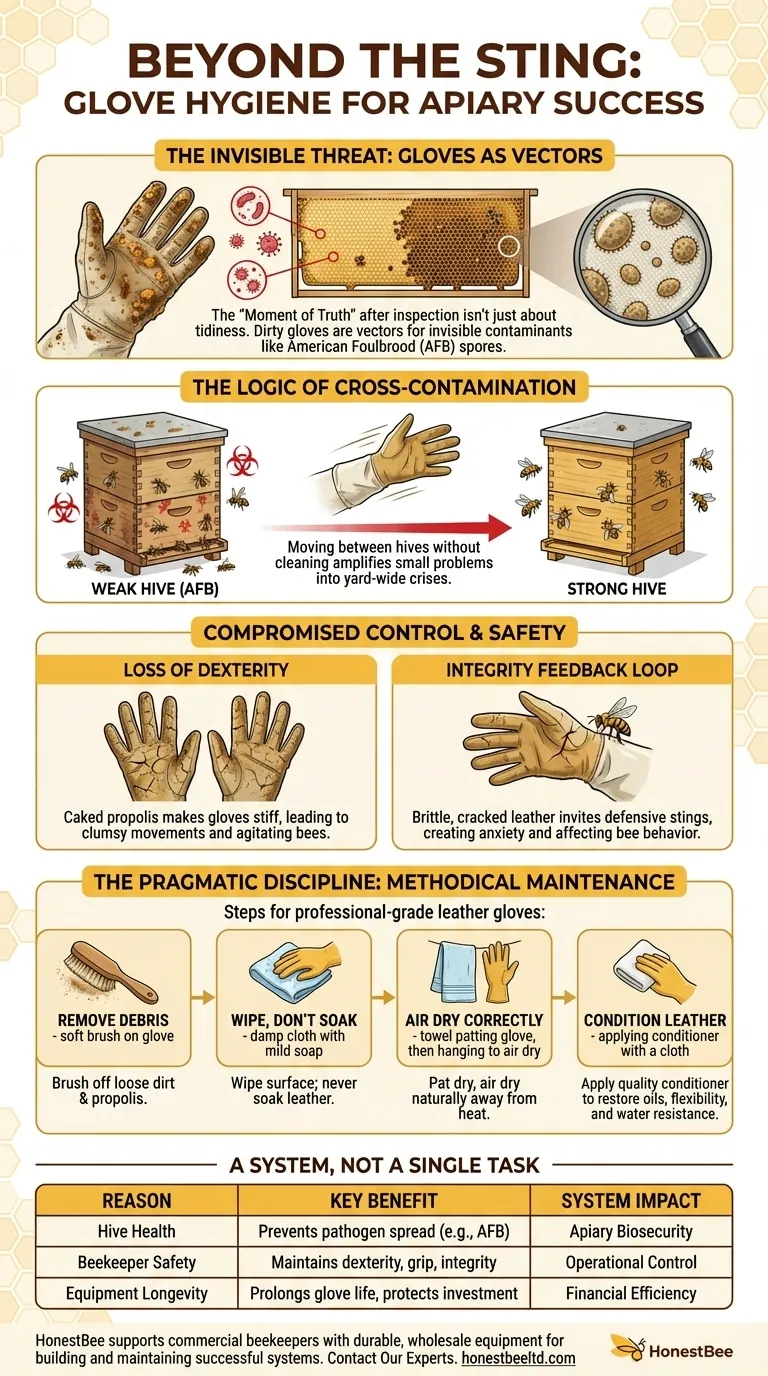
- Remove Surface Debris: Use a soft brush to remove loose dirt and propolis.
- Wipe, Don't Soak: Use a damp cloth with a small amount of mild soap or leather cleaner to wipe the surface. Never soak leather gloves, as this will ruin them once dry.
- Air Dry Correctly: Pat them dry with a towel and let them air dry naturally, away from direct heat or sun.
- Condition the Leather: Once fully dry, apply a quality leather conditioner. This is the most crucial step. It restores essential oils, keeping the leather soft, water-resistant, and crack-free.
This level of care is most effective when applied to equipment designed to withstand it. Commercial-grade leather gloves are built for durability, responding well to the cleaning and conditioning cycles required in a professional operation. Investing in high-quality gear from the start makes maintaining these best practices far more effective.
A System, Not a Single Task
The decision to clean your gloves is a small part of a much larger system that separates struggling apiaries from thriving ones. It connects directly to hive health, personal safety, and the long-term value of your investment.
| Reason for Cleaning | Key Benefit | System Impact |
|---|---|---|
| Hive Health | Prevents the spread of pathogens like American Foulbrood. | Apiary Biosecurity |
| Beekeeper Safety | Maintains dexterity, grip, and protective integrity against stings. | Operational Control |
| Equipment Longevity | Prolongs the life of your gloves, protecting your investment. | Financial Efficiency |
Ultimately, your tools are an extension of your expertise. Ensuring they are in peak condition is fundamental to managing a safe, healthy, and profitable apiary. At HONESTBEE, we support commercial beekeepers and distributors by providing the durable, wholesale equipment necessary to build and maintain such a system.
Equip your operation for success by starting with the right foundation. Contact Our Experts
Visual Guide
Related Products
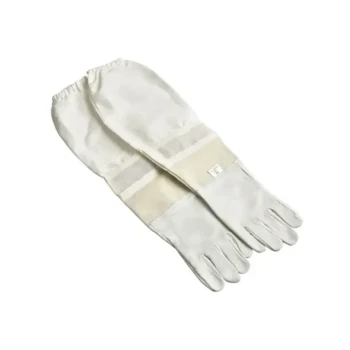
- Beekeeping Gloves Goatskin Leather with Long Cotton Sleeve for Beekeepers
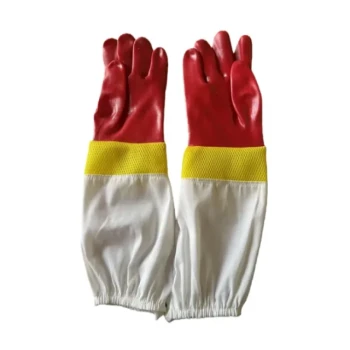
- Heavy Duty Red Rubber Beekeeping Gloves with Vented Mesh Cotton Sleeves
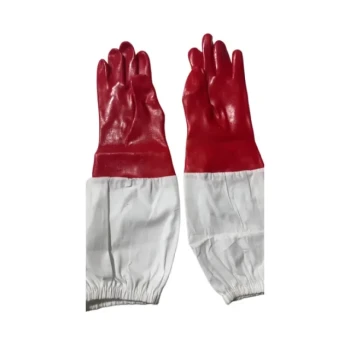
- Heavy Duty Red Rubber Beekeeping Gloves with Extended Pure Cotton Sleeves for Beekeepers
- Goatskin Leather Beekeeper Gloves with Vent Long Sleeve for Beekeeping Honey Bee Sting Proof Protection
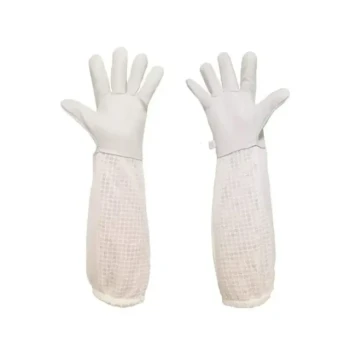
- Premium Ventilated Goatskin Beekeeping Gloves with Full 3-Layer Mesh Sleeve
Related Articles
- How Proper Storage Extends Beekeeping Glove Lifespan by Multiple Seasons
- The Second Skin: A Beekeeper's Guide to Glove Longevity and Apiary Health
- How to Choose Beekeeping Gloves: Material Science for Optimal Protection & Dexterity
- How to Choose Beekeeping Gloves: Material, Fit, and Care Explained
- More Than a Barrier: The Psychology of Glove Selection in Commercial Beekeeping