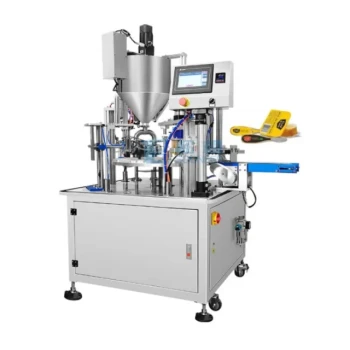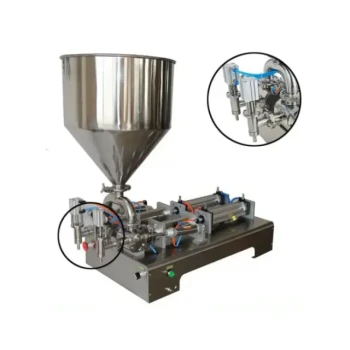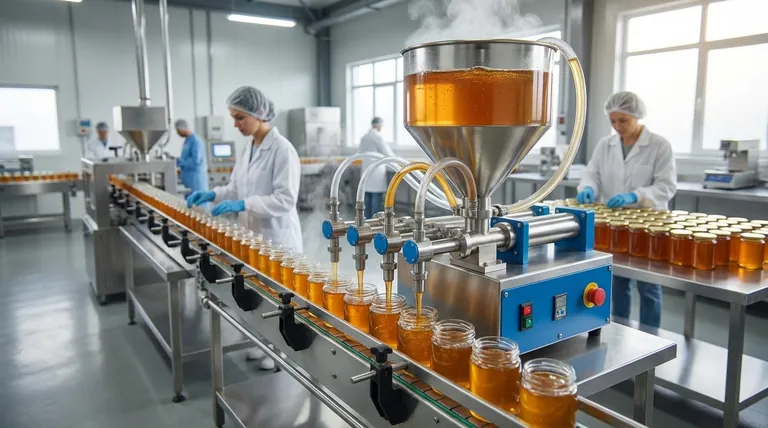
For commercial honey producers, packaging viscous liquids like honey presents unique challenges—from maintaining product consistency to ensuring cost-effective operations. Piston filling machines emerge as the optimal solution, offering unmatched viscosity adaptability, operational efficiency, and long-term ROI. This article explores why piston fillers outperform alternatives and how they can transform your honey packaging process.
How Piston Filling Machines Work for Viscous Liquids
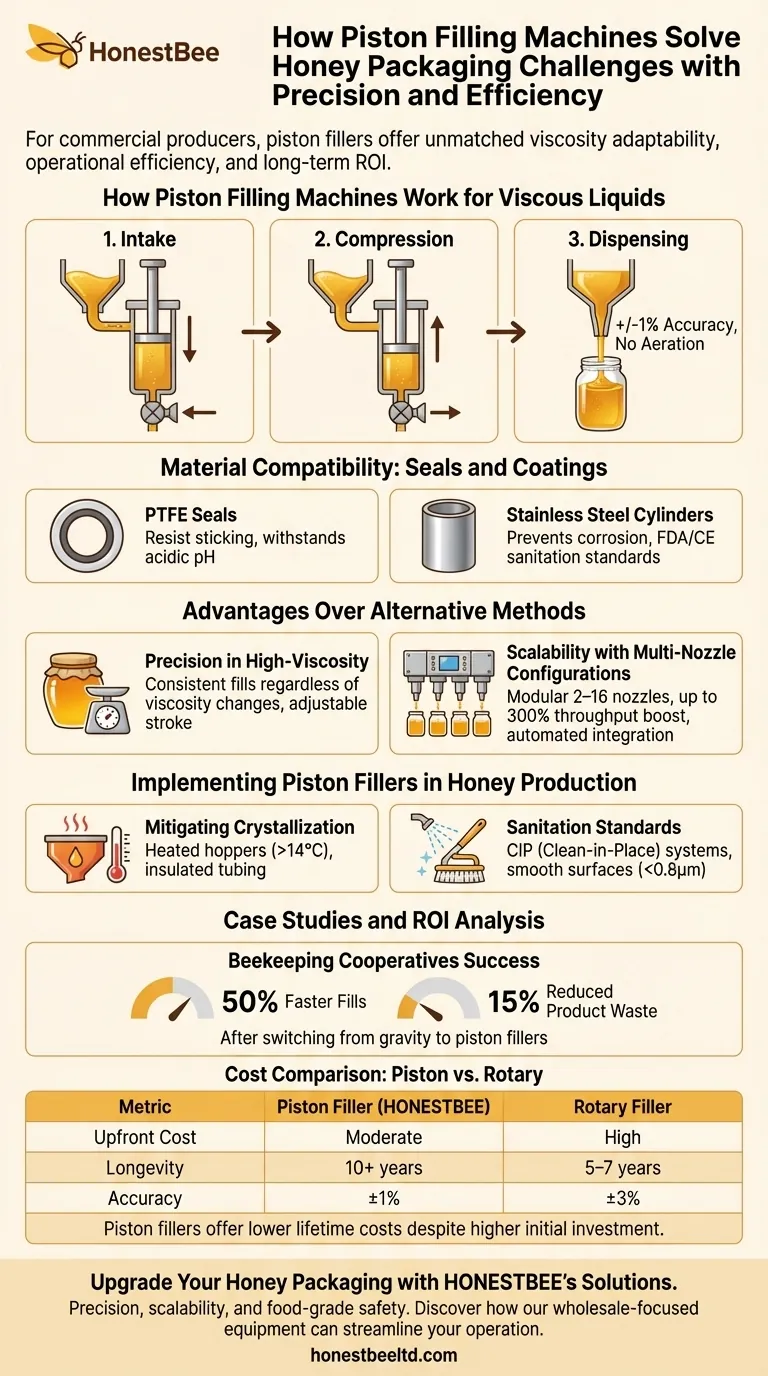
The Piston Cycle: Intake, Compression, and Dispensing
Piston fillers operate through a three-phase mechanical cycle:
- Intake: The piston retracts, drawing honey into a precision-engineered cylinder.
- Compression: The piston reverses direction, creating pressure to move the product.
- Dispensing: Honey is pushed through nozzles into containers with ±1% accuracy, even at high viscosities.
This method avoids aeration—a common issue with rotary or gravity fillers—preserving honey’s texture and shelf life.
Material Compatibility: Seals and Coatings for Honey
Food-grade materials are critical:
- PTFE seals resist sticking and withstand acidic pH levels in raw honey.
- Stainless steel cylinders prevent corrosion and meet FDA/CE sanitation standards.
Advantages Over Alternative Filling Methods
Precision in High-Viscosity Environments
Unlike peristaltic pumps (which struggle with thick liquids) or gravity fillers (prone to inconsistent fills), piston fillers deliver:
- Consistent fills regardless of honey viscosity changes (e.g., creamed vs. liquid honey).
- Adjustable stroke control to accommodate varying container sizes without recalibration.
Scalability with Multi-Nozzle Configurations
For large apiaries, piston systems scale efficiently:
- Modular designs allow 2–16 nozzles, boosting throughput by up to 300%.
- Automated integration with capping and labeling systems reduces labor costs.
Implementing Piston Fillers in Honey Production
Mitigating Crystallization with Temperature Control
Honey crystallizes fastest at 10–18°C. Piston fillers combat this by:
- Heated hoppers maintaining temperatures slightly above 14°C (the optimal crystallization point).
- Insulated tubing preventing heat loss during transfer.
Sanitation Standards for Food-Grade Compliance
Key features for hygiene:
- CIP (Clean-in-Place) systems enable rapid cleaning without disassembly.
- Smooth surfaces with <0.8µm roughness to avoid bacterial buildup.
Case Studies and ROI Analysis
Beekeeping Cooperatives: Throughput Before/After Adoption
A Midwest cooperative reported:
- 50% faster fills after switching from gravity to piston fillers.
- 15% reduction in product waste due to precise dispensing.
Cost Comparison: Piston vs. Rotary Fillers
| Metric | Piston Filler | Rotary Filler |
|---|---|---|
| Upfront Cost | Moderate | High |
| Longevity | 10+ years | 5–7 years |
| Accuracy | ±1% | ±3% |
Piston fillers offer lower lifetime costs despite higher initial investment.
Upgrade Your Honey Packaging with HONESTBEE’s Piston Filling Solutions
For commercial apiaries and distributors, HONESTBEE’s piston filling machines combine precision, scalability, and food-grade safety—ensuring your honey reaches customers in perfect condition. Discover how our wholesale-focused equipment can streamline your operation.
Have you evaluated how viscosity fluctuations impact your current packaging efficiency?
Visual Guide
Related Products
- Precision Durable Efficient HONESTBEE Rotary Honey Filling Machine
- Precision Automated Packaging Turntable Honey Spoon Filling Sealing Packing Machine
- Fully Automatic Honey Filling Packaging Machine for Processing Line
- Economy Small Honey Filling Machine Honey Bottle Filler Packaging Machine
- Automatic Honey Filling and Filtering Machine for Beekeeping Bottle Filling
Related Articles
- How to Choose Between Semi-Automatic and Fully Automatic Honey Filling Machines
- The Bottleneck in a Bottle: Why Manual Honey Filling Limits Your Apiary's Growth
- The Viscosity Principle: How a Honey Filling Machine Masters More Than Just Honey
- The Sticky Truth: Why Your Honey Filling Fails and How to Fix It for Good
- The Mechanics of Trust: Why Your Honey Filling Process is Your Brand's First Handshake