The Science of Nutritional Casting
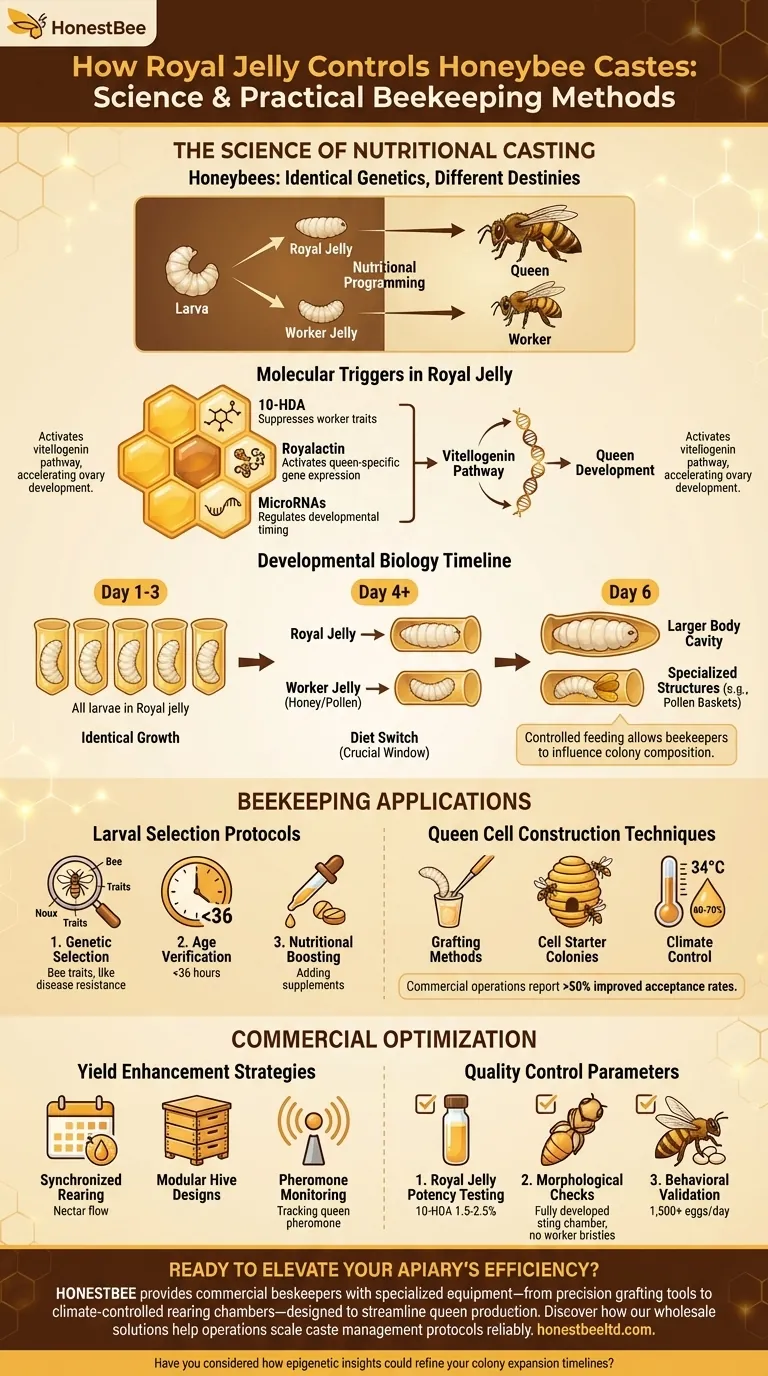
Honeybees demonstrate one of nature's most fascinating examples of nutritional programming—where identical genetic material develops into radically different adult forms based on diet. Research reveals this caste determination hinges on bioactive compounds in royal jelly that trigger epigenetic changes, altering larval development pathways.
Molecular Triggers in Royal Jelly
Royal jelly contains:
- 10-HDA (10-Hydroxy-2-decenoic acid): A fatty acid unique to royal jelly that suppresses worker bee traits
- Royalactin: A protein activating queen-specific gene expression through DNA methylation changes
- MicroRNAs: Small RNA molecules regulating developmental timing
These components collectively activate the vitellogenin pathway, delaying worker bee maturation while accelerating ovary development in queens. Studies show larvae fed pure royal jelly for their entire larval stage develop into queens in nearly all cases, while those switched to honey/pollen mixes after three days become workers.
Developmental Biology Timeline
The caste determination window occurs during critical larval stages:
- Days 1–3: All larvae receive royal jelly, showing identical growth patterns
- Day 4+: Worker-destined larvae transition to diluted jelly or "worker jelly" (honey/pollen blend)
- Day 6: Queen larvae develop larger body cavities; worker larvae begin forming specialized structures like pollen baskets
This plasticity allows beekeepers to influence colony composition through controlled feeding—a practice leveraged in queen rearing operations worldwide.
Beekeeping Applications
Understanding caste biochemistry enables precise colony management. Modern apiaries use this knowledge to:
Larval Selection Protocols
- Genetic Selection: Choose larvae from high-performance colonies showing disease resistance or honey production traits
- Age Verification: Use magnifying tools to confirm larvae are under 36 hours old for optimal queen potential
- Nutritional Boosting: Supplement natural royal jelly with plant-based protein blends to enhance queen viability
Queen Cell Construction Techniques
- Grafting Methods: Transferring larvae to artificial queen cups using fine tools minimizes developmental stress
- Cell Starter Colonies: Dedicated hives with nurse bees conditioned to feed queen cells ensure consistent royal jelly delivery
- Climate Control: Maintaining 34°C and 60–70% humidity in rearing areas mimics optimal hive conditions
Commercial operations report these methods can improve queen acceptance rates by over 50% compared to natural supersedure.
Commercial Optimization
For large-scale beekeeping operations, caste management directly impacts productivity. Key strategies include:
Yield Enhancement Strategies
- Synchronized Rearing: Timing queen production with nectar flows ensures strong foraging populations
- Modular Hive Designs: Allow selective colony expansion without disrupting brood nest stability
- Pheromone Monitoring: Tracking queen mandibular pheromone levels helps predict colony splitting readiness
Quality Control Parameters
- Royal Jelly Potency Testing: Measure 10-HDA concentrations (typically 1.5–2.5% in premium grades)
-
Morphological Checks: Queen pupae should exhibit:
- Elongated abdomens
- Fully developed sting chambers
- Absence of worker-specific bristles
- Behavioral Validation: Mated queens should lay 1,500+ eggs daily within two weeks of introduction
Ready to Elevate Your Apiary’s Efficiency?
HONESTBEE provides commercial beekeepers and distributors with specialized equipment—from precision grafting tools to climate-controlled rearing chambers—designed to streamline queen production. Discover how our wholesale solutions help operations scale caste management protocols reliably.
Have you considered how epigenetic insights could refine your colony expansion timelines? The interplay between royal jelly biochemistry and hive architecture continues to reveal opportunities for apiaries willing to adopt science-backed methods. These technologies now quietly shape the future of sustainable beekeeping.
Visual Guide
Related Products
- No Grafting Queen Rearing Kit: System for Royal Jelly Production and Queen Rearing
- Plastic Chinese Queen Grafting Tool for Bee Queen Rearing
- Professional Plastic Honey Dipper for Easy Honey Drizzling
Related Articles
- The Art of Deception: Integrating Queen Rearing Kits into the Hive Mind
- Mastering Queen Rearing: A Beekeeper’s Guide to Reliable Production
- Biology's Unforgiving Schedule: Mastering the Two Critical Windows of Queen Rearing
- The Beekeeper's Dilemma: Engineering Control in Queen Rearing
- The Architect of the Hive: Turning Queen Rearing from Art to Engineering


