The Illusion of Control
In most complex endeavors, we operate under the assumption of control. We create schedules, manage variables, and adjust timelines. We are the architects of the system.
In queen rearing, this assumption is a dangerous illusion.
The beekeeper is not the architect; they are a participant in a biological process governed by a clock that is millions of years old. You cannot negotiate with it. You cannot delay a deadline. Success is not about command, but about perfect, disciplined synchronization with the hive's unchangeable schedule.
The Preparatory Phase: Setting the Biological Stage
The race against time begins weeks before the first larva is even chosen. A colony cannot be forced to rear queens; it must be persuaded that the conditions are perfect for creating royalty.
Simulating Abundance, Not Waste
Strategic feeding in the weeks before grafting is a powerful tool. It's a form of psychological manipulation, convincing the colony that a massive nectar flow has begun. This signal triggers a cascade of behaviors, most importantly, explosive brood rearing.
But mistime this signal, and you create a system out of balance. Feeding too early in the season encourages a population of nurse bees with no young to care for, consuming vital winter stores and stressing the colony. The goal is to build momentum that peaks precisely when you need it.
Building the "Royal Jelly Factory"
The true aim of this preparation is to build a massive workforce of young nurse bees. These bees are the biological machinery of queen production. Their bodies are primed to produce the vast quantities of royal jelly, the substance that turns a common larva into a queen. Without this demographic surplus, any attempt to rear queens will result in underfed, substandard royalty.
The First Critical Window: A 24-Hour Decision
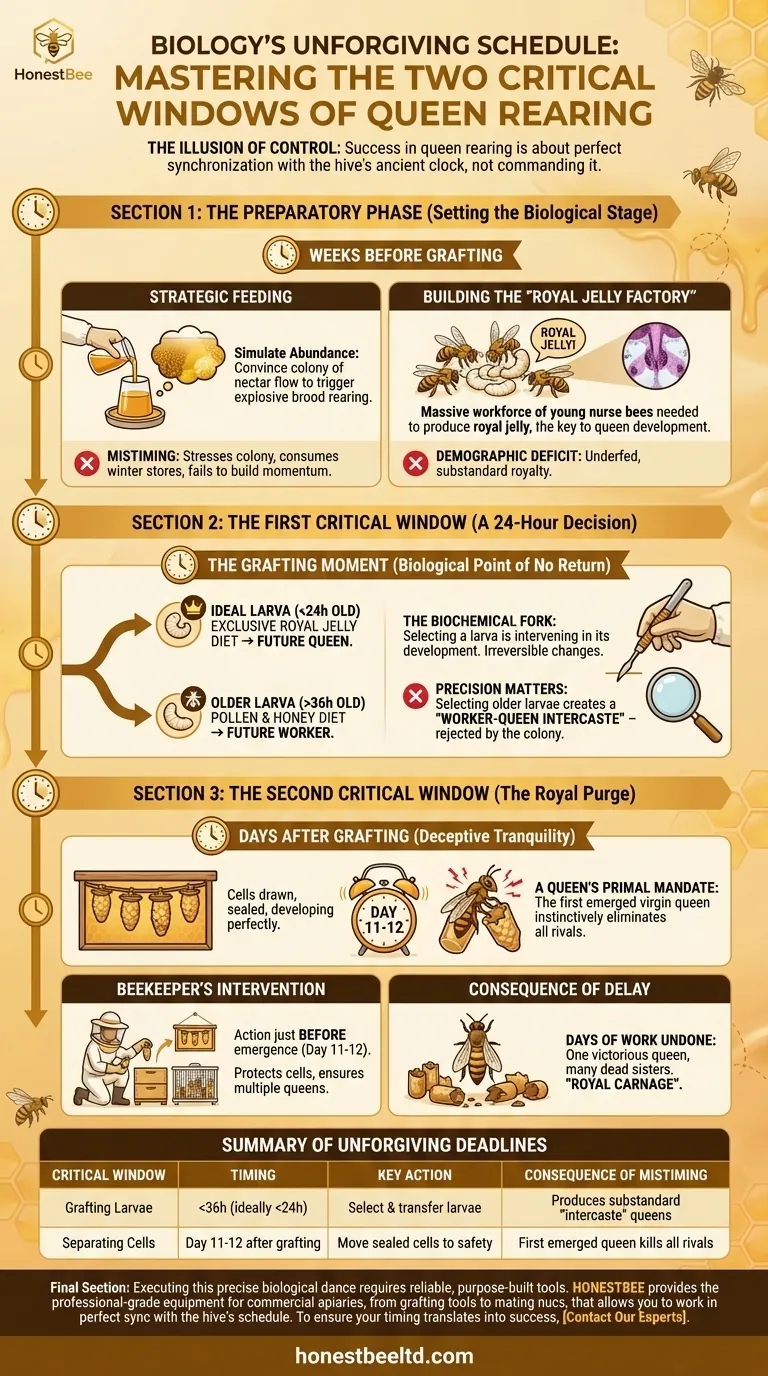
The moment of grafting—transferring a larva into an artificial queen cup—is the most crucial decision in the entire process. It is a biological point of no return.
The Fork in the Developmental Road
A larva is not predestined to be a queen. It becomes one because of its diet. For the first day or so of life, all larvae receive royal jelly. After that, workers are fed a mixture of pollen and honey, while a future queen continues on an exclusive royal jelly diet.
This dietary switch triggers irreversible developmental changes. By selecting a larva for grafting, you are intervening at this biochemical fork in the road.
If you choose a larva that is less than 24 hours old, you are selecting an organism still on the path to royalty. If you select one older than 36 hours, it has already begun its journey to becoming a worker. You cannot turn it back. You will create a "worker-queen intercaste"—a creature that is neither, and which the colony will quickly reject.
This is why precision matters. A steady hand and a reliable grafting tool are not luxuries; they are necessities when the margin for error is measured in hours.
The Second Critical Window: The Royal Purge
Days after the delicate work of grafting, the cell-builder colony is calm. The queen cells are drawn, sealed, and developing perfectly. It is a moment of deceptive tranquility.
Inside one of those cells, a clock is counting down.
A Queen's Primal Mandate
The first virgin queen to emerge from her cell is driven by a single, ruthless instinct: eliminate all rivals. It is not malice; it is a brutally efficient genetic program designed to ensure singular succession. She will immediately seek out the other sealed queen cells, chew a hole in the side, and sting her unborn sisters to death.
To witness this is to see days of meticulous work undone in a matter of hours. A beekeeper who arrives a day late will find one victorious queen and a dozen beautifully drawn, but now lifeless, queen cells.
The Beekeeper's Intervention
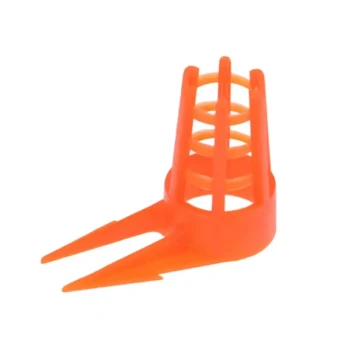
To prevent this royal carnage, the beekeeper must act just before the first queen emerges. Sealed cells must be carefully removed and placed into separate mating nucleus boxes or protected with cages.
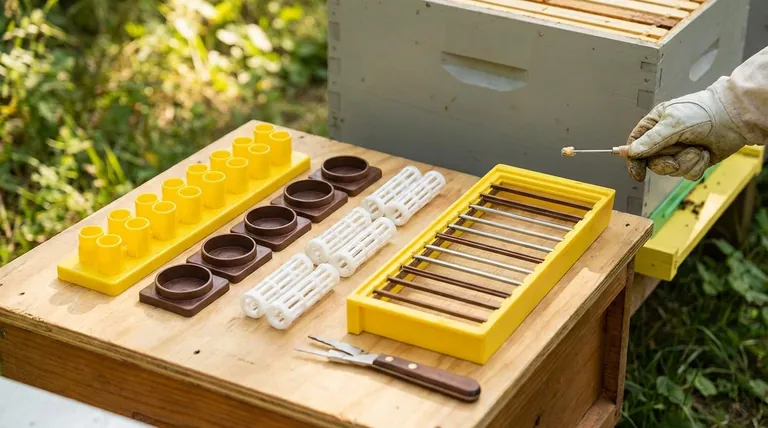
This step transforms the entire economic and genetic output of the operation. Being prepared with your mating nucs assembled and ready isn't just good planning—it's the difference between producing one queen and producing fifty.
The Psychology of Precision vs. Nature's Clock
Humans are accustomed to flexible deadlines. We procrastinate, we approximate, and we believe "good enough" is often sufficient.
The hive teaches a different lesson. It operates on an absolute schedule. Its biological and chemical cascades are non-negotiable. Success in queen rearing, then, is as much an exercise in psychological discipline as it is in technical skill. It demands humility, respect for a system older than ourselves, and an unwavering commitment to its clockwork.
A Summary of Unforgiving Deadlines
| Critical Window | Timing | Key Action | Consequence of Mistiming |
|---|---|---|---|
| Grafting Larvae | Less than 36 hours old (ideally <24h) | Select and transfer larvae | Produces substandard "intercaste" queens |
| Separating Cells | Day 11-12 after grafting | Move sealed queen cells to safety | First emerged queen kills all rivals |
Executing this precise biological dance requires reliable, purpose-built tools. HONESTBEE provides the professional-grade equipment for commercial apiaries, from grafting tools to mating nucs, that allows you to work in perfect sync with the hive's schedule. To ensure your timing translates into success, Contact Our Experts.
Visual Guide
Related Products
- Retractable Chinese Queen Rearing Grafting Tools Equipment
- No Grafting Queen Rearing Kit: System for Royal Jelly Production and Queen Rearing
- Premium Nicot Style Queen Rearing Kit with Hair Roller Bee Cages
- Nicot Queen Rearing Kit for Beekeeping and Grafting in Nicot System
- Stainless Steel Beekeeping Queen Grafting Tool for Honey Bee Rearing
Related Articles
- How to Master Queen Rearing with Precision Grafting Tools
- The Beekeeper's Dilemma: Engineering Control in Queen Rearing
- Precision at Scale: The Operator's Guide to Queen Rearing Grafting Tools
- How to Improve Queen-Rearing Success: Biologically Optimized Grafting Techniques
- Microsurgery in the Apiary: The Unseen Power of the Queen Grafting Tool