The Trembling Hand and the Million-Dollar Larva
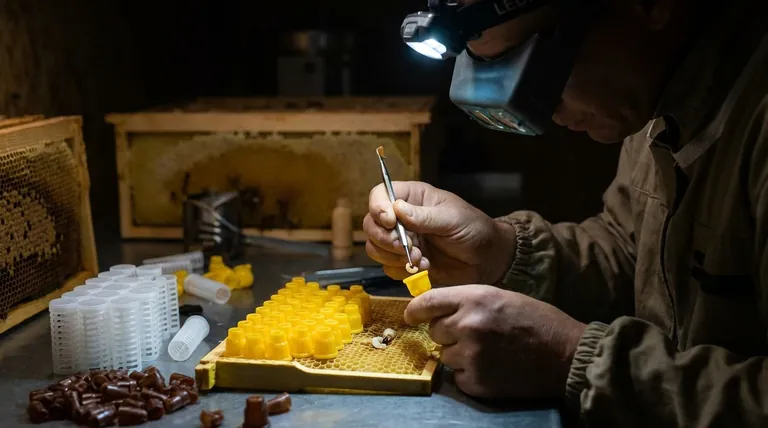
Picture a commercial beekeeper, hunched over a frame under the focused beam of a headlamp. The air is still. Before them lie hundreds of tiny, C-shaped larvae, each no bigger than a grain of salt. The fate of next season's honey production, pollination contracts, and genetic resilience rests on the tip of a tiny, flexible tool.
This is the moment of grafting. It's often seen as a delicate art, a test of a beekeeper's steady hand. But for a commercial operation, relying on "art" is a path to failure. Success at scale is not about art; it's about engineering a repeatable system.
Grafting isn't just a task. It's the central control panel for the entire apiary. It allows you to become the architect of your hive's future, selecting for desired genetics and producing queens on a predictable, industrial schedule.
The Psychological Hurdle: Why We Fail
The most common mistakes in grafting have less to do with the bees and more to do with the beekeeper's psychology.
Our brains are wired for shortcuts. We are tempted to graft slightly larger larvae because they are easier to see and handle. It feels more efficient. But this is a hidden trap. A larva that is 36 hours old, versus the ideal of less than 24, has already begun its journey as a worker. The resulting queen will be subpar, a subtle failure that compounds over the life of the colony.
Similarly, we overestimate our own senses. Many resist magnification, believing their eyesight is "good enough." This isn't just vanity; it's a cognitive bias. But at this microscopic scale, "good enough" leads to damaged larvae and outright rejection by the nurse bees.
Hijacking a Biological Instinct
Grafting works because it's a brilliant manipulation of the bees' natural instincts. A larva destined to be a worker and one destined to be a queen are genetically identical for the first crucial hours.
The difference is their environment and diet.
By moving a very young larva from a horizontal worker cell into a vertical queen cup, you send a powerful signal. When this cup is placed in a strong, queenless "cell builder" colony, the nurse bees' biological programming kicks in. They flood the larva with an exclusive diet of royal jelly, activating the genetic pathways that forge a queen.
You aren't creating a queen. You are simply creating the perfect set of conditions that compel the bees to do it for you.
Building the System: Preparation is Everything
The success of a graft is determined long before the larva is ever lifted. A professional beekeeper builds a system to minimize error and maximize acceptance.
The Workspace as a Cleanroom
Precision work demands a controlled environment. Grafting should be done in a dark room with a single, powerful light source.
- Direct Illumination: An LED headlamp is non-negotiable. It eliminates shadows and focuses light exactly where you need it.
- Clarity is Power: For anyone over 40, 3x-4x magnification is not a luxury; it's a necessity. It transforms a guessing game into a deliberate, surgical procedure.
The Tool as an Extension of the Hand
A high-quality grafting tool with a fine, flexible tip is the core of the physical process. A clean tool, sometimes moistened with a drop of royal jelly, ensures the delicate larva can slide off without damage. For a commercial operator performing hundreds of grafts, a reliable tool isn't just about comfort; it's about reducing the micro-failures that kill profitability.
The Cell Builder: A Biological Factory
The "cell builder" colony is the engine of your operation. It must be a powerhouse: populous, overflowing with young nurse bees, and made queenless just long enough to create a desperate, biological urge to raise a new queen. Placing the grafted cells between frames of pollen and open brood ensures this engine finds and accepts the new larvae immediately. A weak cell builder is like trying to run a factory with a power outage.
Execution: A Ritual of Precision
With the system in place, the grafting itself becomes a calm, repeatable process.
- Select the Blueprint: Choose a frame from your best breeder colony—the one with the genetics you want to replicate. Gently remove the bees.
- Identify the Target: Locate the smallest larvae possible, those still curled in a perfect "C". This is the most critical decision you will make.
- The Transfer: Slide the tool down the cell wall, scoop the larva and its bed of royal jelly, and lift it straight out. In a smooth, calm motion, lower it into a primed queen cup and gently roll it off the tip.
Diagnosing Failure: It's Never Random
When grafts fail, it isn't bad luck. It's a data point indicating a flaw in the system. The most common errors are not mysterious; they are predictable and preventable.
| Key Factor | Critical Detail | Common Pitfall & The Psychology Behind It |
|---|---|---|
| Larva Age | Less than 24 hours old, curled in a "C" shape | Grafting older larvae. (The "efficiency" trap: they are easier to see and handle). |
| Larval Integrity | Undamaged, transferred with its royal jelly | Puncturing the larva. (The "overconfidence" trap: skipping proper magnification). |
| Cell Builder | Strong, populous, and properly queenless | Using a weak colony. (The "impatience" trap: not waiting to build up a strong one). |
| Workspace | Excellent light, stable surface, magnification | Poor visibility. (The "it's good enough" trap: underestimating the task's delicacy). |
From Craft to Commercial Operation
Hobbyists can afford to treat grafting as a craft, celebrating a few successful queen cells. Commercial apiaries cannot. For them, success requires moving from craft to a reliable, engineered process where a 90%+ acceptance rate is the standard, not the exception.
This shift demands a commitment to the system and the right equipment. Durable, well-designed tools are not expenses; they are investments in consistency and scale. HONESTBEE supplies commercial apiaries and distributors with the robust, professional-grade equipment needed to build these systems. From precision grafting tools to all the components for powerful cell builder colonies, our wholesale operations are designed to support beekeepers who are ready to engineer success.
If you are ready to turn your queen rearing into a predictable and scalable part of your business, we can help you build the system. Contact Our Experts
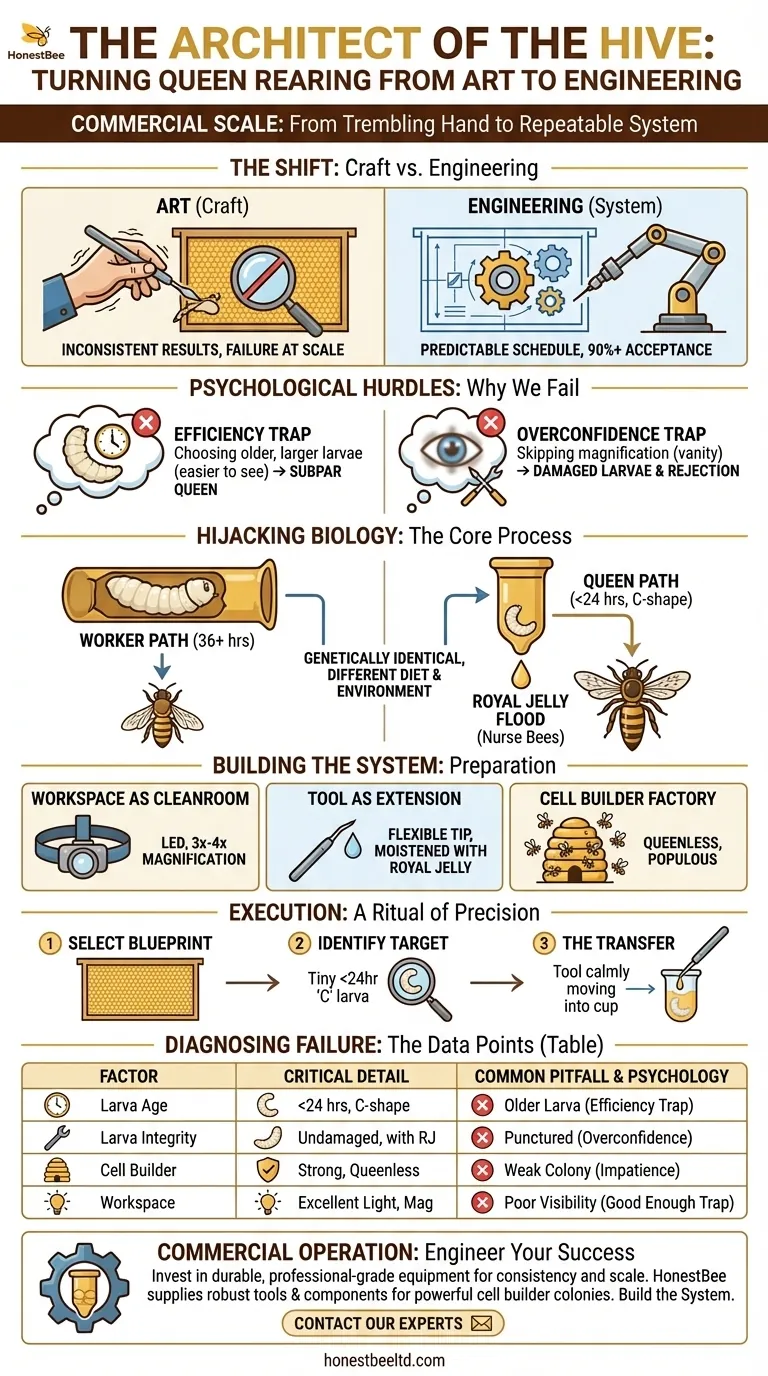
Visual Guide
Related Products
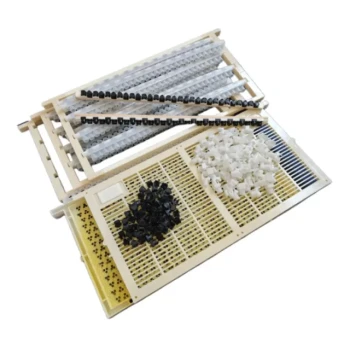
- No Grafting Queen Rearing Kit: System for Royal Jelly Production and Queen Rearing
- Premium Nicot Style Queen Rearing Kit with Hair Roller Bee Cages
- Nicot Queen Rearing Kit for Beekeeping and Grafting in Nicot System
- JZBZ Langstroth Queen Rearing Frame for Beekeeping
- Premium Nicot Style Cell Bar Holder and Queen Cell Cup Holder System
Related Articles
- The Art of Deception: Integrating Queen Rearing Kits into the Hive Mind
- Mastering Queen Rearing: A Beekeeper’s Guide to Reliable Production
- Biology's Unforgiving Schedule: Mastering the Two Critical Windows of Queen Rearing
- The Beekeeper's Dilemma: Engineering Control in Queen Rearing
- Manufacturing Royalty: The Precise Architecture of Queen Rearing