The Two Hives
Picture two hives in an apiary.
One is a whirlwind of activity, but its bees are aggressive and defensive. It produces a mediocre amount of honey and seems susceptible to every passing malady. The other is calm, a gentle hum of productivity. It consistently yields impressive honey supers and overwinters with robust strength.
The difference isn't luck. It's genetics. And the decision of how to manage those genetics is the defining challenge for every beekeeper looking to move from simply having bees to building a truly exceptional apiary.
The Allure of Control
At its core, beekeeping is a dance between human intention and natural chaos. We provide the structure, the bees provide the magic. But when it comes to the queen—the genetic heart of the colony—leaving things to chance feels like a gamble we can't afford.
The drive to improve a stock, to replicate the traits of that one perfect hive across an entire operation, is a desire for control. It's a desire to replace the genetic lottery with intentional, thoughtful architecture.
This is the central dilemma of queen rearing. The methods available sit on a spectrum, with absolute simplicity on one end and absolute control on the other.
Two Paths: Abdication vs. Architecture
Your approach to making new queens is a reflection of your operational philosophy. Are you a passive observer, or are you an active architect?
The 'Walk-Away' Split: An Act of Faith
The simplest method is to let the bees do the work. A 'walk-away' split leverages the colony's powerful survival instinct.
You divide a strong hive, ensuring the queenless half has fresh eggs. In this engineered emergency, the workers will select larvae and begin feeding them royal jelly to raise a new queen.
This method works. It requires no special equipment and minimal skill. But it is an act of faith. You are trusting the bees' emergency selection process. The resulting queen is a product of chance—her temperament, productivity, and resilience are completely unknown until it's too late to change them.
Grafting: The Architect's Approach
Grafting is the domain of the beekeeper as an architect. It is the deliberate act of choosing a future.
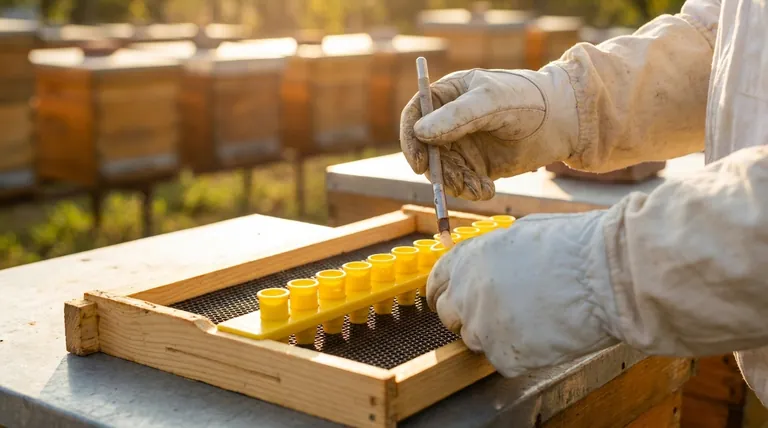
This technique involves the meticulous transfer of a single, day-old larva from the cell of a superior breeder queen into an artificial queen cup. It's a form of microsurgery, requiring a steady hand, a keen eye, and profound respect for the fragility of life.
These cups are then placed in a powerful "cell builder" colony, primed to pour all its resources into raising these chosen heirs. Here, you have dictated the maternal genetics. You are not hoping for a good queen; you are systematically cultivating one.
This is the point where beekeeping elevates into breeding. But this level of control demands precision, and precision demands the right tools. The quality of your grafting tool, the design of your queen cups—these are not minor details. They are the instruments that enable your architectural vision.
The Unseen Variable: The Mating Flight
Even with a perfectly grafted queen, nature has one more card to play. The virgin queen must embark on a nuptial flight, mating with drones from the surrounding area. You've controlled the mother, but the fathers are a product of the local environment.
This introduces a degree of genetic variability. For most commercial apiaries focused on improvement, this is an acceptable and manageable factor.
For those who require absolute certainty—the top-tier breeders and researchers—the final step is Instrumental Insemination. This clinical procedure gives the beekeeper total control over both sides of the genetic line. It represents the pinnacle of control but is a highly specialized practice.
Choosing Your Philosophy, Not Just a Method
The right technique isn't about what's "best," but about what aligns with your goals. The decision is a strategic one, balancing investment against desired outcome.
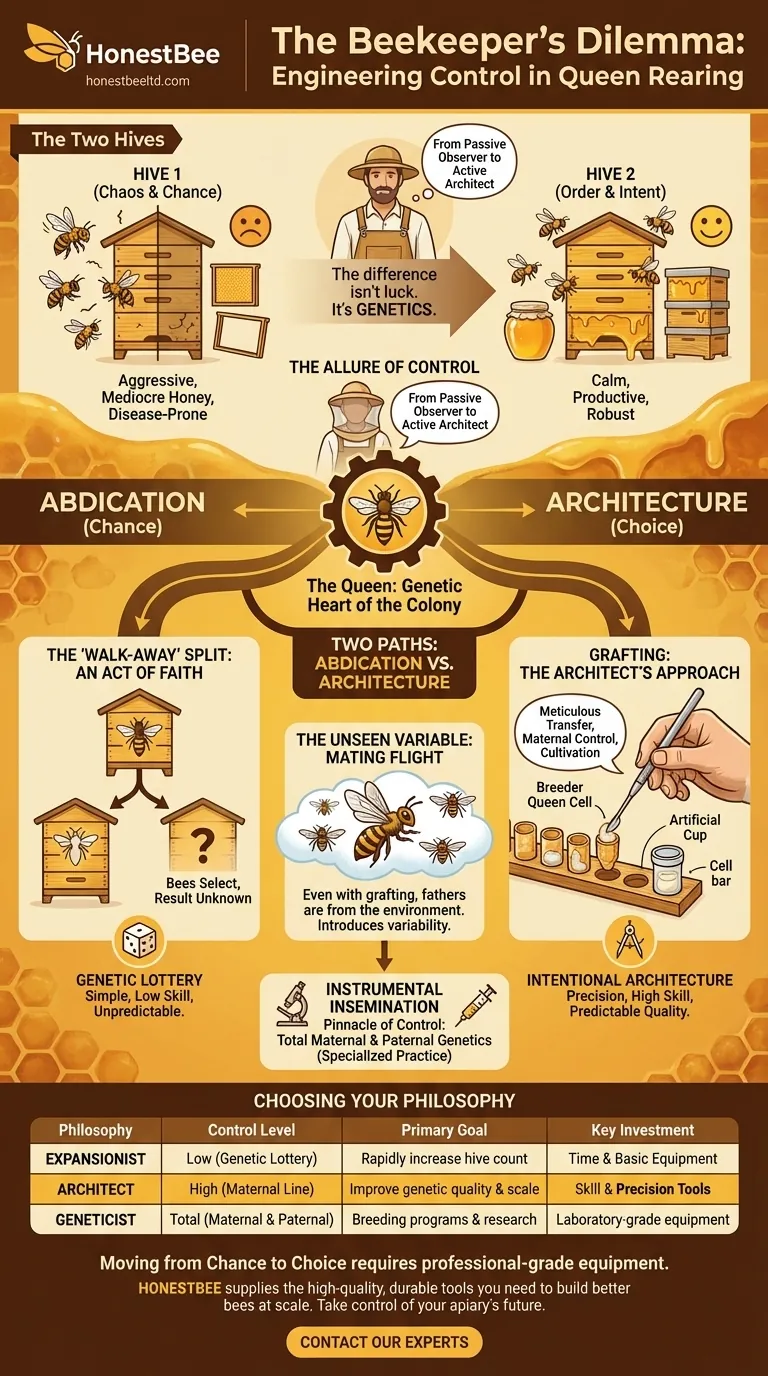
| Philosophy | Control Level | Primary Goal | Key Investment |
|---|---|---|---|
| Expansionist | Low (Genetic Lottery) | Rapidly increase hive count | Time & Basic Equipment |
| Architect | High (Maternal Line) | Improve genetic quality & scale production | Skill & Precision Tools |
| Geneticist | Total (Maternal & Paternal) | Breeding programs & research | Laboratory-grade equipment |
Moving from the Expansionist to the Architect mindset is the most significant leap a beekeeper can make. It's the decision to stop accepting the bees you have and start creating the bees you want.
This transition from chance to choice is enabled by professional-grade equipment. When you decide to implement a serious grafting program, the reliability of your tools—from the grafting needle to the cell bars—is paramount to your success. HONESTBEE specializes in supplying the high-quality, durable equipment that commercial apiaries and distributors rely on to build better bees at scale.
If you are ready to take control of your apiary's future, we can help you get the tools you need. Contact Our Experts
Visual Guide
Related Products
- Retractable Chinese Queen Rearing Grafting Tools Equipment
- No Grafting Queen Rearing Kit: System for Royal Jelly Production and Queen Rearing
- Premium Nicot Style Queen Rearing Kit with Hair Roller Bee Cages
- Nicot Queen Rearing Kit for Beekeeping and Grafting in Nicot System
- Stainless Steel Beekeeping Queen Grafting Tool for Honey Bee Rearing
Related Articles
- How to Master Queen Rearing with Precision Grafting Tools
- Biology's Unforgiving Schedule: Mastering the Two Critical Windows of Queen Rearing
- Precision at Scale: The Operator's Guide to Queen Rearing Grafting Tools
- How to Improve Queen-Rearing Success: Biologically Optimized Grafting Techniques
- Microsurgery in the Apiary: The Unseen Power of the Queen Grafting Tool