A bee smoker isn’t just a tool—it’s your first line of defense when working with colonies. Whether you’re a backyard hobbyist or managing commercial apiaries, selecting the right smoker hinges on understanding how design features align with your specific beekeeping scenarios. This guide breaks down smoker types, fuel efficiency, and safety protocols to help you make an informed choice.
Types of Beekeeping Smokers
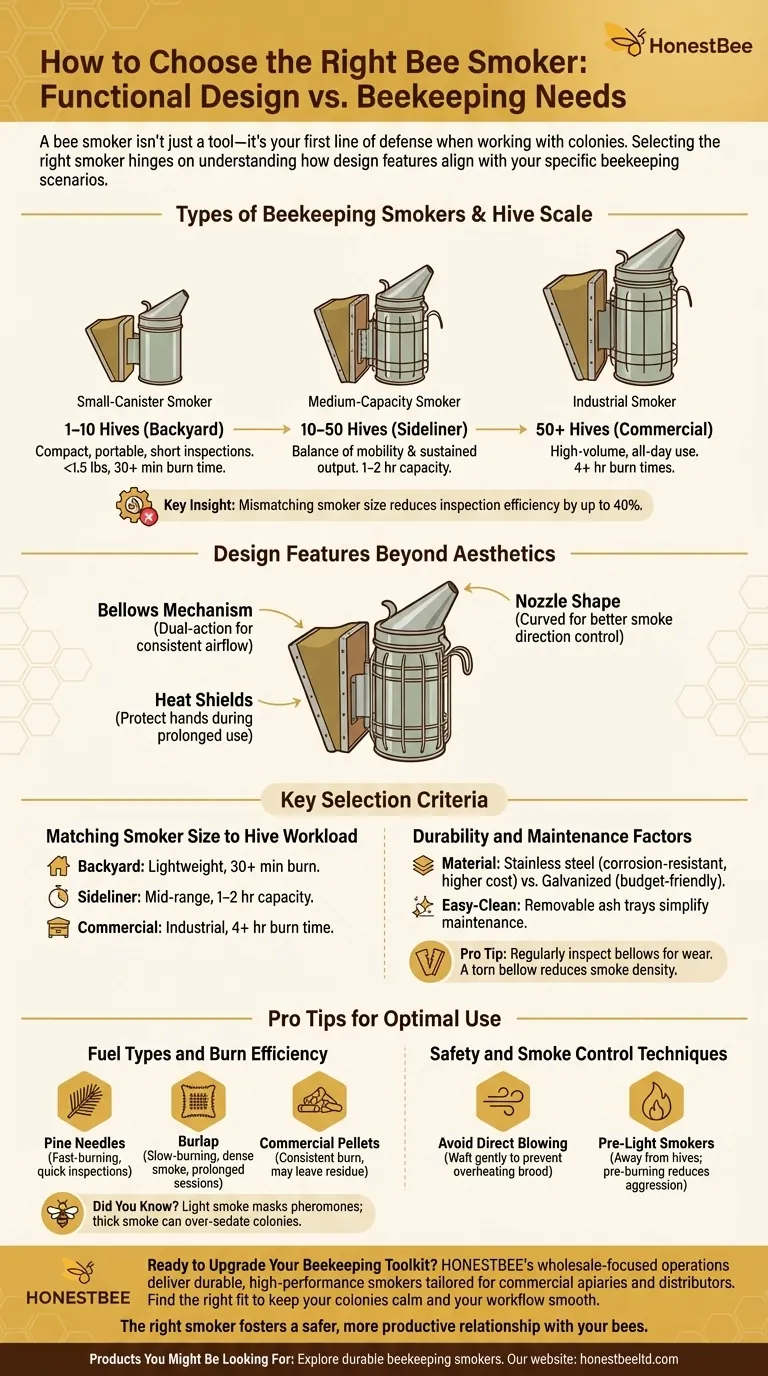
Fuel Capacity and Hive Scale
Smokers vary significantly in fuel capacity, which directly impacts their suitability for different hive scales:
- Small-Canister Smokers (Ideal for 1–10 hives):
Compact designs with fuel chambers holding enough material for short inspections. Best for backyard beekeepers who prioritize portability over extended burn time. - Medium-Capacity Smokers (10–50 hives):
Balance between mobility and sustained smoke output. Often feature heat-resistant shields for longer sessions. - Industrial Smokers (50+ hives):
High-volume fuel chambers and reinforced nozzles for all-day use in commercial operations.
Key Insight: Research shows that mismatching smoker size to hive workload leads to frequent refueling interruptions, reducing inspection efficiency by up to 40%.
Design Features Beyond Aesthetics
Look for functional elements that enhance performance:
- Bellows Mechanism: Dual-action bellows (found in premium models) provide consistent airflow, preventing flare-ups.
- Heat Shields: Protect hands during prolonged use—critical for commercial beekeepers.
- Nozzle Shape: Curved nozzles offer better smoke direction control than straight pipes.
Key Selection Criteria
Matching Smoker Size to Hive Workload
- Backyard Beekeepers: Opt for lightweight models (under 1.5 lbs) with 30+ minutes of burn time.
- Sideliner Beekeepers (10–30 hives): Prioritize mid-range smokers with 1–2 hour fuel capacity.
- Commercial Operators: Industrial smokers with 4+ hour burn times minimize downtime during large-scale inspections.
Durability and Maintenance Factors
- Material Matters: Stainless steel smokers resist corrosion but cost more; galvanized steel is budget-friendly but less durable.
- Easy-Clean Designs: Removable ash trays simplify maintenance—a feature often overlooked until clogging becomes a problem.
Pro Tip: Regularly inspect bellows for wear. A torn bellow reduces smoke density, making bees less responsive.
Pro Tips for Optimal Use
Fuel Types and Burn Efficiency
Not all fuels create equal smoke:
- Pine Needles: Fast-burning, ideal for quick inspections.
- Burlap: Slow-burning with dense smoke, suited for prolonged sessions.
- Commercial Pellets: Consistent burn but may leave residue.
Did You Know? Bees react differently to smoke densities. Light smoke masks pheromones effectively, while thick smoke can over-sedate colonies.
Safety and Smoke Control Techniques
- Avoid Direct Blowing: Gently waft smoke over frames to prevent overheating brood.
- Pre-Light Smokers Away from Hives: Bees associate smoke with hive intrusions; pre-burning reduces initial aggression.
Ready to Upgrade Your Beekeeping Toolkit?
HONESTBEE’s wholesale-focused operations deliver durable, high-performance smokers tailored for commercial apiaries and distributors. From compact models to industrial workhorses, find the right fit to keep your colonies calm and your workflow smooth.
Final Thought: The right smoker isn’t just about emitting smoke—it’s about fostering a safer, more productive relationship with your bees.
Products You Might Be Looking For:
Explore durable beekeeping smokers
Visual Guide
Related Products
- Stainless Steel Honey Bee Smoker Hive and Honeycomb Smoker for Beekeeping
- Professional Bee Smoker with Elongated Spout and Durable Bellows for Beekeeping
- Premium Traditional Copper Bee Smoker with Bellows
- Heavy Duty Manual Bee Smoker Blower for Beekeeping
- European Stainless Steel Bee Smoker for Honey Bee Hive
Related Articles
- The End of 'Hot Hives': Why Your Bee Smoker Is More Important Than Your Suit
- Why Your Bee Smoker Might Be Making Your Hives More Aggressive—And How to Fix It
- Why Your Bee Smoker Keeps Going Out—And the 3-Layer Fix
- How to Operate a Bee Smoker Safely: Expert Techniques for Calmer Hives
- How to Choose the Right Bee Smoker Size for Your Beekeeping Operation