Beekeeping is a delicate balance of skill, patience, and meticulous maintenance—especially when it comes to your smoker. A poorly maintained smoker doesn’t just reduce efficiency; it can agitate bees, spread disease, and even pose fire hazards. This guide delivers actionable steps to clean your smoker thoroughly, prevent cross-contamination, and maintain peak performance season after season.
The Critical Role of Smoker Maintenance in Apiary Management
Your smoker is more than a tool—it’s a lifeline during hive inspections. Resin buildup and debris, however, can turn it into a liability.
How Resin and Debris Compromise Beehive Safety
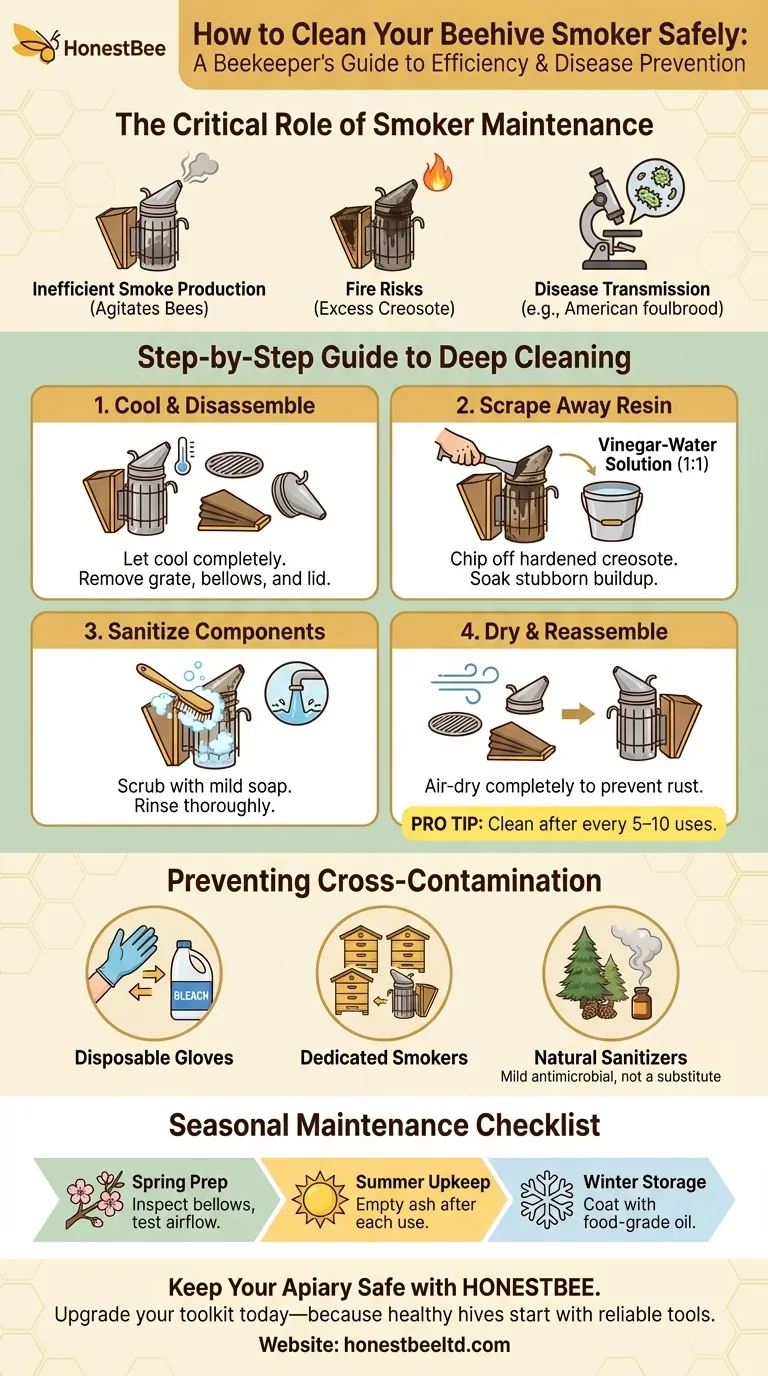
- Inefficient smoke production: Clogged smokers require more fuel and produce uneven smoke, which can overstimulate bees instead of calming them. Research shows agitated bees are more likely to sting, as smoke masks their alarm pheromones.
- Fire risks: Excess creosote (a byproduct of burned fuels) is highly flammable. Overheating a dirty smoker can ignite embers unexpectedly.
- Disease transmission: Pathogens like American foulbrood can linger in residue, spreading to other hives during inspections.
Step-by-Step Guide to Deep Cleaning Your Smoker
-
Cool and Disassemble
- Let the smoker cool completely. Remove the grate, bellows, and lid.
-
Scrape Away Resin
- Use a hive tool or putty knife to chip off hardened creosote. For stubborn buildup, soak parts in a vinegar-water solution (1:1 ratio) for several hours.
-
Sanitize Critical Components
- Scrub the interior with a stiff brush and mild soap. Rinse thoroughly to avoid chemical residues that could harm bees.
-
Dry and Reassemble
- Air-dry all parts before storage to prevent rust.
Pro Tip: Clean your smoker after every 5–10 uses to minimize residue accumulation.
Preventing Cross-Contamination Between Hives
Cross-contamination is a silent threat in apiaries. Here’s how to mitigate it:
Choosing the Right Tools for Sanitization
- Disposable gloves: Swap gloves between hives or sanitize reusable ones with a bleach solution (1 part bleach to 9 parts water).
- Dedicated smokers: If managing multiple apiaries, assign a smoker to each location.
- Natural sanitizers: Pine resin smoke has mild antimicrobial properties, but it’s no substitute for physical cleaning.
Seasonal Maintenance Checklist for Beekeepers
-
Spring Prep
- Inspect bellows for cracks; replace worn parts.
- Test airflow before peak season.
-
Summer Upkeep
- Empty ash after each use to improve combustion.
-
Winter Storage
- Coat metal parts with food-grade oil to prevent rust.
Keep Your Apiary Safe with HONESTBEE
A well-maintained smoker is the backbone of productive beekeeping. HONESTBEE equips commercial apiaries and distributors with durable, easy-to-clean smokers designed for heavy use. Upgrade your toolkit today—because healthy hives start with reliable tools.
Final Thought: Regular smoker maintenance isn’t just about equipment longevity; it’s a safeguard for your bees’ well-being and your operational success.
Visual Guide
Related Products
- European Stainless Steel Bee Smoker for Honey Bee Hive
- Stainless Steel Bee Hive Smoker Beekeeping Smoker for Wholesale
- Stainless Steel Honey Bee Smoker Hive and Honeycomb Smoker for Beekeeping
- Electric Bee Smoker European Style Bee Hive Smoker for Beekeeping
- Stainless Steel Electric Beehive Smoker for Beekeeping and Bee Keeper Use
Related Articles
- The End of 'Hot Hives': Why Your Bee Smoker Is More Important Than Your Suit
- How to Operate a Bee Smoker Safely: Expert Techniques for Calmer Hives
- Why Your Bee Smoker Might Be Making Your Hives More Aggressive—And How to Fix It
- Why Your Bee Smoker Keeps Going Out—And the 3-Layer Fix
- How to Choose the Right Bee Smoker Size for Your Beekeeping Operation