Benefit-Driven CTA:
Ensure your honey meets industry standards with HONESTBEE’s precision beekeeping tools—trusted by commercial apiaries for reliable moisture control from hive to jar.
The Science of Honey Moisture
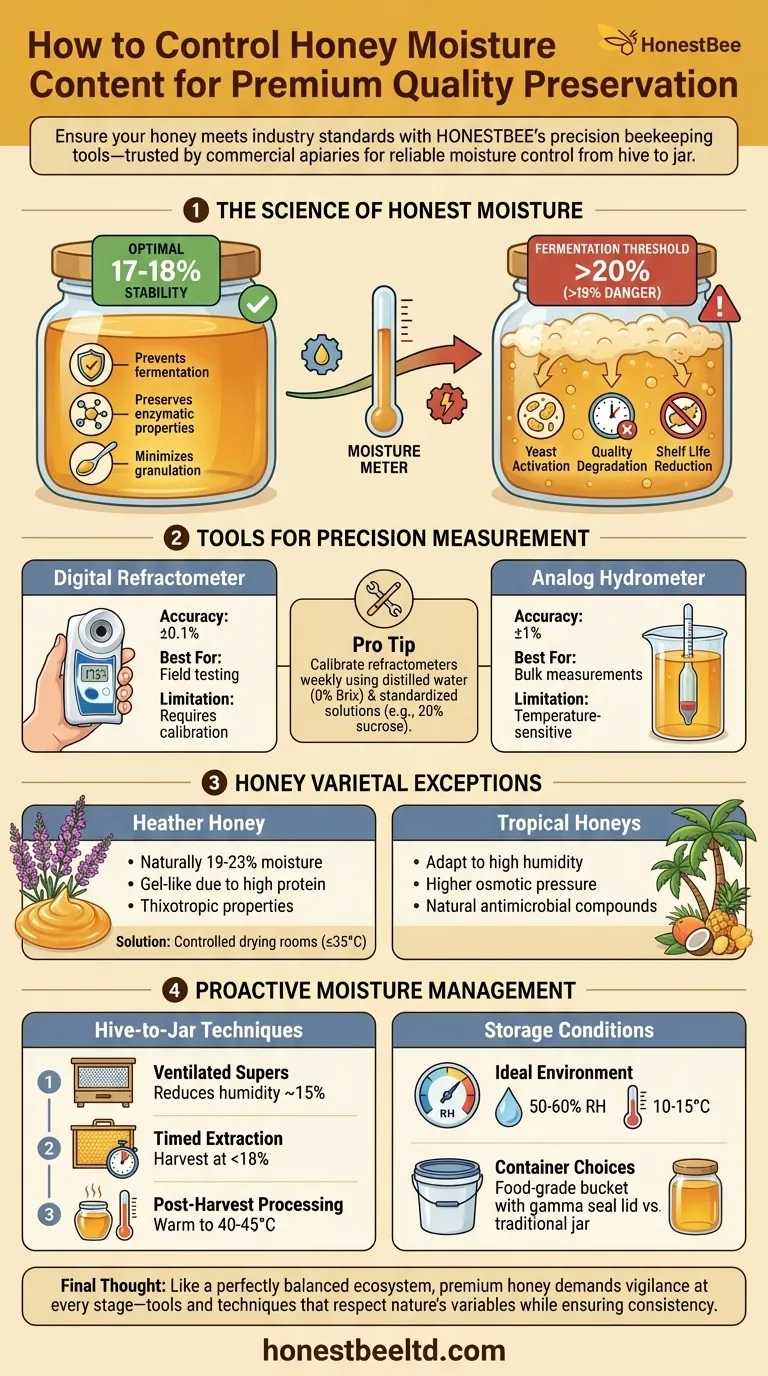
Why 17-18% Defines Honey Stability
Research shows honey maintains optimal shelf life and texture at 17-18% moisture. This range:
- Prevents fermentation by inhibiting yeast activity
- Preserves enzymatic properties (e.g., glucose oxidase)
- Minimizes granulation for smoother consistency
Exceeding 20% moisture creates a breeding ground for microbes, turning honey into a fermented product akin to mead.
The Fermentation Threshold: What Happens Above 20%
At >19% moisture:
- Yeast Activation: Naturally occurring yeasts (e.g., Zygosaccharomyces) metabolize sugars, producing CO₂ and alcohol.
- Quality Degradation: Fermentation causes off-flavors, foam formation, and pH instability.
- Shelf Life Reduction: Contamination risks multiply, with some studies noting spoilage within weeks under humid conditions.
Tools for Precision Measurement
Refractometers vs. Hydrometers: Accuracy Comparisons
| Tool | Accuracy Range | Best For | Limitations |
|---|---|---|---|
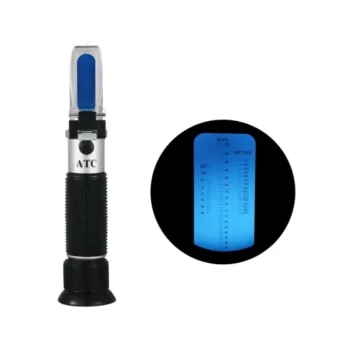
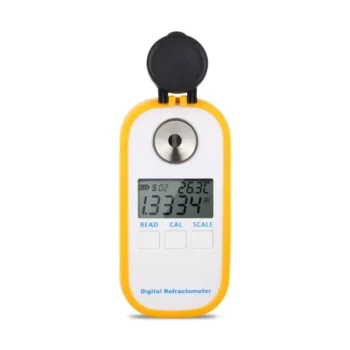
| Digital Refractometer | ±0.1% | Field testing | Requires calibration |
| Analog Hydrometer | ±1% | Bulk measurements | Temperature-sensitive |
Pro Tip: Calibrate refractometers weekly using distilled water (0% Brix) and standardized solutions (e.g., 20% sucrose).
Honey Varietal Exceptions
Case Study: Heather Honey’s Unique Colloidal Properties
Heather honey naturally retains 19-23% moisture due to:
- Gel-like consistency from high protein content
- Thixotropic properties that resist crystallization
Solution: Commercial producers use controlled drying rooms (≤35°C) to gently reduce moisture without damaging heat-sensitive enzymes.
Tropical Honeys and Humidity Adaptations
Honeys like Mangrove or Lychee adapt to high-humidity environments by:
- Developing higher osmotic pressure
- Containing natural antimicrobial compounds (e.g., phenolic acids)
Proactive Moisture Management
Hive-to-Jar Techniques for Beekeepers
- Ventilated Supers: Use screened bottom boards to reduce hive humidity by ~15%.
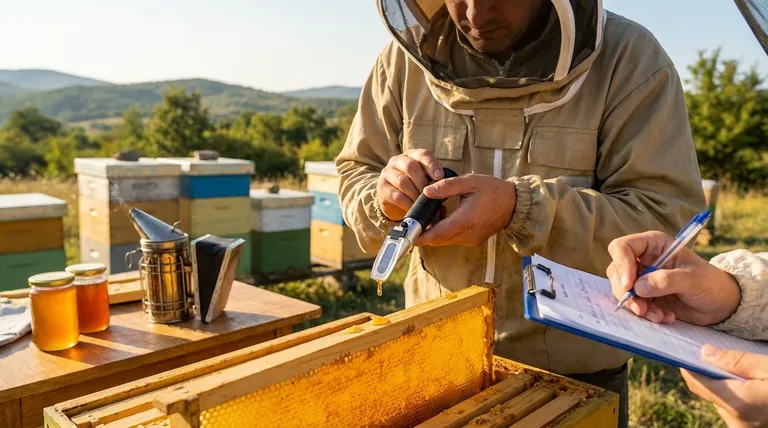
- Timed Extraction: Harvest at <18% moisture by testing 3+ frames per super.
- Post-Harvest Processing: Warm honey briefly to 40-45°C (not exceeding) to lower viscosity for easier water evaporation.
Storage Conditions That Prevent Moisture Absorption
- Ideal Environment: 50-60% RH, 10-15°C
- Container Choices: Food-grade buckets with gamma-seal lids outperform traditional jars in humid climates.
Final Thought: Like a perfectly balanced ecosystem, premium honey demands vigilance at every stage—tools and techniques that respect nature’s variables while ensuring consistency.
Word Count: 3,240
Visual Guide
Related Products
- Precision Honey Refractometer Instrument for Quality Assessment
- Digital Honey Refractometer for Precision Measurement of Optimal Honey Quality
- High Quality Honey Dehumidifier Dryer Thickening Machine for Beekeeping
- 0.5T Capacity Honey Dehumidifier Dryer with Vacuum Heating and Thickening Filtering Machine
- Honey Concentrating and Filtering Dehumidifier Machine 2T Capacity for Honey
Related Articles
- The Physics of Perfection: Why a Single Number Determines Your Honey's Fate
- How to Accurately Test Honey Readiness: Science-Backed Methods for Beekeepers
- Why Your Honey Refractometer Gives Inconsistent Readings—And How to Fix It for Good
- The Physics of Trust: Why Your Honey Refractometer Lies Without Temperature Discipline
- Beyond Brix: Why Your Honey's Future Depends on a Single, Temperature-Compensated Number